House approves bill letting water utilities seek PFAS‑reduction surcharges with regulator oversight
May 31, 2025 | 2025 Legislature CT, Connecticut
This article was created by AI summarizing key points discussed. AI makes mistakes, so for full details and context, please refer to the video of the full meeting. Please report any errors so we can fix them. Report an error »
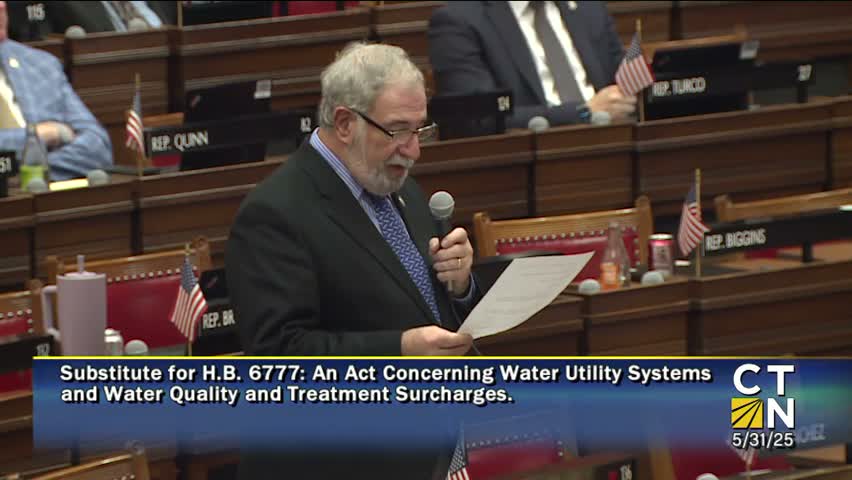
Hartford — The Connecticut House voted to let water utilities recover certain PFAS‑remediation costs through a surcharge mechanism limited by explicit caps and contingent on regulator approval.
Representative Steinberg, sponsor of the measure, said the bill is intended to give utilities a predictable path to finance upgrades required to remove PFAS from public water supplies while limiting sudden rate increases for customers. Under the statute the utility must submit a surcharge request to the state regulatory authority for approval; increases are capped to reduce 'rate shock' in any 12‑month period (roughly 7.5% in that period or up to a 15% increase since the last rate case, depending on timing and methodology spelled out in the bill).
The House adopted a technical amendment and then passed the bill on a roll call. Supporters emphasized that federal EPA standards are pushing utilities to act and that rate recovery mechanisms are needed so systems can install treatment without a single year’s rates spiking dramatically. Representative Mara, supporting the bill, said many utilities face near‑term investments to comply with tightening federal PFAS limits and should be able to recover prudent costs subject to oversight.
Questions from members centered on whether PURA already had authority to approve similar cost‑recovery mechanisms, and whether the Legislature should set further statutory guardrails. Representative Carney noted public commenters, including AARP, argued utilities could already apply to PURA for recovery through major project filings and that the new law should avoid duplicating existing processes. Representative Steinberg said the legislation clarifies legislative intent and places explicit limits on annual increases to protect ratepayers.
The House vote recorded approximately 144 in favor, 1 opposed, with several members absent; the bill passed as amended.
What’s next: The bill sets out the surcharge approval process and the regulatory limits. Utilities seeking recovery must file with the regulator; the public will have opportunities to review and comment during approval proceedings, and any surcharge cannot be applied without agency approval.
Why this matters: PFAS compounds have been broadly detected in water systems and EPA standards are driving costly treatment work. The bill attempts to balance two public priorities — cleaner drinking water and limiting consumer rate shock — by coupling recovery options with explicit caps and regulator review.
Representative Steinberg, sponsor of the measure, said the bill is intended to give utilities a predictable path to finance upgrades required to remove PFAS from public water supplies while limiting sudden rate increases for customers. Under the statute the utility must submit a surcharge request to the state regulatory authority for approval; increases are capped to reduce 'rate shock' in any 12‑month period (roughly 7.5% in that period or up to a 15% increase since the last rate case, depending on timing and methodology spelled out in the bill).
The House adopted a technical amendment and then passed the bill on a roll call. Supporters emphasized that federal EPA standards are pushing utilities to act and that rate recovery mechanisms are needed so systems can install treatment without a single year’s rates spiking dramatically. Representative Mara, supporting the bill, said many utilities face near‑term investments to comply with tightening federal PFAS limits and should be able to recover prudent costs subject to oversight.
Questions from members centered on whether PURA already had authority to approve similar cost‑recovery mechanisms, and whether the Legislature should set further statutory guardrails. Representative Carney noted public commenters, including AARP, argued utilities could already apply to PURA for recovery through major project filings and that the new law should avoid duplicating existing processes. Representative Steinberg said the legislation clarifies legislative intent and places explicit limits on annual increases to protect ratepayers.
The House vote recorded approximately 144 in favor, 1 opposed, with several members absent; the bill passed as amended.
What’s next: The bill sets out the surcharge approval process and the regulatory limits. Utilities seeking recovery must file with the regulator; the public will have opportunities to review and comment during approval proceedings, and any surcharge cannot be applied without agency approval.
Why this matters: PFAS compounds have been broadly detected in water systems and EPA standards are driving costly treatment work. The bill attempts to balance two public priorities — cleaner drinking water and limiting consumer rate shock — by coupling recovery options with explicit caps and regulator review.
View the Full Meeting & All Its Details
This article offers just a summary. Unlock complete video, transcripts, and insights as a Founder Member.
✓
Watch full, unedited meeting videos
✓
Search every word spoken in unlimited transcripts
✓
AI summaries & real-time alerts (all government levels)
✓
Permanent access to expanding government content
30-day money-back guarantee
