Senate Judiciary debates civil-arrest protections; DOC counsel says facilities unaffected
January 27, 2026 | Judiciary, SENATE, Committees, Legislative , Vermont
This article was created by AI summarizing key points discussed. AI makes mistakes, so for full details and context, please refer to the video of the full meeting. Please report any errors so we can fix them. Report an error »
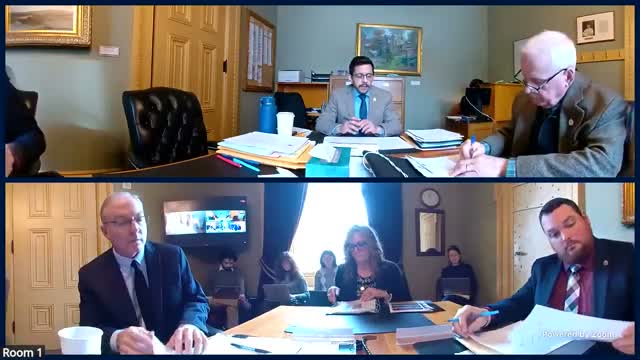
The Senate Judiciary Committee on Jan. 27 discussed a draft bill that would limit civil arrests at certain locations, hearing from the Department of Corrections' general counsel and asking staff to refine definitions for travel protections.
The chair, Senator Howard Hashim, opened the session by noting the committee had asked the Department of Corrections for input on language in the bill that references "state, county, and municipal buildings." The department's general counsel told the committee, "Really no thoughts that I'm here to offer from the department on this" and added that "we don't see any issue with it, in so far as the impact on our facilities," including prison facilities and probation and parole offices.
The DOC witness said the department does not handle civil arrests in its facilities: "Civil arrest is not something that we deal with, in these facilities." On procedures where federal authorities bring detainers, the counsel explained those actions come through federal channels and rely on proper charging documents under federal custody arrangements, noting the department would reject intake without correct paperwork.
Committee members pressed further about whether probation or parole check-ins or other routine reporting would be affected. The DOC counsel said the department does not proactively notify outside officials that someone will be present at a probation or parole office and that the phrase "assist" in the draft bill needs clarification.
Several senators also focused on how to define protections for "traveling to and from" covered locations. Senator Phil Garuth described his understanding that the protection would likely cover a direct route "from your domicile or your place of work to the courthouse and back," and asked whether off-route travel or long trips would remain protected. The chair said staff member "Rick" was asked to research comparable statutory language and return with a recommendation.
Senator Tonya Behovsky told the committee she was coordinating language with the ACLU and legislative counsel to make the civil-action provisions more defensible and to add intent language. Behovsky also reiterated interest in ensuring protections for very young children: "I share senator Matos' desire to make sure we're protecting children under 3, if they're at child care."
Lawmakers raised special concerns about including domestic violence shelters, emergency shelters and health-care facilities, with members warning that law-enforcement actions in such sensitive locations could harm victims and witnesses. One senator said federal agents entering a shelter to remove someone "disturbs everybody," underscoring the committee's caution about how protections should apply in those settings.
The committee did not take a vote. Members directed staff and legislative counsel to refine definitions in the draft (including travel limits and the scope of covered buildings), to consult Good Samaritan law definitions where relevant, and to return with revised language for further consideration.
The chair, Senator Howard Hashim, opened the session by noting the committee had asked the Department of Corrections for input on language in the bill that references "state, county, and municipal buildings." The department's general counsel told the committee, "Really no thoughts that I'm here to offer from the department on this" and added that "we don't see any issue with it, in so far as the impact on our facilities," including prison facilities and probation and parole offices.
The DOC witness said the department does not handle civil arrests in its facilities: "Civil arrest is not something that we deal with, in these facilities." On procedures where federal authorities bring detainers, the counsel explained those actions come through federal channels and rely on proper charging documents under federal custody arrangements, noting the department would reject intake without correct paperwork.
Committee members pressed further about whether probation or parole check-ins or other routine reporting would be affected. The DOC counsel said the department does not proactively notify outside officials that someone will be present at a probation or parole office and that the phrase "assist" in the draft bill needs clarification.
Several senators also focused on how to define protections for "traveling to and from" covered locations. Senator Phil Garuth described his understanding that the protection would likely cover a direct route "from your domicile or your place of work to the courthouse and back," and asked whether off-route travel or long trips would remain protected. The chair said staff member "Rick" was asked to research comparable statutory language and return with a recommendation.
Senator Tonya Behovsky told the committee she was coordinating language with the ACLU and legislative counsel to make the civil-action provisions more defensible and to add intent language. Behovsky also reiterated interest in ensuring protections for very young children: "I share senator Matos' desire to make sure we're protecting children under 3, if they're at child care."
Lawmakers raised special concerns about including domestic violence shelters, emergency shelters and health-care facilities, with members warning that law-enforcement actions in such sensitive locations could harm victims and witnesses. One senator said federal agents entering a shelter to remove someone "disturbs everybody," underscoring the committee's caution about how protections should apply in those settings.
The committee did not take a vote. Members directed staff and legislative counsel to refine definitions in the draft (including travel limits and the scope of covered buildings), to consult Good Samaritan law definitions where relevant, and to return with revised language for further consideration.
View the Full Meeting & All Its Details
This article offers just a summary. Unlock complete video, transcripts, and insights as a Founder Member.
✓
Watch full, unedited meeting videos
✓
Search every word spoken in unlimited transcripts
✓
AI summaries & real-time alerts (all government levels)
✓
Permanent access to expanding government content
30-day money-back guarantee
