Charter panel debates elected vs. appointed boards; to raise ideas with full commission
January 29, 2026 | New Canaan, Fairfield, Connecticut
This article was created by AI summarizing key points discussed. AI makes mistakes, so for full details and context, please refer to the video of the full meeting. Please report any errors so we can fix them. Report an error »
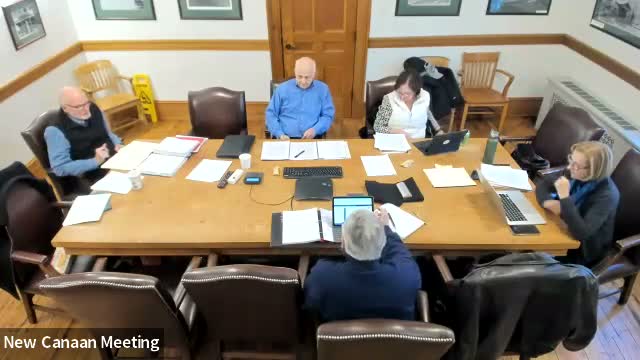
The Charter Revision Commission (Group 1) debated on Jan. 28 whether town boards and commissions should remain appointed or become elected, ultimately agreeing to present a set of ideas to the full commission rather than adopt a single position.
Commissioner Angela Kingston convened the special meeting and the subgroup turned first to a review of draft minutes before launching a substantive discussion of appointed versus elected boards. Joe Paulo, who led portions of the theme discussion, told colleagues that recent materials from Planning & Zoning and public comments by the first selectman had expanded the scope of the conversation and changed the tone of deliberations. "I reserved the right to submit a separate report," Paulo said, explaining he might write independently because he felt the new information materially altered the group’s earlier work.
Members wrestled with practical trade-offs. Supporters of elected boards said elections could broaden representation; opponents warned that technical or time-consuming positions might deter qualified candidates if they had to run for office. Commissioners noted state statutes do not explicitly prohibit mixed appointed/elected models but do not provide a blueprint for transition, making any move toward elections legally and administratively complex.
Rather than draft a single, binding position, the group agreed to carry several ideas to the full CRC for discussion. Those ideas include recommending a lower ceiling for maximum party representation on appointed bodies (for example, a limit at or below a bare majority) and recommending that the appointment process be formalized by ordinance and involve the full Board of Selectmen. The motion to raise these ideas with the full commission was moved and seconded, and the group recorded their support to forward them for broader consideration.
Members also discussed non-charter options to improve inclusivity: an ordinance or standard appointment process that would require public notice, candidate CVs, an application timeline, and review by the full Board of Selectmen, measures intended to make appointments more transparent and to give unaffiliated candidates better access.
The subgroup asked staff to invite additional witnesses — the town clerk and treasurer were mentioned — and scheduled further discussion at the full Commission meeting. The panel also agreed to hold structured interviews (including with the parking commission and the WPCA) to gather more operational detail before recommending any charter edits.
At the end of the session the group confirmed it would present the discussed ideas to the full CRC for review and possible drafting work; one member reiterated he might file a separate position paper.
The subgroup approved its Jan. 21 minutes earlier in the meeting and closed after agreeing next steps and scheduling follow-ups.
Commissioner Angela Kingston convened the special meeting and the subgroup turned first to a review of draft minutes before launching a substantive discussion of appointed versus elected boards. Joe Paulo, who led portions of the theme discussion, told colleagues that recent materials from Planning & Zoning and public comments by the first selectman had expanded the scope of the conversation and changed the tone of deliberations. "I reserved the right to submit a separate report," Paulo said, explaining he might write independently because he felt the new information materially altered the group’s earlier work.
Members wrestled with practical trade-offs. Supporters of elected boards said elections could broaden representation; opponents warned that technical or time-consuming positions might deter qualified candidates if they had to run for office. Commissioners noted state statutes do not explicitly prohibit mixed appointed/elected models but do not provide a blueprint for transition, making any move toward elections legally and administratively complex.
Rather than draft a single, binding position, the group agreed to carry several ideas to the full CRC for discussion. Those ideas include recommending a lower ceiling for maximum party representation on appointed bodies (for example, a limit at or below a bare majority) and recommending that the appointment process be formalized by ordinance and involve the full Board of Selectmen. The motion to raise these ideas with the full commission was moved and seconded, and the group recorded their support to forward them for broader consideration.
Members also discussed non-charter options to improve inclusivity: an ordinance or standard appointment process that would require public notice, candidate CVs, an application timeline, and review by the full Board of Selectmen, measures intended to make appointments more transparent and to give unaffiliated candidates better access.
The subgroup asked staff to invite additional witnesses — the town clerk and treasurer were mentioned — and scheduled further discussion at the full Commission meeting. The panel also agreed to hold structured interviews (including with the parking commission and the WPCA) to gather more operational detail before recommending any charter edits.
At the end of the session the group confirmed it would present the discussed ideas to the full CRC for review and possible drafting work; one member reiterated he might file a separate position paper.
The subgroup approved its Jan. 21 minutes earlier in the meeting and closed after agreeing next steps and scheduling follow-ups.
Don't Miss a Word: See the Full Meeting!
Go beyond summaries. Unlock every video, transcript, and key insight with a Founder Membership.
✓
Get instant access to full meeting videos
✓
Search and clip any phrase from complete transcripts
✓
Receive AI-powered summaries & custom alerts
✓
Enjoy lifetime, unrestricted access to government data
30-day money-back guarantee
