Lebanon outlines pre-allocation deals, capacity targets and timeline tied to LEAP growth
January 27, 2026 | Lebanon City, Boone County, Indiana
This article was created by AI summarizing key points discussed. AI makes mistakes, so for full details and context, please refer to the video of the full meeting. Please report any errors so we can fix them. Report an error »
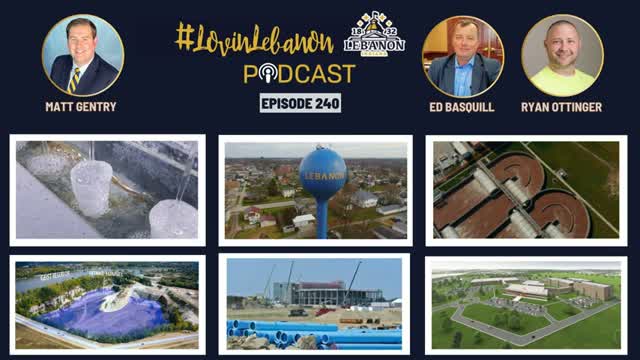
Lebanon Mayor Matt Gentry and utilities officials described how the city is managing limited water resources to accommodate planned growth in the LEAP district and across the city, including pre-allocation agreements for developers and a multi-stage capacity expansion tied to water purchased from Citizens.
"We put people's names on gallons of water in our tank," Mayor Matt Gentry said, explaining the pre-allocation approach. Under the model described on the podcast, a developer signs a pre-allocation agreement with a 10% refundable deposit to reserve capacity; water is only made available once Citizens delivers supply and the city has completed its own infrastructure upgrades.
Water/Wastewater Operations Manager Ryan Ottinger provided the project timeline and capacity figures cited on the podcast: an initial 2 million gallons per day (MGD) of purchased water is due by 01/01/2027; a 2-million-gallon storage tower is under construction; a phase-2 preliminary engineering report would bring an additional 8 MGD with a target delivery of 01/01/2028; and officials said peak flow capacity increases are planned through 01/01/2031, when the system's additional peak flow could reach roughly 25 MGD above current levels. Ottinger emphasized that the city currently treats about 4.6 MGD and said the near-term expansion will allow the city to serve up to 9.6 MGD "at no cost to the civil rate payers."
Officials said the pre-allocation agreements are intended to permit developers to plan construction timelines while protecting existing residents. "If the water is not ready by [the deadline], then part of the agreement is that it is not going to be available," Ottinger said, adding that developers cannot turn on their faucets until the water is added to the system. City staff said utility service-board and city-council approvals govern allocation decisions and that escrowed deposits protect the system from speculative claims on capacity.
The podcast also addressed concerns about right-of-way acquisition, eminent domain and compensation. Mayor Gentry said those are formal legal processes used only for public-purpose projects and that property owners are compensated when right-of-way is acquired. Officials encouraged developers and residents to review the utilities' published engineering reports and to contact the utility with project-specific questions.
"We put people's names on gallons of water in our tank," Mayor Matt Gentry said, explaining the pre-allocation approach. Under the model described on the podcast, a developer signs a pre-allocation agreement with a 10% refundable deposit to reserve capacity; water is only made available once Citizens delivers supply and the city has completed its own infrastructure upgrades.
Water/Wastewater Operations Manager Ryan Ottinger provided the project timeline and capacity figures cited on the podcast: an initial 2 million gallons per day (MGD) of purchased water is due by 01/01/2027; a 2-million-gallon storage tower is under construction; a phase-2 preliminary engineering report would bring an additional 8 MGD with a target delivery of 01/01/2028; and officials said peak flow capacity increases are planned through 01/01/2031, when the system's additional peak flow could reach roughly 25 MGD above current levels. Ottinger emphasized that the city currently treats about 4.6 MGD and said the near-term expansion will allow the city to serve up to 9.6 MGD "at no cost to the civil rate payers."
Officials said the pre-allocation agreements are intended to permit developers to plan construction timelines while protecting existing residents. "If the water is not ready by [the deadline], then part of the agreement is that it is not going to be available," Ottinger said, adding that developers cannot turn on their faucets until the water is added to the system. City staff said utility service-board and city-council approvals govern allocation decisions and that escrowed deposits protect the system from speculative claims on capacity.
The podcast also addressed concerns about right-of-way acquisition, eminent domain and compensation. Mayor Gentry said those are formal legal processes used only for public-purpose projects and that property owners are compensated when right-of-way is acquired. Officials encouraged developers and residents to review the utilities' published engineering reports and to contact the utility with project-specific questions.
View the Full Meeting & All Its Details
This article offers just a summary. Unlock complete video, transcripts, and insights as a Founder Member.
✓
Watch full, unedited meeting videos
✓
Search every word spoken in unlimited transcripts
✓
AI summaries & real-time alerts (all government levels)
✓
Permanent access to expanding government content
30-day money-back guarantee
