Committee advances substitute allowing suits against firearm industry members who create a 'public nuisance'
January 28, 2026 | 2026 Legislature VA, Virginia
This article was created by AI summarizing key points discussed. AI makes mistakes, so for full details and context, please refer to the video of the full meeting. Please report any errors so we can fix them. Report an error »
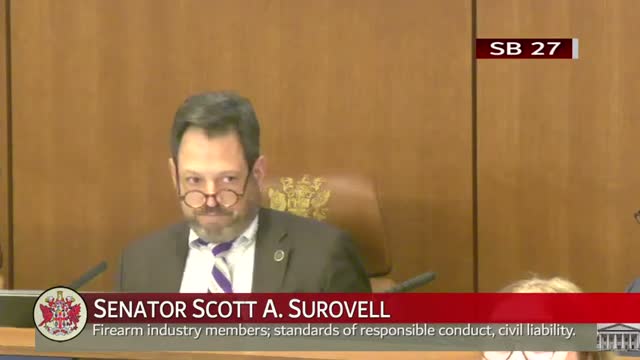
Sen. Carol Foy presented a substitute Jan. 28 that would make certain firearm industry members subject to civil liability if their manufacture, sale, distribution or marketing of firearms contributes to a public nuisance or otherwise violates the Virginia Consumer Protection Act. The stated intent is to create standards of responsible industry conduct and to permit civil suits where courts find a nexus between industry misconduct and downstream harm.
During an extended hearing, committee members asked for concrete examples of conduct that could trigger liability. Sponsor and supporters pointed to industry actions the committee characterized as preventable — such as failing to adopt readily available theft‑mitigating technologies, selling unusually high volumes to suspicious retail outlets, lax security at dealers, or marketing that attracts youth — and said courts would make proximate‑cause determinations. Opponents, including the NRA and Virginia Citizens Defense League, warned the substitute was sweeping, would chill lawful commerce and invite meritless suits that could raise insurance costs and drive businesses from Virginia.
The substitute preserves defenses when an industry member complies with state and federal law and follows industry standards; supporters said that would limit liability where manufacturers and sellers act responsibly. The committee’s public record shows substantial, divided testimony: victims‑advocacy and public‑health groups supported the measure while trade groups and pro‑gun organizations opposed it.
After wide public comment and discussion about whether the substitute would overreach, the committee voted to report the measure and refer it to Finance. Sponsors and critics signaled further drafting and legal work will follow in Finance and on the floor to tighten standards such as the definitions of ‘‘reasonable controls,’’ the applicable statutory predicates and how courts should assess proximate cause.
Next steps: Finance will receive the bill for a fiscal impact review and committees will likely continue negotiations on liability standards and exemptions for law‑enforcement and military procurement. Supporters say the substitute restores a legal remedy where negligence in manufacturing, marketing, or distribution contributes materially to predictable harms; opponents say the plan improperly shifts liability for criminal misuse away from the actor who committed the crime.
During an extended hearing, committee members asked for concrete examples of conduct that could trigger liability. Sponsor and supporters pointed to industry actions the committee characterized as preventable — such as failing to adopt readily available theft‑mitigating technologies, selling unusually high volumes to suspicious retail outlets, lax security at dealers, or marketing that attracts youth — and said courts would make proximate‑cause determinations. Opponents, including the NRA and Virginia Citizens Defense League, warned the substitute was sweeping, would chill lawful commerce and invite meritless suits that could raise insurance costs and drive businesses from Virginia.
The substitute preserves defenses when an industry member complies with state and federal law and follows industry standards; supporters said that would limit liability where manufacturers and sellers act responsibly. The committee’s public record shows substantial, divided testimony: victims‑advocacy and public‑health groups supported the measure while trade groups and pro‑gun organizations opposed it.
After wide public comment and discussion about whether the substitute would overreach, the committee voted to report the measure and refer it to Finance. Sponsors and critics signaled further drafting and legal work will follow in Finance and on the floor to tighten standards such as the definitions of ‘‘reasonable controls,’’ the applicable statutory predicates and how courts should assess proximate cause.
Next steps: Finance will receive the bill for a fiscal impact review and committees will likely continue negotiations on liability standards and exemptions for law‑enforcement and military procurement. Supporters say the substitute restores a legal remedy where negligence in manufacturing, marketing, or distribution contributes materially to predictable harms; opponents say the plan improperly shifts liability for criminal misuse away from the actor who committed the crime.
Don't Miss a Word: See the Full Meeting!
Go beyond summaries. Unlock every video, transcript, and key insight with a Founder Membership.
✓
Get instant access to full meeting videos
✓
Search and clip any phrase from complete transcripts
✓
Receive AI-powered summaries & custom alerts
✓
Enjoy lifetime, unrestricted access to government data
30-day money-back guarantee
