House subcommittee approves bill limiting premature separation and hybridization of captive exotic mammals
January 28, 2026 | 2026 Legislature VA, Virginia
This article was created by AI summarizing key points discussed. AI makes mistakes, so for full details and context, please refer to the video of the full meeting. Please report any errors so we can fix them. Report an error »
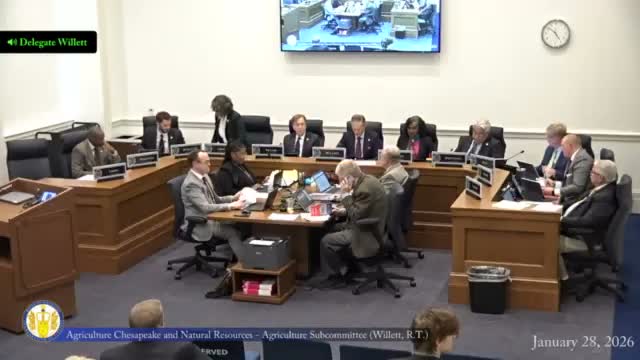
A House subcommittee on Thursday approved a substitute to HB 112 that would make it unlawful to separate exotic mammalian wildlife offspring born in captivity from their mothers before they reach four months of age and would prohibit intentional commercial hybridization of such mammals.
Sponsor Delegate Lawford presented the substitute as narrowly tailored to curb exploitation by “bad actors” in roadside zoos and private trade, saying the bill “makes it unlawful to prematurely separate any exotic mammalian wildlife offspring born in captivity from the mother before they turn 4 months old.” The substitute creates enumerated exemptions for emergency medical care, accredited zoological institutions, licensed wildlife rehabilitators and scientific research approved by the Department of Wildlife Resources and institutions of higher education.
Supporters including the Virginia Veterinary Medical Association and animal‑welfare groups described the proposal as a welfare measure. “These mammals are especially exploited because of their need for parental care,” said Kelly Gotchalk of the Virginia Veterinary Medical Association, who said decades of veterinary and zoo experience informed the association’s support.
Opponents — representing private exotic‑animal owners, zookeeping organizations and animal‑interest alliances — urged caution and asked the committee to revise enforcement provisions. Abbott Hoffman of the American Federation of Agriculture said the bill’s four‑month restriction could affect veterans and therapeutic programs; Heidi Kroske of the Virginia Animal Owners Alliance warned it could unfairly single out private owners and asked what enforcement would look like.
The substitute preserves multiple narrow exemptions. Lawford emphasized the change is aimed at “rooting out bad actors” and does not outlaw necessary neonatal care, while sponsor supporters noted the measure had been revised to clarify exceptions for medical necessity and research.
The committee voted to report HB 112 as substituted by a roll‑call vote of 8 in favor and 2 opposed. The report sends the substitute forward with the committee’s recommendation.
The next step is consideration by the full committee; the substitute does not take effect until enacted into law and may be subject to further amendment.
Sponsor Delegate Lawford presented the substitute as narrowly tailored to curb exploitation by “bad actors” in roadside zoos and private trade, saying the bill “makes it unlawful to prematurely separate any exotic mammalian wildlife offspring born in captivity from the mother before they turn 4 months old.” The substitute creates enumerated exemptions for emergency medical care, accredited zoological institutions, licensed wildlife rehabilitators and scientific research approved by the Department of Wildlife Resources and institutions of higher education.
Supporters including the Virginia Veterinary Medical Association and animal‑welfare groups described the proposal as a welfare measure. “These mammals are especially exploited because of their need for parental care,” said Kelly Gotchalk of the Virginia Veterinary Medical Association, who said decades of veterinary and zoo experience informed the association’s support.
Opponents — representing private exotic‑animal owners, zookeeping organizations and animal‑interest alliances — urged caution and asked the committee to revise enforcement provisions. Abbott Hoffman of the American Federation of Agriculture said the bill’s four‑month restriction could affect veterans and therapeutic programs; Heidi Kroske of the Virginia Animal Owners Alliance warned it could unfairly single out private owners and asked what enforcement would look like.
The substitute preserves multiple narrow exemptions. Lawford emphasized the change is aimed at “rooting out bad actors” and does not outlaw necessary neonatal care, while sponsor supporters noted the measure had been revised to clarify exceptions for medical necessity and research.
The committee voted to report HB 112 as substituted by a roll‑call vote of 8 in favor and 2 opposed. The report sends the substitute forward with the committee’s recommendation.
The next step is consideration by the full committee; the substitute does not take effect until enacted into law and may be subject to further amendment.
Don't Miss a Word: See the Full Meeting!
Go beyond summaries. Unlock every video, transcript, and key insight with a Founder Membership.
✓
Get instant access to full meeting videos
✓
Search and clip any phrase from complete transcripts
✓
Receive AI-powered summaries & custom alerts
✓
Enjoy lifetime, unrestricted access to government data
30-day money-back guarantee
