St. Joseph County Council tables vote on proposed regional land bank after extended Q&A
January 28, 2026 | St. Joseph County, Indiana
This article was created by AI summarizing key points discussed. AI makes mistakes, so for full details and context, please refer to the video of the full meeting. Please report any errors so we can fix them. Report an error »
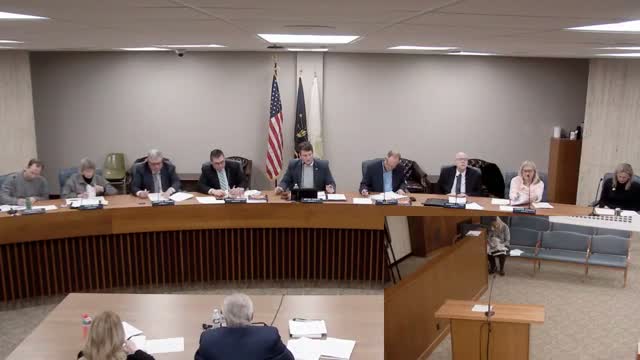
Commissioner Rafael Morton urged the St. Joseph County Council to back a proposal to join a regional land bank aimed at returning vacant and abandoned properties to productive use, saying the initiative would leverage a Lilly Endowment-funded regional housing collaborative and private foundation support. "I stand before you in strong support of the ordinance and resolution establishing a regional land bank in partnership with MACOG, the Community Foundation of St. Joseph County and the city of South Bend," Morton said.
James Turnwold, speaking for the project team and Michiana Area Council of Governments (MACOG), described how the land bank would acquire properties (including some already owned by municipalities), stabilize them and list them on a public website for vetted buyers. He said the initiative is part of a roughly $20 million Lilly Endowment investment in a regional housing collaborative and that about $1,000,000 of that award is designated for the land bank over five years.
Turnwold and other presenters acknowledged council concerns about legal and title costs for clearing problematic parcels. "We have put forward a proposal that would relook at how [legal costs] are specifically mentioned within the agreement," the presenter said, describing an approach where commissioners could set an annual limit that could be $0 or a higher amount and the land bank would cover costs beyond that limit.
Several council members pressed for specifics on likely legal-fee exposure, the number of initial parcels and whether private developers support the tool. MACOG said an initial tranche could include roughly 60 municipally owned parcels (about 20 county-owned and 40 city-owned) that typically do not require title work, and that for additional parcels an estimated 3–5 of every 20 might need extra title/legal work. Presenters said the land bank aims to intervene strategically, not on every tax sale parcel, and to reduce ongoing municipal maintenance and enforcement costs.
At least one member of the public, Michael McManus of South Bend, voiced strong support: "This resolution seems to be a win win win proposition," he said, urging the council to accept the private investment. Supporters, including Commissioner Morton, argued that the land bank could return properties to the tax rolls and create housing affordable at about 80% of area median income for teachers, nurses and first-time buyers.
Opponents and cautious council members asked for more detail on whether municipal contributions or commissioner budget line items would be expected, what minimum annual funding would look like, and whether a county contribution is required to make the program viable. Councilman Schetzel said he would prefer more information and moved to table the resolution for one month "to gather and understand this final layer of information." Councilman Catanzarite seconded.
The motion to table Bill 88-25 passed 6–3, postponing a final vote to the council's next public hearing to allow staff and project partners to return with more precise figures on legal exposures, developer commitments and operational details. A companion ordinance (Bill 87-25) adopting provisions of Indiana Code 6-1.1-46 was likewise tabled to the February hearing by a 7–2 vote.
Next steps: project partners will return with additional detail requested by the council; the resolution remains on the agenda for the next public hearing.
James Turnwold, speaking for the project team and Michiana Area Council of Governments (MACOG), described how the land bank would acquire properties (including some already owned by municipalities), stabilize them and list them on a public website for vetted buyers. He said the initiative is part of a roughly $20 million Lilly Endowment investment in a regional housing collaborative and that about $1,000,000 of that award is designated for the land bank over five years.
Turnwold and other presenters acknowledged council concerns about legal and title costs for clearing problematic parcels. "We have put forward a proposal that would relook at how [legal costs] are specifically mentioned within the agreement," the presenter said, describing an approach where commissioners could set an annual limit that could be $0 or a higher amount and the land bank would cover costs beyond that limit.
Several council members pressed for specifics on likely legal-fee exposure, the number of initial parcels and whether private developers support the tool. MACOG said an initial tranche could include roughly 60 municipally owned parcels (about 20 county-owned and 40 city-owned) that typically do not require title work, and that for additional parcels an estimated 3–5 of every 20 might need extra title/legal work. Presenters said the land bank aims to intervene strategically, not on every tax sale parcel, and to reduce ongoing municipal maintenance and enforcement costs.
At least one member of the public, Michael McManus of South Bend, voiced strong support: "This resolution seems to be a win win win proposition," he said, urging the council to accept the private investment. Supporters, including Commissioner Morton, argued that the land bank could return properties to the tax rolls and create housing affordable at about 80% of area median income for teachers, nurses and first-time buyers.
Opponents and cautious council members asked for more detail on whether municipal contributions or commissioner budget line items would be expected, what minimum annual funding would look like, and whether a county contribution is required to make the program viable. Councilman Schetzel said he would prefer more information and moved to table the resolution for one month "to gather and understand this final layer of information." Councilman Catanzarite seconded.
The motion to table Bill 88-25 passed 6–3, postponing a final vote to the council's next public hearing to allow staff and project partners to return with more precise figures on legal exposures, developer commitments and operational details. A companion ordinance (Bill 87-25) adopting provisions of Indiana Code 6-1.1-46 was likewise tabled to the February hearing by a 7–2 vote.
Next steps: project partners will return with additional detail requested by the council; the resolution remains on the agenda for the next public hearing.
Don't Miss a Word: See the Full Meeting!
Go beyond summaries. Unlock every video, transcript, and key insight with a Founder Membership.
✓
Get instant access to full meeting videos
✓
Search and clip any phrase from complete transcripts
✓
Receive AI-powered summaries & custom alerts
✓
Enjoy lifetime, unrestricted access to government data
30-day money-back guarantee
