House Finance Committee hears bill to lower mutual thrift tax, members weigh phased cuts and NOL changes
January 28, 2026 | Finance, House of Representatives, Legislative, Pennsylvania
This article was created by AI summarizing key points discussed. AI makes mistakes, so for full details and context, please refer to the video of the full meeting. Please report any errors so we can fix them. Report an error »
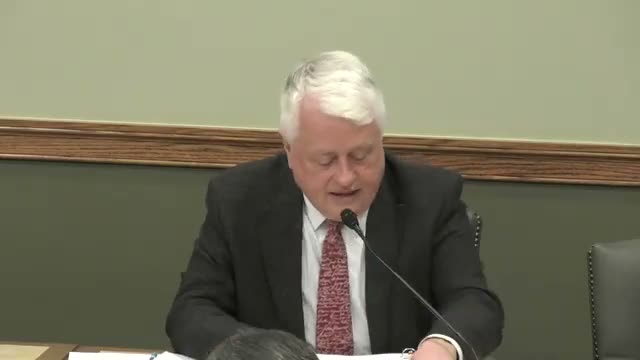
HARRISBURG — Lawmakers on the House Finance Committee on Thursday heard testimony on House Bill 788, a bipartisan proposal to reduce Pennsylvania’s mutual thrift institutions tax and expand net operating loss (NOL) carryforward periods for mutual banks.
Representative Mirsky, the bill’s prime sponsor, said the measure "would address a long standing inequity in how Pennsylvania taxes our mutual thrift institutions," arguing mutual banks are depositor‑owned community lenders that should not face a higher tax burden than other financial institutions.
"These are commonly community based financial institutions, mutual banks, savings banks, savings and loan associations, and building and loan associations that operate very differently from investor owned banks," Mirsky said in opening remarks. The bill would cut the current 11.5% mutual thrift tax to 8.99% immediately and then lower it over nine years to 4.99%, Mirsky said, aligning the final rate with the corporate net income tax rate enacted under Act 53 of 2022.
John Dill, chief executive officer of Marquette Savings Bank in Erie, told the committee mutuals play a distinct community role and that the tax puts them at a competitive disadvantage. "We don't have shareholders," Dill said, arguing mutuals' limited funding sources and community focus make the 11.5% rate onerous. Dill described community services Marquette provides — fraud prevention interventions, a $8.5 million Innovation Learning Center with public programming, volunteer hours and annual charitable giving — and said lower taxes would free funds for similar local programs.
"We need your help, not a lot, but a little," Dill said. He also described a youth financial literacy initiative called EmpoweredU that the bank launched and said it costs about $40,000 to run.
Chuck Marson, a certified public accountant at Snodgrass, told the committee Pennsylvania’s mutual thrift tax has not been materially updated since its enactment in 1964 and "the current mutual thrift institution rate is 11 and a half percent." Marson contrasted that with the corporate net income tax, which he said is scheduled to fall to 4.99% by 2031, and with bank shares tax rates that he described as substantially lower. He highlighted a second disparity: thrifts currently can carry forward NOLs for only three years, while other businesses generally have longer carryforward periods.
Committee members probed the policy tradeoffs and fiscal effects. Chairman Samuelson noted Department of Revenue materials in the committee packet showing recent mutual thrift tax receipts in the range of about $15 million to $38 million in recent years and an estimated fiscal impact for HB 788 of roughly $7.5 million to $9 million in the early years and about $13 million to $14 million by roughly five years after enactment.
Representative Fritz asked whether lower tax rates might encourage more mutuals to form; Dill and Marson said a more favorable tax environment could help de novo formation but is not the only factor. Representative Harris asked whether savings could be used for customer relief such as student loans; Dill said mutuals typically emphasize mortgage and deposit products but that lower taxes could free dollars for community programs and financial literacy.
Members also discussed proposed amendments. The committee said it would consider moving the bill’s first rate reduction step to 2026 (from 2025 in the draft) and an amendment to change the NOL carryforward in the bill from the drafted 10 years to 6 years; Marson said a 6‑year carryforward "would certainly help in the area of de novo banks," while noting it would still fall short of many states and federal practice.
The committee did not take a vote at the hearing. Chairman Samuelson reminded members the amendment filing deadline would be 24 hours before a future vote, announced the committee’s next scheduled meeting for Wednesday, Feb. 4, and adjourned the hearing.
What happens next: The committee will accept amendments ahead of a future vote; the committee packet includes Department of Revenue estimates for the bill’s projected fiscal impact.
Representative Mirsky, the bill’s prime sponsor, said the measure "would address a long standing inequity in how Pennsylvania taxes our mutual thrift institutions," arguing mutual banks are depositor‑owned community lenders that should not face a higher tax burden than other financial institutions.
"These are commonly community based financial institutions, mutual banks, savings banks, savings and loan associations, and building and loan associations that operate very differently from investor owned banks," Mirsky said in opening remarks. The bill would cut the current 11.5% mutual thrift tax to 8.99% immediately and then lower it over nine years to 4.99%, Mirsky said, aligning the final rate with the corporate net income tax rate enacted under Act 53 of 2022.
John Dill, chief executive officer of Marquette Savings Bank in Erie, told the committee mutuals play a distinct community role and that the tax puts them at a competitive disadvantage. "We don't have shareholders," Dill said, arguing mutuals' limited funding sources and community focus make the 11.5% rate onerous. Dill described community services Marquette provides — fraud prevention interventions, a $8.5 million Innovation Learning Center with public programming, volunteer hours and annual charitable giving — and said lower taxes would free funds for similar local programs.
"We need your help, not a lot, but a little," Dill said. He also described a youth financial literacy initiative called EmpoweredU that the bank launched and said it costs about $40,000 to run.
Chuck Marson, a certified public accountant at Snodgrass, told the committee Pennsylvania’s mutual thrift tax has not been materially updated since its enactment in 1964 and "the current mutual thrift institution rate is 11 and a half percent." Marson contrasted that with the corporate net income tax, which he said is scheduled to fall to 4.99% by 2031, and with bank shares tax rates that he described as substantially lower. He highlighted a second disparity: thrifts currently can carry forward NOLs for only three years, while other businesses generally have longer carryforward periods.
Committee members probed the policy tradeoffs and fiscal effects. Chairman Samuelson noted Department of Revenue materials in the committee packet showing recent mutual thrift tax receipts in the range of about $15 million to $38 million in recent years and an estimated fiscal impact for HB 788 of roughly $7.5 million to $9 million in the early years and about $13 million to $14 million by roughly five years after enactment.
Representative Fritz asked whether lower tax rates might encourage more mutuals to form; Dill and Marson said a more favorable tax environment could help de novo formation but is not the only factor. Representative Harris asked whether savings could be used for customer relief such as student loans; Dill said mutuals typically emphasize mortgage and deposit products but that lower taxes could free dollars for community programs and financial literacy.
Members also discussed proposed amendments. The committee said it would consider moving the bill’s first rate reduction step to 2026 (from 2025 in the draft) and an amendment to change the NOL carryforward in the bill from the drafted 10 years to 6 years; Marson said a 6‑year carryforward "would certainly help in the area of de novo banks," while noting it would still fall short of many states and federal practice.
The committee did not take a vote at the hearing. Chairman Samuelson reminded members the amendment filing deadline would be 24 hours before a future vote, announced the committee’s next scheduled meeting for Wednesday, Feb. 4, and adjourned the hearing.
What happens next: The committee will accept amendments ahead of a future vote; the committee packet includes Department of Revenue estimates for the bill’s projected fiscal impact.
View the Full Meeting & All Its Details
This article offers just a summary. Unlock complete video, transcripts, and insights as a Founder Member.
✓
Watch full, unedited meeting videos
✓
Search every word spoken in unlimited transcripts
✓
AI summaries & real-time alerts (all government levels)
✓
Permanent access to expanding government content
30-day money-back guarantee
