Audit: Kansas property tax exemptions cost counties about $1 billion in 2024; universities hold $4.4 billion exempt
January 27, 2026 | Assessment and Taxation, Standing, Senate, Committees, Legislative, Kansas
This article was created by AI summarizing key points discussed. AI makes mistakes, so for full details and context, please refer to the video of the full meeting. Please report any errors so we can fix them. Report an error »
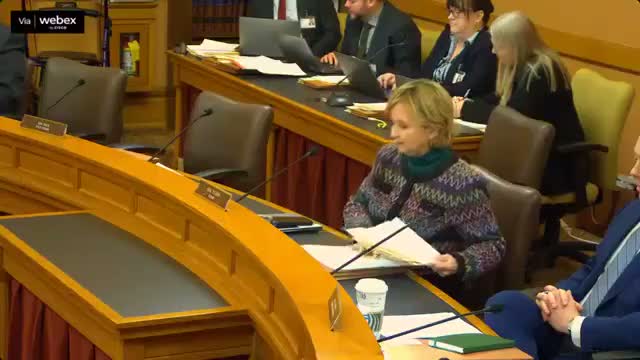
Sam Dads, a senior auditor with Legislative Post Audit, told the Senate Assessment and Taxation Committee that real property tax exemptions led counties to forgo an estimated $1,000,000,000 in tax revenue in 2024 and the state to forgo about $12,000,000.
Dads said auditors focused on real property and calculated estimates by combining county property-tax records with Department of Revenue reports to determine average assessment rates and mill levies by county. He cautioned that the method requires assumptions because exempt properties lack comparable taxable uses: “These types of analysis require substantial assumptions about assessment rates and mill levies for exempt property, because these properties aren’t used for taxable purposes,” he said.
The audit found systemic data and coding problems that limit more granular analysis. Auditors reviewed 64 exemption statutes but said county exemption codes in the KDOR/CADOR data were often missing, inconsistent or incorrect, and about 7% of exempt property statewide had a blank exemption code in the data the auditors reviewed. Dads said problems include properties qualifying under multiple exemptions, some statutes mapped to multiple codes and county-level changes that do not match BOTA orders. Those issues prevent a reliable estimate of foregone revenue by exemption type.
Auditors also reported that the choice of assumptions matters. For example, the team used county-specific average assessment rates but noted that if a universal 25% assessment rate used for commercial property were applied (as in an alternative analysis presented elsewhere), the estimate would increase by about $700,000,000.
The audit also examined property owned by Kansas’s seven public universities and their foundations. Dads said the universities and foundations owned about $4,500,000,000 in real property in 2024 and about $4,400,000,000 of that value was tax exempt; universities held roughly 97% of the exempt value, foundations the remaining 3 percent. However, auditors could not determine how much of the exempt university property had been donated because most universities do not track acquisition source.
The report includes two recommendations: KDOR/CADOR should include values for industrial revenue bond (IRB) and economic development (EDX) exemption codes in the statistical report of property assessment and taxation, and the Legislature should consider reviewing and repealing outdated exemption statutes the auditors identified.
Committee members urged follow-up. The chair asked for a county-by-county breakdown of excluded incentive programs (TIFs, CIDs, RHIDs); Bob Kim of the Division of Property Evaluation said a similar report was in progress that would include IRBs and TIFs but that CID data were unavailable and RHID coding had just been implemented for the 2026 tax year.
What’s next: auditors asked KDOR to improve coding and reporting; the committee requested the county-level breakdown from the Division of Property Evaluation for further review.
Dads said auditors focused on real property and calculated estimates by combining county property-tax records with Department of Revenue reports to determine average assessment rates and mill levies by county. He cautioned that the method requires assumptions because exempt properties lack comparable taxable uses: “These types of analysis require substantial assumptions about assessment rates and mill levies for exempt property, because these properties aren’t used for taxable purposes,” he said.
The audit found systemic data and coding problems that limit more granular analysis. Auditors reviewed 64 exemption statutes but said county exemption codes in the KDOR/CADOR data were often missing, inconsistent or incorrect, and about 7% of exempt property statewide had a blank exemption code in the data the auditors reviewed. Dads said problems include properties qualifying under multiple exemptions, some statutes mapped to multiple codes and county-level changes that do not match BOTA orders. Those issues prevent a reliable estimate of foregone revenue by exemption type.
Auditors also reported that the choice of assumptions matters. For example, the team used county-specific average assessment rates but noted that if a universal 25% assessment rate used for commercial property were applied (as in an alternative analysis presented elsewhere), the estimate would increase by about $700,000,000.
The audit also examined property owned by Kansas’s seven public universities and their foundations. Dads said the universities and foundations owned about $4,500,000,000 in real property in 2024 and about $4,400,000,000 of that value was tax exempt; universities held roughly 97% of the exempt value, foundations the remaining 3 percent. However, auditors could not determine how much of the exempt university property had been donated because most universities do not track acquisition source.
The report includes two recommendations: KDOR/CADOR should include values for industrial revenue bond (IRB) and economic development (EDX) exemption codes in the statistical report of property assessment and taxation, and the Legislature should consider reviewing and repealing outdated exemption statutes the auditors identified.
Committee members urged follow-up. The chair asked for a county-by-county breakdown of excluded incentive programs (TIFs, CIDs, RHIDs); Bob Kim of the Division of Property Evaluation said a similar report was in progress that would include IRBs and TIFs but that CID data were unavailable and RHID coding had just been implemented for the 2026 tax year.
What’s next: auditors asked KDOR to improve coding and reporting; the committee requested the county-level breakdown from the Division of Property Evaluation for further review.
View the Full Meeting & All Its Details
This article offers just a summary. Unlock complete video, transcripts, and insights as a Founder Member.
✓
Watch full, unedited meeting videos
✓
Search every word spoken in unlimited transcripts
✓
AI summaries & real-time alerts (all government levels)
✓
Permanent access to expanding government content
30-day money-back guarantee
