Kansas revenue committee hears that digital license‑plate conversion drove sustained demand and higher production costs
January 28, 2026 | Assessment and Taxation, Standing, Senate, Committees, Legislative, Kansas
This article was created by AI summarizing key points discussed. AI makes mistakes, so for full details and context, please refer to the video of the full meeting. Please report any errors so we can fix them. Report an error »
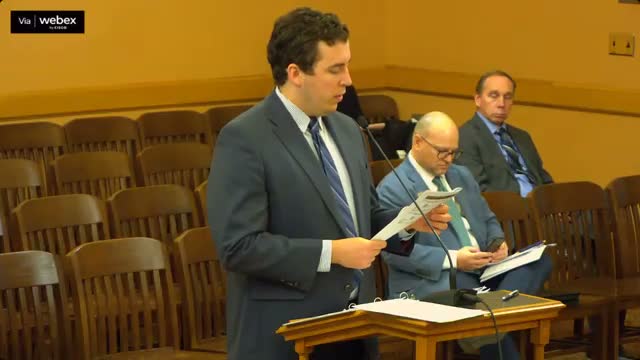
The Kansas Senate Committee on Assessment and Taxation was told that a statewide replacement of embossed license plates with digitally printed plates, begun in March 2024 and initially funded with ARPA dollars, produced an enduring increase in demand that pushed production costs well above budgeted levels.
"The previous average prior to this replacement program was about 44,000 plates produced each month and is currently averaging at about 64,000 plates produced each month," the committee heard from the fiscal analyst presenting the Department of Revenue materials. Analysts showed production spikes into the hundreds of thousands during the conversion window and a sustained elevation afterward.
Secretary of Revenue Mark Burkhart told legislators that while a digitally printed plate is cheaper per unit than an embossed plate, the overall volume has risen roughly 50 percent since the conversion. "We're 50% higher," Burkhart said, adding that more specialty plate options and more frequent replacement requests contributed to the surge.
The department requested three supplemental allocations charged to the Division of Vehicles Operating Fund: $920,000 to address a legislative pay shortfall tied to prior legislation, $4,000,000 for increased production costs associated with the digital plate conversion and distribution, and $2,500,000 for contractual services to cover implementation costs for driver's licenses and ID cards. Committee materials show the Division of Vehicles Operating Fund pays production, postage and material costs while proceeds from many specialty plate fees flow to the State Highway Fund or counties.
Committee members probed whether the projected long-term savings from the conversion materialized; officials said the per‑plate cost savings did not offset the higher-than-expected volume of orders. The department also noted that counties place plate orders and the department is statutorily obligated to fulfill those requests.
The committee asked the department for more detailed expenditure and production data; staff agreed to provide line‑item expenditures and registration volume by class. The committee did not take a formal vote on funding during the hearing and directed staff to work the budget at the next session.
The fiscal uncertainty over the Division of Vehicles Operating Fund and the supplemental requests will remain a focus as the committee prepares budget work sessions.
"The previous average prior to this replacement program was about 44,000 plates produced each month and is currently averaging at about 64,000 plates produced each month," the committee heard from the fiscal analyst presenting the Department of Revenue materials. Analysts showed production spikes into the hundreds of thousands during the conversion window and a sustained elevation afterward.
Secretary of Revenue Mark Burkhart told legislators that while a digitally printed plate is cheaper per unit than an embossed plate, the overall volume has risen roughly 50 percent since the conversion. "We're 50% higher," Burkhart said, adding that more specialty plate options and more frequent replacement requests contributed to the surge.
The department requested three supplemental allocations charged to the Division of Vehicles Operating Fund: $920,000 to address a legislative pay shortfall tied to prior legislation, $4,000,000 for increased production costs associated with the digital plate conversion and distribution, and $2,500,000 for contractual services to cover implementation costs for driver's licenses and ID cards. Committee materials show the Division of Vehicles Operating Fund pays production, postage and material costs while proceeds from many specialty plate fees flow to the State Highway Fund or counties.
Committee members probed whether the projected long-term savings from the conversion materialized; officials said the per‑plate cost savings did not offset the higher-than-expected volume of orders. The department also noted that counties place plate orders and the department is statutorily obligated to fulfill those requests.
The committee asked the department for more detailed expenditure and production data; staff agreed to provide line‑item expenditures and registration volume by class. The committee did not take a formal vote on funding during the hearing and directed staff to work the budget at the next session.
The fiscal uncertainty over the Division of Vehicles Operating Fund and the supplemental requests will remain a focus as the committee prepares budget work sessions.
Don't Miss a Word: See the Full Meeting!
Go beyond summaries. Unlock every video, transcript, and key insight with a Founder Membership.
✓
Get instant access to full meeting videos
✓
Search and clip any phrase from complete transcripts
✓
Receive AI-powered summaries & custom alerts
✓
Enjoy lifetime, unrestricted access to government data
30-day money-back guarantee
