Oliver County board examines carbon-capture draft, flags limits of county authority over pipelines and subsurface storage
January 28, 2026 | Oliver County, North Dakota
This article was created by AI summarizing key points discussed. AI makes mistakes, so for full details and context, please refer to the video of the full meeting. Please report any errors so we can fix them. Report an error »
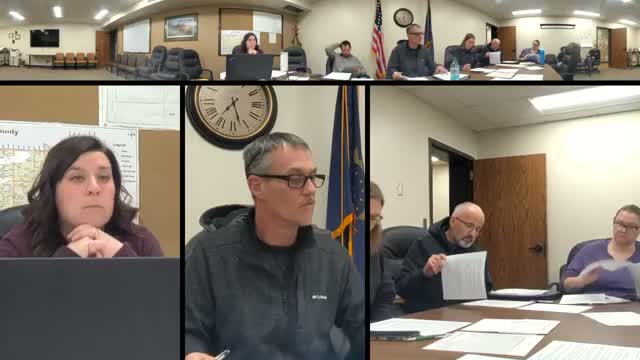
The Oliver County Planning and Zoning board spent substantial time discussing a draft carbon-capture ordinance adapted for local conditions from a Morton County model.
Staff explained the draft contemplates facilities that remove CO2 either directly from air or from point sources and then either sequester it on-site or transport it (by pipeline or truck) for underground storage. Several board members expressed concern that, if captured CO2 is trucked away, the volume of truck traffic could significantly damage county roads and increase maintenance costs.
One member warned that "if they're trucking it somewhere, that would be a big impact to the road system in Oliver County." Members urged adding requirements for project-area maps, communication plans and independent engineer inspections paid by proponents so the county could monitor on-site activity and road impacts.
The board also wrestled with the limits of local authority. Staff said pipelines and subsurface storage are often state-regulated activities and that the county’s clear regulatory reach is over above-ground appurtenances and siting-related standards; restricting transmission or underground sequestration could fall to state agencies or courts. Because of those legal uncertainties the board asked staff to consult the county’s state’s attorney and to return with recommended ordinance language and clearer applicability statements.
Board members proposed tightening applicability language to specify whether below-ground sequestration must occur at or adjacent to the collection facility or could occur elsewhere — the current draft uses a generic phrase about "eventual below ground sequestration" that could permit off-site transport. The board directed staff to revise the draft to clarify whether trucking off-site is permitted and to indicate which provisions the county has authority to regulate versus items that are preempted.
Staff explained the draft contemplates facilities that remove CO2 either directly from air or from point sources and then either sequester it on-site or transport it (by pipeline or truck) for underground storage. Several board members expressed concern that, if captured CO2 is trucked away, the volume of truck traffic could significantly damage county roads and increase maintenance costs.
One member warned that "if they're trucking it somewhere, that would be a big impact to the road system in Oliver County." Members urged adding requirements for project-area maps, communication plans and independent engineer inspections paid by proponents so the county could monitor on-site activity and road impacts.
The board also wrestled with the limits of local authority. Staff said pipelines and subsurface storage are often state-regulated activities and that the county’s clear regulatory reach is over above-ground appurtenances and siting-related standards; restricting transmission or underground sequestration could fall to state agencies or courts. Because of those legal uncertainties the board asked staff to consult the county’s state’s attorney and to return with recommended ordinance language and clearer applicability statements.
Board members proposed tightening applicability language to specify whether below-ground sequestration must occur at or adjacent to the collection facility or could occur elsewhere — the current draft uses a generic phrase about "eventual below ground sequestration" that could permit off-site transport. The board directed staff to revise the draft to clarify whether trucking off-site is permitted and to indicate which provisions the county has authority to regulate versus items that are preempted.
View the Full Meeting & All Its Details
This article offers just a summary. Unlock complete video, transcripts, and insights as a Founder Member.
✓
Watch full, unedited meeting videos
✓
Search every word spoken in unlimited transcripts
✓
AI summaries & real-time alerts (all government levels)
✓
Permanent access to expanding government content
30-day money-back guarantee
