Kansas committee hears SB 355 to require e-cigarette manufacturers to obtain state license
January 27, 2026 | Federal and State Affairs, Standing, Senate, Committees, Legislative, Kansas
This article was created by AI summarizing key points discussed. AI makes mistakes, so for full details and context, please refer to the video of the full meeting. Please report any errors so we can fix them. Report an error »
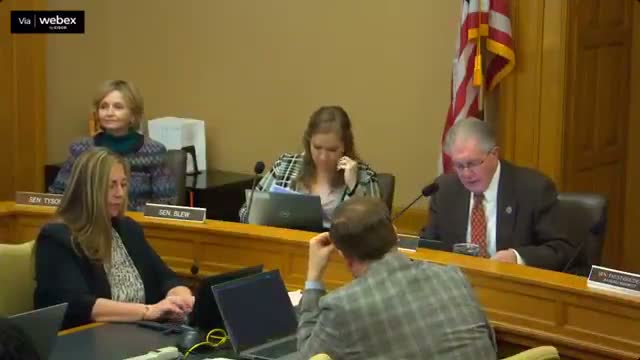
The Senate Committee on Federal and State Affairs on Wednesday heard testimony on Senate Bill 355, which would amend the Kansas Cigarette and Tobacco Products Act to add e-cigarette products and require manufacturers and wholesalers who do business in Kansas to obtain a state license.
Proponents, including David Silvia, senior director of public policy at Altria, said the measure is intended to close an opaque illicit supply chain and strengthen enforcement. "This proposal will help ensure that only licensed manufacturers and wholesalers do business in Kansas and help in addressing the significant problem of illicit made evaporation," Silvia said in proponent testimony, noting the bill creates a new manufacturer license with a $500 annual fee and requires the Department of Revenue to publish lists of licenses that have been suspended or revoked.
Supporters argued that licensing at all points of the supply chain would improve visibility for inspections, audits and tax collection. Brian Post of the nonprofit Fuel True Independent Energy and Convenience told the committee the bill provides "a level playing field" for regulated retailers and would "close a loophole by filling an important gap in our regulatory framework." Several distributors and retailers, including St. Joe Distributing and Checkers Extra, also testified in favor of the bill.
Opponents warned of collateral effects on small independent businesses. Byron McNary, owner of McVapor LLC, told senators the bill would "devastate my industry" because most manufacturers are overseas and would not obtain state licenses, leaving small Kansas shops at a competitive disadvantage. McNary said many shops currently source products through out-of-state distributors and that state tax records and ABC inspections already track e-liquid taxes.
A neutral witness, Nick Reinicker of Inman, said he was "neutral to this bill" and urged careful attention to ingredient transparency and fee parity for small producers; he also raised concerns about large industry influence.
Committee members pressed witnesses on several points. Senators sought clarification that the licensure described in the bill is a single manufacturer's license (not a per-retail-store fee); bill counsel and proponents confirmed the language creates one manufacturer's license and one fee. Committee members also asked whether the bill covers all product formats; David Silvia said the manufacturer definition would include e-liquid producers, pod-system makers and manufacturers of disposable prefilled devices. Proponents noted some products have not sought FDA authorization and said licensed distributors would generally avoid federally unapproved products.
The committee heard practical concerns about product content from Senator Blue, who asked whether illicit products could contain illicit drugs; proponents replied that unregulated imports pose unknown risks and that licensing and FDA review reduce those risks. Witnesses estimated the global e-vapor export market to China at roughly $5,000,000,000, cited as context for illicit supply chains entering U.S. markets.
No bill vote was taken on SB 355 during the hearing; the committee heard multiple proponents and opponents and said it would "work" the bill further at a later time. Committee staff noted a minor fiscal note in the packet. The chairman closed the SB 355 hearing and moved on to other committee business.
Next steps: the committee did not take a final action on SB 355 during this meeting; sponsors indicated additional work on amendments and follow-up may occur before further committee action.
Proponents, including David Silvia, senior director of public policy at Altria, said the measure is intended to close an opaque illicit supply chain and strengthen enforcement. "This proposal will help ensure that only licensed manufacturers and wholesalers do business in Kansas and help in addressing the significant problem of illicit made evaporation," Silvia said in proponent testimony, noting the bill creates a new manufacturer license with a $500 annual fee and requires the Department of Revenue to publish lists of licenses that have been suspended or revoked.
Supporters argued that licensing at all points of the supply chain would improve visibility for inspections, audits and tax collection. Brian Post of the nonprofit Fuel True Independent Energy and Convenience told the committee the bill provides "a level playing field" for regulated retailers and would "close a loophole by filling an important gap in our regulatory framework." Several distributors and retailers, including St. Joe Distributing and Checkers Extra, also testified in favor of the bill.
Opponents warned of collateral effects on small independent businesses. Byron McNary, owner of McVapor LLC, told senators the bill would "devastate my industry" because most manufacturers are overseas and would not obtain state licenses, leaving small Kansas shops at a competitive disadvantage. McNary said many shops currently source products through out-of-state distributors and that state tax records and ABC inspections already track e-liquid taxes.
A neutral witness, Nick Reinicker of Inman, said he was "neutral to this bill" and urged careful attention to ingredient transparency and fee parity for small producers; he also raised concerns about large industry influence.
Committee members pressed witnesses on several points. Senators sought clarification that the licensure described in the bill is a single manufacturer's license (not a per-retail-store fee); bill counsel and proponents confirmed the language creates one manufacturer's license and one fee. Committee members also asked whether the bill covers all product formats; David Silvia said the manufacturer definition would include e-liquid producers, pod-system makers and manufacturers of disposable prefilled devices. Proponents noted some products have not sought FDA authorization and said licensed distributors would generally avoid federally unapproved products.
The committee heard practical concerns about product content from Senator Blue, who asked whether illicit products could contain illicit drugs; proponents replied that unregulated imports pose unknown risks and that licensing and FDA review reduce those risks. Witnesses estimated the global e-vapor export market to China at roughly $5,000,000,000, cited as context for illicit supply chains entering U.S. markets.
No bill vote was taken on SB 355 during the hearing; the committee heard multiple proponents and opponents and said it would "work" the bill further at a later time. Committee staff noted a minor fiscal note in the packet. The chairman closed the SB 355 hearing and moved on to other committee business.
Next steps: the committee did not take a final action on SB 355 during this meeting; sponsors indicated additional work on amendments and follow-up may occur before further committee action.
Don't Miss a Word: See the Full Meeting!
Go beyond summaries. Unlock every video, transcript, and key insight with a Founder Membership.
✓
Get instant access to full meeting videos
✓
Search and clip any phrase from complete transcripts
✓
Receive AI-powered summaries & custom alerts
✓
Enjoy lifetime, unrestricted access to government data
30-day money-back guarantee
