Kansas committee hears bill to add digital assets to unclaimed property rules, create Bitcoin reserve fund
January 27, 2026 | Financial Institutions and Insurance, Standing, Senate, Committees, Legislative, Kansas
This article was created by AI summarizing key points discussed. AI makes mistakes, so for full details and context, please refer to the video of the full meeting. Please report any errors so we can fix them. Report an error »
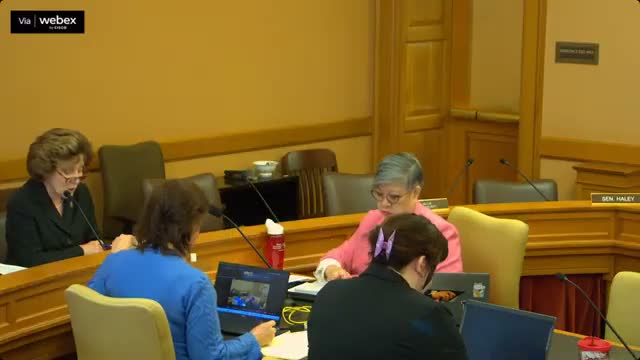
A Senate committee heard bipartisan testimony on Senate Bill 352 on Jan. 29, a proposal to add cryptocurrencies and other digital assets to Kansas's unclaimed-property law and to create a Bitcoin and Digital Assets Reserve Fund administered by the State Treasurer.
The bill would add definitions for digital concepts such as airdrops and staking, require custodial holders (exchanges, banks, trust companies and other licensed custodians) to report and deliver unclaimed digital assets in their native form, and create a three-year presumption of abandonment after written or electronic communications are returned as undeliverable. If assets remain unclaimed after that period, the bill directs that staking rewards and airdrops earned thereafter would be transferred to the new reserve fund; the State Treasurer would credit 10% of each deposit of digital funds to the State General Fund, subject to legislative appropriation.
Senator Craig Bowser, the bill's sponsor, told the committee the legislation is designed to modernize Kansas law and to preserve owners' rights by keeping custodial assets in native form for three years so owners who return can recover the original asset. "If it's a $100,000 today and a year from now it's $1,000,000 and we sold it at $100,000, we now owe this guy," he said, arguing for a hold-in-kind approach to avoid forcing owners to forfeit upside value.
Eric Baker, director of advocacy for the nonprofit Satoshi Action Fund, testified in support and asked for four clarifying amendments: (1) explicitly preserve fiduciary status so principal remains owner property and only revenue derived from custody is available to the state; (2) limit the 10% transfer to staking rewards, airdrops and interest rather than principal; (3) create an explicit acquisition authority allowing the treasurer to use net digital-asset revenue to acquire Bitcoin as a reserve asset; and (4) preserve legislative spending control by tying expenditures to appropriation.
John Hedges, deputy general counsel for the State Treasurer's Office (appearing as neutral), told lawmakers the bill represents a different philosophy than the office's longstanding treatment of unclaimed property, which has been to hold assets in trust for owners and, in many cases, require holders to liquidate cryptocurrency before remittance. He warned the fiscal note contains significant uncertainties and that operational costs could range from the low hundreds of thousands to $500,000 or more annually depending on procurement and vendor configurations. "We just don't know," he said of the program's long-term costs.
Hedges also described gaps the bill leaves unresolved: limited guidance about how the Treasurer should manage a reserve fund, unclear procurement and custody pathways (states typically need multiple vendors for custody, staking and custody reconciliation), timing and liability if the office stakes or liquidates assets, and potential litigation risks tied to valuation and payout timing. He asked the legislature for clearer policy direction and resources if it intends the Treasurer to manage native digital assets.
Committee members asked about specific points including whether the bill applies to self-custody wallets (Bowser said it does not), how private keys and access would be handled (Bowser said the bill targets custodial holdings where the custodian controls access), and how public registries would report volatile crypto values (Hedges said current systems list names and dollar values and would need reconfiguration).
Proponents cited examples from other jurisdictions and private-sector remittances to illustrate scale: Bowser referenced a recent transfer to Wyoming and an external report estimating large pools of unclaimed digital assets. Hedges noted a difference between proposals that fund a reserve from government-forfeited assets and SB 352's approach of funding a reserve from property remitted as unclaimed by private holders.
The committee closed the hearing without taking a vote and announced it may keep the SB 352 hearing open through Thursday to continue questions and follow-up. The chair also scheduled a separate hearing on Senate Bill 360 for the following day.
What happens next: Lawmakers will consider amendments to address operational, fiscal and legal risks raised by the State Treasurer's Office and proponents; the committee did not take a formal vote at this hearing.
The bill would add definitions for digital concepts such as airdrops and staking, require custodial holders (exchanges, banks, trust companies and other licensed custodians) to report and deliver unclaimed digital assets in their native form, and create a three-year presumption of abandonment after written or electronic communications are returned as undeliverable. If assets remain unclaimed after that period, the bill directs that staking rewards and airdrops earned thereafter would be transferred to the new reserve fund; the State Treasurer would credit 10% of each deposit of digital funds to the State General Fund, subject to legislative appropriation.
Senator Craig Bowser, the bill's sponsor, told the committee the legislation is designed to modernize Kansas law and to preserve owners' rights by keeping custodial assets in native form for three years so owners who return can recover the original asset. "If it's a $100,000 today and a year from now it's $1,000,000 and we sold it at $100,000, we now owe this guy," he said, arguing for a hold-in-kind approach to avoid forcing owners to forfeit upside value.
Eric Baker, director of advocacy for the nonprofit Satoshi Action Fund, testified in support and asked for four clarifying amendments: (1) explicitly preserve fiduciary status so principal remains owner property and only revenue derived from custody is available to the state; (2) limit the 10% transfer to staking rewards, airdrops and interest rather than principal; (3) create an explicit acquisition authority allowing the treasurer to use net digital-asset revenue to acquire Bitcoin as a reserve asset; and (4) preserve legislative spending control by tying expenditures to appropriation.
John Hedges, deputy general counsel for the State Treasurer's Office (appearing as neutral), told lawmakers the bill represents a different philosophy than the office's longstanding treatment of unclaimed property, which has been to hold assets in trust for owners and, in many cases, require holders to liquidate cryptocurrency before remittance. He warned the fiscal note contains significant uncertainties and that operational costs could range from the low hundreds of thousands to $500,000 or more annually depending on procurement and vendor configurations. "We just don't know," he said of the program's long-term costs.
Hedges also described gaps the bill leaves unresolved: limited guidance about how the Treasurer should manage a reserve fund, unclear procurement and custody pathways (states typically need multiple vendors for custody, staking and custody reconciliation), timing and liability if the office stakes or liquidates assets, and potential litigation risks tied to valuation and payout timing. He asked the legislature for clearer policy direction and resources if it intends the Treasurer to manage native digital assets.
Committee members asked about specific points including whether the bill applies to self-custody wallets (Bowser said it does not), how private keys and access would be handled (Bowser said the bill targets custodial holdings where the custodian controls access), and how public registries would report volatile crypto values (Hedges said current systems list names and dollar values and would need reconfiguration).
Proponents cited examples from other jurisdictions and private-sector remittances to illustrate scale: Bowser referenced a recent transfer to Wyoming and an external report estimating large pools of unclaimed digital assets. Hedges noted a difference between proposals that fund a reserve from government-forfeited assets and SB 352's approach of funding a reserve from property remitted as unclaimed by private holders.
The committee closed the hearing without taking a vote and announced it may keep the SB 352 hearing open through Thursday to continue questions and follow-up. The chair also scheduled a separate hearing on Senate Bill 360 for the following day.
What happens next: Lawmakers will consider amendments to address operational, fiscal and legal risks raised by the State Treasurer's Office and proponents; the committee did not take a formal vote at this hearing.
View the Full Meeting & All Its Details
This article offers just a summary. Unlock complete video, transcripts, and insights as a Founder Member.
✓
Watch full, unedited meeting videos
✓
Search every word spoken in unlimited transcripts
✓
AI summaries & real-time alerts (all government levels)
✓
Permanent access to expanding government content
30-day money-back guarantee
