Pasco health officials say organized, unlicensed ‘pop‑up’ food vendors pose public‑health and economic risks
January 27, 2026 | Pasco City, Franklin County, Washington
This article was created by AI summarizing key points discussed. AI makes mistakes, so for full details and context, please refer to the video of the full meeting. Please report any errors so we can fix them. Report an error »
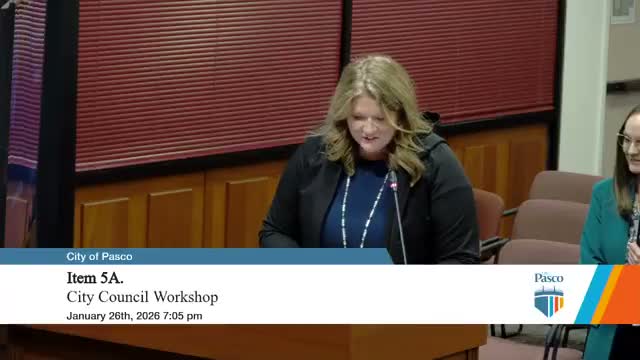
Benton‑Franklin Health District officials briefed the Pasco City Council on a spike in complaints about organized, unlicensed food vendors that health staff say move between cities and states and pose both food‑safety and economic risks.
Janae Parent, administrator for the Benton‑Franklin Health District, introduced the district’s team and said the goal is “not enforcement for enforcement’s sake, but to share data, highlight risks, and begin a thoughtful conversation” about protecting residents and supporting legitimate businesses.
Aaron Hockaday, director of the district’s environmental‑health programs, said the agency saw roughly a 120% increase in complaints about unpermitted vendors over the past 18 months and now believes a connected operation is moving identical menus, tents and vehicles across California, Oregon, Nevada and Washington. He said the Governor’s Office estimated about 68 locations of this vendor network in Washington.
Hockaday described food‑safety problems investigators have observed, including food prepared or stored without temperature control, raw meats cross‑contaminating produce, and multi‑day perishables kept at room temperature. “We have never once encountered one of these operations where they would have passed a health inspection,” he said.
Presenters also described an economic impact on local restaurants. Health staff said the operations are largely cash‑only and do not obtain licenses or pay taxes, allowing them to undercut local businesses. Mr. Cortinas of the Latin Business Association told the council his organization visited several taco vendors and found none licensed; he said inspectors had ordered exposed food discarded and estimated vendors were making $1,000–$3,000 a day.
Staff outlined current enforcement limits and next steps. The health district said responses are complaint‑driven — roughly 150–200 food‑vendor complaints per year — and each incident can take 2½–3 staff hours. Inspectors typically respond with law enforcement to order closure and disposal of unsafe food; staff also reported mild threats against inspectors at some sites. Because ownership is often unidentifiable, staff said the district is relying on a Tri‑Cities multi‑jurisdiction task force of public health, law enforcement and prosecuting attorneys and on a statewide task force convened by the governor to pursue higher‑level investigations.
Council members raised ideas to help consumers and compliant vendors, including clearer permit posting, QR codes linking to inspection results and a potential “seal of approval” for vendors that meet city and health‑district requirements. Health staff said the state requires licensed food businesses to post permits visibly and that the district already provides small QR codes and bilingual assistance to help legitimate operators get permitted, but that the particular vendor group described has largely refused outreach.
Public commenters urged continued education and enforcement. Mr. Cortinas said his association had offered assistance to help vendors obtain permits; Zimbra Wade cautioned that community trust and reluctance to report vendors can complicate enforcement and outreach.
Next steps: staff said they will continue regional coordination, refine public communications with area PIOs, and work with law enforcement and business groups to develop a unified approach before the vendors return in greater numbers in spring. The workshop was informational and no council action was requested.
Janae Parent, administrator for the Benton‑Franklin Health District, introduced the district’s team and said the goal is “not enforcement for enforcement’s sake, but to share data, highlight risks, and begin a thoughtful conversation” about protecting residents and supporting legitimate businesses.
Aaron Hockaday, director of the district’s environmental‑health programs, said the agency saw roughly a 120% increase in complaints about unpermitted vendors over the past 18 months and now believes a connected operation is moving identical menus, tents and vehicles across California, Oregon, Nevada and Washington. He said the Governor’s Office estimated about 68 locations of this vendor network in Washington.
Hockaday described food‑safety problems investigators have observed, including food prepared or stored without temperature control, raw meats cross‑contaminating produce, and multi‑day perishables kept at room temperature. “We have never once encountered one of these operations where they would have passed a health inspection,” he said.
Presenters also described an economic impact on local restaurants. Health staff said the operations are largely cash‑only and do not obtain licenses or pay taxes, allowing them to undercut local businesses. Mr. Cortinas of the Latin Business Association told the council his organization visited several taco vendors and found none licensed; he said inspectors had ordered exposed food discarded and estimated vendors were making $1,000–$3,000 a day.
Staff outlined current enforcement limits and next steps. The health district said responses are complaint‑driven — roughly 150–200 food‑vendor complaints per year — and each incident can take 2½–3 staff hours. Inspectors typically respond with law enforcement to order closure and disposal of unsafe food; staff also reported mild threats against inspectors at some sites. Because ownership is often unidentifiable, staff said the district is relying on a Tri‑Cities multi‑jurisdiction task force of public health, law enforcement and prosecuting attorneys and on a statewide task force convened by the governor to pursue higher‑level investigations.
Council members raised ideas to help consumers and compliant vendors, including clearer permit posting, QR codes linking to inspection results and a potential “seal of approval” for vendors that meet city and health‑district requirements. Health staff said the state requires licensed food businesses to post permits visibly and that the district already provides small QR codes and bilingual assistance to help legitimate operators get permitted, but that the particular vendor group described has largely refused outreach.
Public commenters urged continued education and enforcement. Mr. Cortinas said his association had offered assistance to help vendors obtain permits; Zimbra Wade cautioned that community trust and reluctance to report vendors can complicate enforcement and outreach.
Next steps: staff said they will continue regional coordination, refine public communications with area PIOs, and work with law enforcement and business groups to develop a unified approach before the vendors return in greater numbers in spring. The workshop was informational and no council action was requested.
View the Full Meeting & All Its Details
This article offers just a summary. Unlock complete video, transcripts, and insights as a Founder Member.
✓
Watch full, unedited meeting videos
✓
Search every word spoken in unlimited transcripts
✓
AI summaries & real-time alerts (all government levels)
✓
Permanent access to expanding government content
30-day money-back guarantee
