House Education hears national overview of Educational Service Agencies; expert cites examples for Vermont
January 29, 2026 | Education, HOUSE OF REPRESENTATIVES, Committees, Legislative , Vermont
This article was created by AI summarizing key points discussed. AI makes mistakes, so for full details and context, please refer to the video of the full meeting. Please report any errors so we can fix them. Report an error »
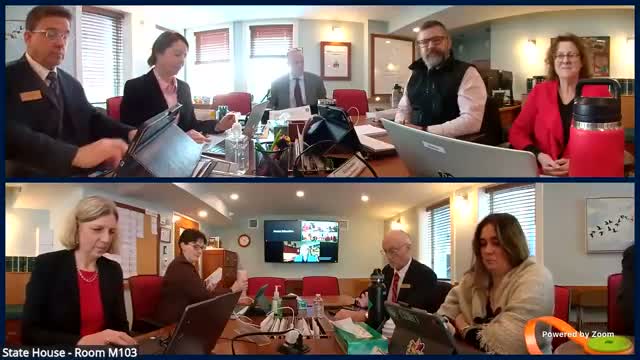
Joan Wade, executive director of the Association of Educational Service Agencies, told the Vermont House Committee on Education on Jan. 28 that Educational Service Agencies (ESAs) act as regional shared-service organizations that help local school districts access specialized staff, streamline compliance and implement statewide initiatives.
Wade said ESAs go by many names — CESAs, BOCES, IUs and RESAs — but “their goal is to help local school districts operate more efficiently, expand across the state to give expertise, and to implement state priorities in a cost effective and equitable manner.” She told the committee that ESAs appear in 44 states and that AESA has just under 500 members.
The presentation framed ESAs as an intermediary layer between local education agencies and state departments of education. Wade listed four common governance models — superintendent-led regional boards, regional boards of local school-board members, mixed boards and publicly elected regional boards — and said each model has trade-offs involving operational alignment, community representation and accountability.
Wade described several funding approaches: full state appropriation for baseline services; fee-for-service models where districts buy services; hybrid models that combine baseline funding with entrepreneurial fees; and a rare taxing authority (she noted Michigan is the only state that allows ESAs a property millage). “By far, the most common funding mechanism is some kind of blended model where the state gives them some seed money to get things started and then the ESA is entrepreneurial,” she said.
She highlighted the services ESAs typically provide: regional special-education supports for low-incidence, high-cost needs; professional development and instructional coaching; technology infrastructure and cybersecurity; shared human-resources and payroll functions; cooperative purchasing; compliance and Medicaid/E-rate assistance; crisis and mental-health coordination; and career and technical education programs. Those shared services, she said, can keep small districts viable by reducing administrative duplication and the cost of hard-to-find specialists.
Wade cited examples from other states: Wisconsin CESAs have reported savings in cooperative health-insurance pools, which AESA members have described as more than $50 million in reported savings; Iowa AEAs reportedly save 20–25% on commonly purchased instructional materials; Pennsylvania intermediate units assist districts with Medicaid and E-rate filings; and Texas operates 20 education service centers serving roughly 1,400 districts.
Rep. Jim Hartley asked whether the Wisconsin figure could be replicated in Vermont and whether the savings required statewide contracts or tradeoffs in benefit design. “Is that a number Vermont could achieve?” Hartley asked. Wade said the Wisconsin CESA participated in a cooperative insurance pool that reported substantial savings but added she did not have the design details on hand and offered to provide the documentation to the committee later.
Representative Bridal asked whether ESAs have effective models for students with very high special-education needs and for reducing out-of-district placements. Wade pointed to Wisconsin, Pennsylvania and Iowa as states where regional agencies run alternative placements or pooled services for high-need students and said some ESAs operate alternative schools that can return students to local diploma pathways.
Committee members raised political and policy questions specific to Vermont, including whether mandatory ESA membership should follow voluntary piloting and how ESAs would interact with ongoing consolidation discussions. Wade recommended phased implementation and careful statutory design for regions, governance and accountability to ensure districts buy into services rather than feel overruled.
The committee did not take formal votes during the session. Wade concluded by offering AESA as a resource and additional documentation; the committee thanked her and indicated they will continue deliberations with AESA materials as background.
The committee’s next procedural steps were not decided during the hearing; lawmakers signaled continued discussion of governance, funding and pilot options for Vermont’s ESA considerations.
Wade said ESAs go by many names — CESAs, BOCES, IUs and RESAs — but “their goal is to help local school districts operate more efficiently, expand across the state to give expertise, and to implement state priorities in a cost effective and equitable manner.” She told the committee that ESAs appear in 44 states and that AESA has just under 500 members.
The presentation framed ESAs as an intermediary layer between local education agencies and state departments of education. Wade listed four common governance models — superintendent-led regional boards, regional boards of local school-board members, mixed boards and publicly elected regional boards — and said each model has trade-offs involving operational alignment, community representation and accountability.
Wade described several funding approaches: full state appropriation for baseline services; fee-for-service models where districts buy services; hybrid models that combine baseline funding with entrepreneurial fees; and a rare taxing authority (she noted Michigan is the only state that allows ESAs a property millage). “By far, the most common funding mechanism is some kind of blended model where the state gives them some seed money to get things started and then the ESA is entrepreneurial,” she said.
She highlighted the services ESAs typically provide: regional special-education supports for low-incidence, high-cost needs; professional development and instructional coaching; technology infrastructure and cybersecurity; shared human-resources and payroll functions; cooperative purchasing; compliance and Medicaid/E-rate assistance; crisis and mental-health coordination; and career and technical education programs. Those shared services, she said, can keep small districts viable by reducing administrative duplication and the cost of hard-to-find specialists.
Wade cited examples from other states: Wisconsin CESAs have reported savings in cooperative health-insurance pools, which AESA members have described as more than $50 million in reported savings; Iowa AEAs reportedly save 20–25% on commonly purchased instructional materials; Pennsylvania intermediate units assist districts with Medicaid and E-rate filings; and Texas operates 20 education service centers serving roughly 1,400 districts.
Rep. Jim Hartley asked whether the Wisconsin figure could be replicated in Vermont and whether the savings required statewide contracts or tradeoffs in benefit design. “Is that a number Vermont could achieve?” Hartley asked. Wade said the Wisconsin CESA participated in a cooperative insurance pool that reported substantial savings but added she did not have the design details on hand and offered to provide the documentation to the committee later.
Representative Bridal asked whether ESAs have effective models for students with very high special-education needs and for reducing out-of-district placements. Wade pointed to Wisconsin, Pennsylvania and Iowa as states where regional agencies run alternative placements or pooled services for high-need students and said some ESAs operate alternative schools that can return students to local diploma pathways.
Committee members raised political and policy questions specific to Vermont, including whether mandatory ESA membership should follow voluntary piloting and how ESAs would interact with ongoing consolidation discussions. Wade recommended phased implementation and careful statutory design for regions, governance and accountability to ensure districts buy into services rather than feel overruled.
The committee did not take formal votes during the session. Wade concluded by offering AESA as a resource and additional documentation; the committee thanked her and indicated they will continue deliberations with AESA materials as background.
The committee’s next procedural steps were not decided during the hearing; lawmakers signaled continued discussion of governance, funding and pilot options for Vermont’s ESA considerations.
View the Full Meeting & All Its Details
This article offers just a summary. Unlock complete video, transcripts, and insights as a Founder Member.
✓
Watch full, unedited meeting videos
✓
Search every word spoken in unlimited transcripts
✓
AI summaries & real-time alerts (all government levels)
✓
Permanent access to expanding government content
30-day money-back guarantee
