Tamworth hearing forwards regulatory compliance ordinance to ballot after public questions on scope and fees
January 29, 2026 | Tamworth Town, Carroll County, New Hampshire
This article was created by AI summarizing key points discussed. AI makes mistakes, so for full details and context, please refer to the video of the full meeting. Please report any errors so we can fix them. Report an error »
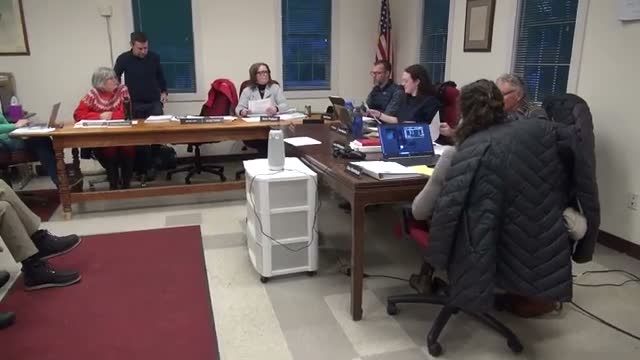
Tamworth held a public hearing on a proposed Regulatory Compliance Ordinance that would restore a required notification process for certain property projects and put the question on the March town ballot. Proponents said the measure does not add new land-use regulations but creates a mechanism to notify town officials when work triggers rules that already exist.
Leanne and Liam Prentice presented the ordinance’s background and purpose. Prentice said the proposal responds to a past building-notification form that town voters approved in 2004 and later modified, but which had been rendered voluntary after it was enacted under the wrong RSA. "This ordinance does not create any new regulation. It adds a required notification mechanism," Prentice told the hearing, saying the change would help the select board and assessor know when a property has undergone work that affects compliance or assessment.
The presentation emphasized practical aims: a short checklist-style form would indicate whether a project (for example, a driveway permit, earth excavation or a subdivision) needs further planning-board or select-board review. The presenters said the town would use state records where applicable — for instance, septic system approvals filed with the New Hampshire Department of Environmental Services (DES) — and that the compliance role would be to confirm required approvals are on file rather than to supplant DES authority over failed systems.
Several residents raised concerns about the ordinance’s reach, enforcement and costs. Questions focused on a $5,000 threshold (carried over from the older building-notification form), whether notice requirements would be retroactive, and who would staff any compliance role. Adam Cunningham asked whether the $5,000 threshold is statutory or locally set; presenters said it was part of the older form and can be clarified as the form and fee schedule are drafted. On retroactivity, the board said legal counsel is reviewing the question and the short answer is expected to be no.
Supporters and skeptics both discussed tax and assessment implications. A board member argued that more complete assessment information could reduce the tax rate by broadening the town’s tax base if previously unassessed improvements are reported; that argument prompted pushback that higher assessed values do not guarantee a lower tax rate. Presenters noted the town has historically received about 80 voluntary building notifications a year and that fees for the mandatory process could be structured to offset administrative cost.
Penalties were discussed only as the statute prescribes: the ordinance would rely on existing state statutory enforcement (citations to RSA 676:17 and related state law were made during the hearing). A resident noted the statute’s fines and potential attorney-fee exposure; presenters reiterated the select board has discretion about when and whether to impose fines.
After public comment and a period of discussion about form design and outreach (several residents urged a clear FAQ and improved communication), the board closed the hearing and voted by voice to place the Regulatory Compliance Ordinance on the town warrant for the March ballot. A board member moved the motion and another seconded; the chair called for "Aye" and reported no recorded opposition. The measure will appear to voters on the March ballot; if it passes, the board said it will finalize the form, fee schedule and administrative assignments before implementation.
Next steps: the ordinance will be printed on the March ballot as a warrant article; the planning board and select board will continue outreach, work with counsel on retroactivity and finalize the administrative form and fees if voters approve the measure.
Leanne and Liam Prentice presented the ordinance’s background and purpose. Prentice said the proposal responds to a past building-notification form that town voters approved in 2004 and later modified, but which had been rendered voluntary after it was enacted under the wrong RSA. "This ordinance does not create any new regulation. It adds a required notification mechanism," Prentice told the hearing, saying the change would help the select board and assessor know when a property has undergone work that affects compliance or assessment.
The presentation emphasized practical aims: a short checklist-style form would indicate whether a project (for example, a driveway permit, earth excavation or a subdivision) needs further planning-board or select-board review. The presenters said the town would use state records where applicable — for instance, septic system approvals filed with the New Hampshire Department of Environmental Services (DES) — and that the compliance role would be to confirm required approvals are on file rather than to supplant DES authority over failed systems.
Several residents raised concerns about the ordinance’s reach, enforcement and costs. Questions focused on a $5,000 threshold (carried over from the older building-notification form), whether notice requirements would be retroactive, and who would staff any compliance role. Adam Cunningham asked whether the $5,000 threshold is statutory or locally set; presenters said it was part of the older form and can be clarified as the form and fee schedule are drafted. On retroactivity, the board said legal counsel is reviewing the question and the short answer is expected to be no.
Supporters and skeptics both discussed tax and assessment implications. A board member argued that more complete assessment information could reduce the tax rate by broadening the town’s tax base if previously unassessed improvements are reported; that argument prompted pushback that higher assessed values do not guarantee a lower tax rate. Presenters noted the town has historically received about 80 voluntary building notifications a year and that fees for the mandatory process could be structured to offset administrative cost.
Penalties were discussed only as the statute prescribes: the ordinance would rely on existing state statutory enforcement (citations to RSA 676:17 and related state law were made during the hearing). A resident noted the statute’s fines and potential attorney-fee exposure; presenters reiterated the select board has discretion about when and whether to impose fines.
After public comment and a period of discussion about form design and outreach (several residents urged a clear FAQ and improved communication), the board closed the hearing and voted by voice to place the Regulatory Compliance Ordinance on the town warrant for the March ballot. A board member moved the motion and another seconded; the chair called for "Aye" and reported no recorded opposition. The measure will appear to voters on the March ballot; if it passes, the board said it will finalize the form, fee schedule and administrative assignments before implementation.
Next steps: the ordinance will be printed on the March ballot as a warrant article; the planning board and select board will continue outreach, work with counsel on retroactivity and finalize the administrative form and fees if voters approve the measure.
Don't Miss a Word: See the Full Meeting!
Go beyond summaries. Unlock every video, transcript, and key insight with a Founder Membership.
✓
Get instant access to full meeting videos
✓
Search and clip any phrase from complete transcripts
✓
Receive AI-powered summaries & custom alerts
✓
Enjoy lifetime, unrestricted access to government data
30-day money-back guarantee
