Committee advances bill allowing pharmacists to dispense HIV prevention drugs under Georgia physician protocol
January 28, 2026 | Appropriations, HOUSE OF REPRESENTATIVES, Committees, Legislative, Georgia
This article was created by AI summarizing key points discussed. AI makes mistakes, so for full details and context, please refer to the video of the full meeting. Please report any errors so we can fix them. Report an error »
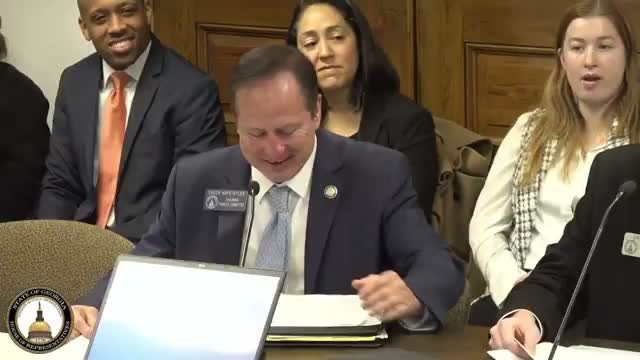
A committee advanced a substitute to LC560521s that would let pharmacists dispense pre-exposure prophylaxis (PrEP) and post-exposure prophylaxis (PEP) for HIV under a protocol with a physician who resides in Georgia.
The sponsor told the panel the substitute narrows prior language to ensure supervising physicians are located in Georgia and to prevent out-of-state telemedicine oversight. The sponsor said pharmacists would have to complete a training program, be certified in basic cardiac life support, and provide an in-person visit that includes at least a 15-minute observation after administration. The sponsor also described enforcement provisions including fines and potential suspension of administering privileges for violations; the exact insurance minimum reported in the transcript was unclear.
Representative Clark urged support, citing Georgia’s infection rate: “In the state of Georgia, we have a pretty high, HIV, rate, and I believe that our state has one of the highest rates of new HIV cases,” he said, and said increasing access through pharmacies could reduce infections and treatment costs. The sponsor characterized the medicine as relatively low-cost per dose and argued the state could save tens of millions of dollars compared with the long-term cost of HIV treatment.
Committee members asked procedural and supervision questions. The sponsor noted the bill defines pharmacists, sets training standards, allows dispensing of a minimum 30-day up to a 90-day supply of PrEP in specified circumstances, and permits a delegating physician to enter agreements with more than 10 pharmacists.
A member moved and the committee considered amendments in the packet. The amendment was moved, seconded and adopted, and the committee voted to pass LC560521s as amended. The chair announced the bill passed out of committee; the transcript does not include a numerical roll-call for this passage.
The chair said the bill’s House sponsor will carry it in the House. The committee advanced the substitute with the stated goal of expanding access to HIV prevention while preserving physician oversight and enforcement mechanisms.
The sponsor told the panel the substitute narrows prior language to ensure supervising physicians are located in Georgia and to prevent out-of-state telemedicine oversight. The sponsor said pharmacists would have to complete a training program, be certified in basic cardiac life support, and provide an in-person visit that includes at least a 15-minute observation after administration. The sponsor also described enforcement provisions including fines and potential suspension of administering privileges for violations; the exact insurance minimum reported in the transcript was unclear.
Representative Clark urged support, citing Georgia’s infection rate: “In the state of Georgia, we have a pretty high, HIV, rate, and I believe that our state has one of the highest rates of new HIV cases,” he said, and said increasing access through pharmacies could reduce infections and treatment costs. The sponsor characterized the medicine as relatively low-cost per dose and argued the state could save tens of millions of dollars compared with the long-term cost of HIV treatment.
Committee members asked procedural and supervision questions. The sponsor noted the bill defines pharmacists, sets training standards, allows dispensing of a minimum 30-day up to a 90-day supply of PrEP in specified circumstances, and permits a delegating physician to enter agreements with more than 10 pharmacists.
A member moved and the committee considered amendments in the packet. The amendment was moved, seconded and adopted, and the committee voted to pass LC560521s as amended. The chair announced the bill passed out of committee; the transcript does not include a numerical roll-call for this passage.
The chair said the bill’s House sponsor will carry it in the House. The committee advanced the substitute with the stated goal of expanding access to HIV prevention while preserving physician oversight and enforcement mechanisms.
View the Full Meeting & All Its Details
This article offers just a summary. Unlock complete video, transcripts, and insights as a Founder Member.
✓
Watch full, unedited meeting videos
✓
Search every word spoken in unlimited transcripts
✓
AI summaries & real-time alerts (all government levels)
✓
Permanent access to expanding government content
30-day money-back guarantee
