Passaic council advances short-term rental registration and occupancy tax to second reading
January 28, 2026 | Passaic City, Passaic County, New Jersey
This article was created by AI summarizing key points discussed. AI makes mistakes, so for full details and context, please refer to the video of the full meeting. Please report any errors so we can fix them. Report an error »
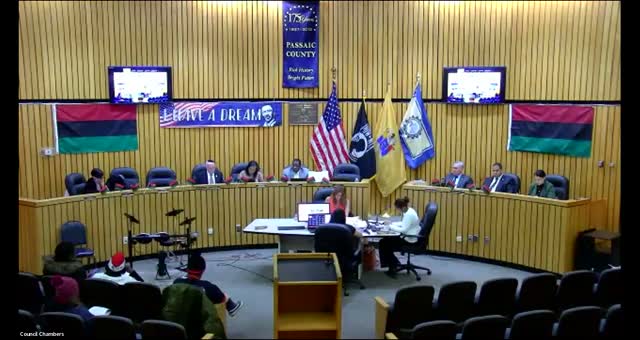
The Passaic City Council on Jan. 26 moved forward a package of ordinances to regulate short-term rentals and impose an occupancy tax, scheduling them for second reading.
City staff described three related measures: Ordinance 34 would permit short-term rental use in zoning as a limited condition; Ordinance 35 would require owners to register short-term rentals with the city and pass inspections; Ordinance 36 would impose an occupancy tax on transient rentals. City staff said the package is intended to regulate activity already taking place on third-party platforms and to protect residents.
Officials and council members emphasized several limits and protections in the proposals. Staff said registrations would be restricted to the owner’s primary residence, capped at a maximum of 90 days per calendar year, and subject to inspection and safety requirements. A registration fee of $250 and a 3% occupancy tax were cited as example revenue mechanisms; staff said final fee and tax details will be set in ordinance language and subject to future council review.
Council members asked about enforcement, maximum occupancy and whether advertising platforms would be listed on applications. Staff said registrants must disclose where they plan to advertise and that the city can report violations to platforms. Several council members framed the package as protective of both renters and property owners, noting that registration creates a mechanism to inspect units and hold hosts accountable for code violations.
The council approved motions to set the ordinances for second reading — with dates for second and final readings set for February meetings — and passed roll-call votes to move forward. No final adoption of the ordinances was completed that night; additional readings and formal votes are scheduled.
If adopted, the ordinances would require homeowners using short-term rental platforms to register, undergo inspection and pay the occupancy tax and registration fee. City officials said the rules are designed to prevent conversions of permanent housing into year-round commercial short-term rentals and to protect neighborhood quality of life during large event periods such as FIFA.
City staff described three related measures: Ordinance 34 would permit short-term rental use in zoning as a limited condition; Ordinance 35 would require owners to register short-term rentals with the city and pass inspections; Ordinance 36 would impose an occupancy tax on transient rentals. City staff said the package is intended to regulate activity already taking place on third-party platforms and to protect residents.
Officials and council members emphasized several limits and protections in the proposals. Staff said registrations would be restricted to the owner’s primary residence, capped at a maximum of 90 days per calendar year, and subject to inspection and safety requirements. A registration fee of $250 and a 3% occupancy tax were cited as example revenue mechanisms; staff said final fee and tax details will be set in ordinance language and subject to future council review.
Council members asked about enforcement, maximum occupancy and whether advertising platforms would be listed on applications. Staff said registrants must disclose where they plan to advertise and that the city can report violations to platforms. Several council members framed the package as protective of both renters and property owners, noting that registration creates a mechanism to inspect units and hold hosts accountable for code violations.
The council approved motions to set the ordinances for second reading — with dates for second and final readings set for February meetings — and passed roll-call votes to move forward. No final adoption of the ordinances was completed that night; additional readings and formal votes are scheduled.
If adopted, the ordinances would require homeowners using short-term rental platforms to register, undergo inspection and pay the occupancy tax and registration fee. City officials said the rules are designed to prevent conversions of permanent housing into year-round commercial short-term rentals and to protect neighborhood quality of life during large event periods such as FIFA.
View the Full Meeting & All Its Details
This article offers just a summary. Unlock complete video, transcripts, and insights as a Founder Member.
✓
Watch full, unedited meeting videos
✓
Search every word spoken in unlimited transcripts
✓
AI summaries & real-time alerts (all government levels)
✓
Permanent access to expanding government content
30-day money-back guarantee
