Board grills district over SARC data showing disciplinary and graduation gaps for students of color and vulnerable groups
January 28, 2026 | Petaluma City Elementary, School Districts, California
This article was created by AI summarizing key points discussed. AI makes mistakes, so for full details and context, please refer to the video of the full meeting. Please report any errors so we can fix them. Report an error »
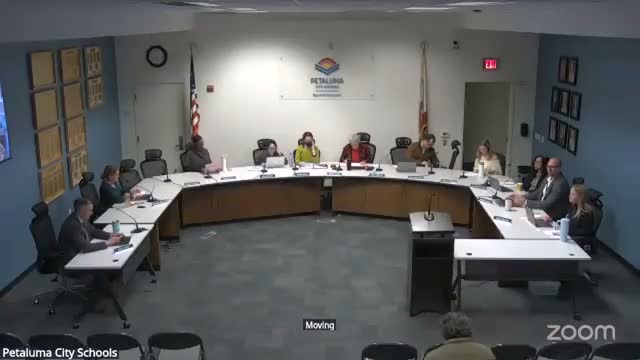
Trustees spent significant time on the district’s School Accountability Report Cards (SARCs), focusing on disparities in suspensions, test scores and graduation rates when results are disaggregated by race, gender and subgroup.
Several trustees highlighted suspension data showing higher rates among male, Latino and English-learner students and questioned whether disciplinary practices and referral patterns contribute to disparate outcomes. “I didn’t really compare all of them, but one thing I noticed about the suspension rates is they tend to be largely male, largely Hispanic, largely ELs, and largely socioeconomic,” a trustee said; the board asked principals how discipline referrals are recorded and what interventions are in place.
Principals and site administrators described ongoing review processes: monthly discipline reports, use of a discipline matrix, and site-level data meetings to target interventions. One principal said test-score growth was strong for English learners at their site but noted students with disabilities remain an area of concentrated concern. Trustees asked that school plans (SPSAs) explicitly document corrective actions and timelines so the board can track progress.
Trustees also raised graduation-rate disparities and asked for coordination with feeder districts to track incoming student preparation and common-assessment alignment. Board members requested follow-up: clearer explanation for anomalous data (e.g., a steep drop in a science metric at one site), more transparency on how SARC data connects to site SPSAs, and earlier reporting so interventions can reach students in time.
Next steps: Staff and principals will return with targeted follow-up information for February: explanations for data outliers, updated SPSA action steps tied to SARC findings, and plans to monitor outcomes for prioritized subgroups.
Speakers quoted in this story are from the meeting record of Petaluma City Schools.
Several trustees highlighted suspension data showing higher rates among male, Latino and English-learner students and questioned whether disciplinary practices and referral patterns contribute to disparate outcomes. “I didn’t really compare all of them, but one thing I noticed about the suspension rates is they tend to be largely male, largely Hispanic, largely ELs, and largely socioeconomic,” a trustee said; the board asked principals how discipline referrals are recorded and what interventions are in place.
Principals and site administrators described ongoing review processes: monthly discipline reports, use of a discipline matrix, and site-level data meetings to target interventions. One principal said test-score growth was strong for English learners at their site but noted students with disabilities remain an area of concentrated concern. Trustees asked that school plans (SPSAs) explicitly document corrective actions and timelines so the board can track progress.
Trustees also raised graduation-rate disparities and asked for coordination with feeder districts to track incoming student preparation and common-assessment alignment. Board members requested follow-up: clearer explanation for anomalous data (e.g., a steep drop in a science metric at one site), more transparency on how SARC data connects to site SPSAs, and earlier reporting so interventions can reach students in time.
Next steps: Staff and principals will return with targeted follow-up information for February: explanations for data outliers, updated SPSA action steps tied to SARC findings, and plans to monitor outcomes for prioritized subgroups.
Speakers quoted in this story are from the meeting record of Petaluma City Schools.
Don't Miss a Word: See the Full Meeting!
Go beyond summaries. Unlock every video, transcript, and key insight with a Founder Membership.
✓
Get instant access to full meeting videos
✓
Search and clip any phrase from complete transcripts
✓
Receive AI-powered summaries & custom alerts
✓
Enjoy lifetime, unrestricted access to government data
30-day money-back guarantee
