Commission decides not to distribute 'know your rights' cards after law-enforcement warns they 'oversimplify the law'
January 26, 2026 | Troy, Miami County, Ohio
This article was created by AI summarizing key points discussed. AI makes mistakes, so for full details and context, please refer to the video of the full meeting. Please report any errors so we can fix them. Report an error »
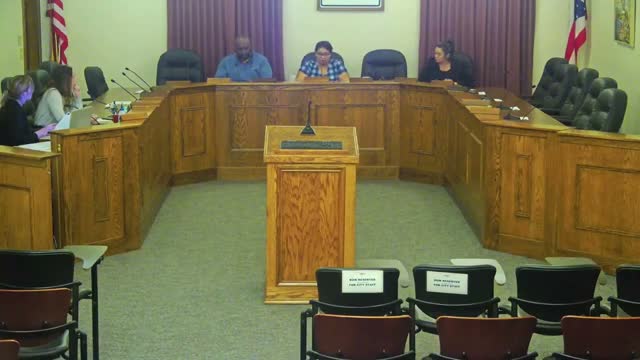
During member comments at the Troy Patients Commission meeting, a commission member (S1) presented bilingual resource cards intended for residents and read sections aloud intended to explain constitutional protections.
S1 read a passage describing refusal to speak and refusal to consent to entry: "I do not wish to speak with you, answer your questions, or sign or hand you any documents based on the Fifth Amendment rights under United States Constitution. I do not give you permission to enter my home based on Fourth Amendment rights under The United States Constitution unless you have a warrant to enter signed by a judge or magistrate." S1 said the cards were provided by Legal Aid and ABLE and were available in Montgomery County and in Spanish and English.
Unidentified Speaker S3 responded that, "Based on your reading of this, I I would say it oversimplifies the law," and warned that common legal exceptions — including exigent circumstances and the plain view doctrine — mean an officer may lawfully enter or search in some situations. S3 said pressing the card literally could create probable cause or reasonable suspicion and cautioned that "by forcing this issue, I I would be concerned that it may lead to a use of force incident." S3 also referenced points from "Sergeant Masurian" in the discussion.
Following the exchange, S1 said the commission would not distribute or promote the cards: "So then that's not something that we're gonna pass out or promote." No formal vote was recorded on the matter in the transcript.
Why it matters: The exchange highlights tensions between providing residents with information about constitutional rights and concerns from law-enforcement about how simplified messaging could affect on-the-ground interactions. The commission’s decision was to refrain from distributing the particular card discussed.
Next steps: The commission did not adopt the cards for distribution and did not record additional follow-up in the meeting transcript.
S1 read a passage describing refusal to speak and refusal to consent to entry: "I do not wish to speak with you, answer your questions, or sign or hand you any documents based on the Fifth Amendment rights under United States Constitution. I do not give you permission to enter my home based on Fourth Amendment rights under The United States Constitution unless you have a warrant to enter signed by a judge or magistrate." S1 said the cards were provided by Legal Aid and ABLE and were available in Montgomery County and in Spanish and English.
Unidentified Speaker S3 responded that, "Based on your reading of this, I I would say it oversimplifies the law," and warned that common legal exceptions — including exigent circumstances and the plain view doctrine — mean an officer may lawfully enter or search in some situations. S3 said pressing the card literally could create probable cause or reasonable suspicion and cautioned that "by forcing this issue, I I would be concerned that it may lead to a use of force incident." S3 also referenced points from "Sergeant Masurian" in the discussion.
Following the exchange, S1 said the commission would not distribute or promote the cards: "So then that's not something that we're gonna pass out or promote." No formal vote was recorded on the matter in the transcript.
Why it matters: The exchange highlights tensions between providing residents with information about constitutional rights and concerns from law-enforcement about how simplified messaging could affect on-the-ground interactions. The commission’s decision was to refrain from distributing the particular card discussed.
Next steps: The commission did not adopt the cards for distribution and did not record additional follow-up in the meeting transcript.
View the Full Meeting & All Its Details
This article offers just a summary. Unlock complete video, transcripts, and insights as a Founder Member.
✓
Watch full, unedited meeting videos
✓
Search every word spoken in unlimited transcripts
✓
AI summaries & real-time alerts (all government levels)
✓
Permanent access to expanding government content
30-day money-back guarantee
