Methuen updates midyear reading benchmarks and secures DESE high‑dosage tutoring seats
January 28, 2026 | Methuen Public Schools, School Boards, Massachusetts
This article was created by AI summarizing key points discussed. AI makes mistakes, so for full details and context, please refer to the video of the full meeting. Please report any errors so we can fix them. Report an error »
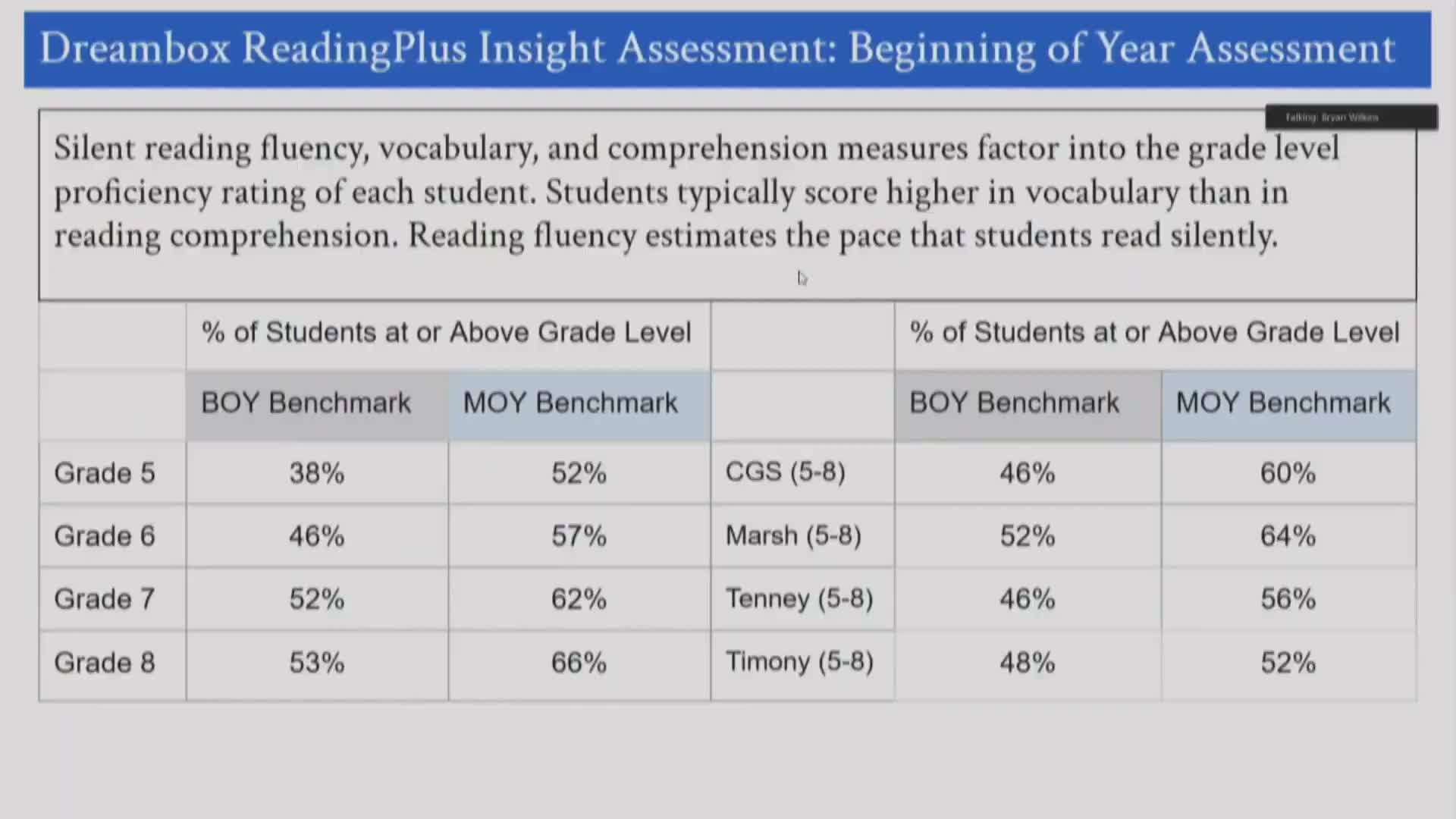
District staff reported midyear benchmark results and outlined steps to accelerate early‑literacy progress.
At the committee meeting the presenter summarized the midyear assessment, saying the district remains “still slightly behind where we ended the year last year” while noting that assessment thresholds change as students age. They highlighted that the assessment measures three areas—fluency, vocabulary and reading comprehension—and singled out comprehension as the most difficult category for students.
Kathleen Dunlevy and Jen Conley, the two humanities supervisors who each oversee two schools, described immediate classroom and specialist responses. Dunlevy and Conley said reading specialists are being used to pull small, targeted groups and teachers are being asked to run additional 10‑minute, skill‑focused lessons multiple times per week. As Conley described, CKLA intervention calibrates benchmark data into groups and provides 10‑minute lesson plans intended to be implemented “three times, three to five times a week” to focus on narrowly defined decoding or fluency skills.
Committee members pressed staff on what benchmarks and subtests actually measure. A committee member said tools such as DIBELS and DreamBox are screening and progress‑monitoring tools, “not showing grade‑level proficiency,” and staff agreed these measures indicate standing against a benchmark at a specific time and are primarily used to identify which students need additional instruction.
The district announced a DESE early‑literacy high‑dosage tutoring award that will provide additional seats targeted at first graders: 80 seats at Timoney, 80 at Tenney, 60 at CGS and 30 at Marsh. The presenter said a third‑party provider will deliver the tutoring and that the school system may hire staff for that work; those students could be removed from reading‑specialist lists so specialists can focus on other high‑need students.
Staff framed this award as a way to expand targeted supports while acknowledging constraints: there are relatively few reading specialists across multiple schools, and scheduling and existing services (ESL, other interventions) complicate forming perfectly fluid groups. The presenter said the district will continue to use multiple data points (DreamBox, DIBELS and MCAS where appropriate) to identify students for targeted groups.
The committee did not take formal votes on curriculum changes or staffing at this meeting; members encouraged continued monitoring of intervention outcomes and clearer reporting on specialist caseloads for upcoming budget discussions.
The district also plans to send families progress notes and a CKLA parent letter describing assessment measures and opt‑out procedures for sensitive screeners.
At the committee meeting the presenter summarized the midyear assessment, saying the district remains “still slightly behind where we ended the year last year” while noting that assessment thresholds change as students age. They highlighted that the assessment measures three areas—fluency, vocabulary and reading comprehension—and singled out comprehension as the most difficult category for students.
Kathleen Dunlevy and Jen Conley, the two humanities supervisors who each oversee two schools, described immediate classroom and specialist responses. Dunlevy and Conley said reading specialists are being used to pull small, targeted groups and teachers are being asked to run additional 10‑minute, skill‑focused lessons multiple times per week. As Conley described, CKLA intervention calibrates benchmark data into groups and provides 10‑minute lesson plans intended to be implemented “three times, three to five times a week” to focus on narrowly defined decoding or fluency skills.
Committee members pressed staff on what benchmarks and subtests actually measure. A committee member said tools such as DIBELS and DreamBox are screening and progress‑monitoring tools, “not showing grade‑level proficiency,” and staff agreed these measures indicate standing against a benchmark at a specific time and are primarily used to identify which students need additional instruction.
The district announced a DESE early‑literacy high‑dosage tutoring award that will provide additional seats targeted at first graders: 80 seats at Timoney, 80 at Tenney, 60 at CGS and 30 at Marsh. The presenter said a third‑party provider will deliver the tutoring and that the school system may hire staff for that work; those students could be removed from reading‑specialist lists so specialists can focus on other high‑need students.
Staff framed this award as a way to expand targeted supports while acknowledging constraints: there are relatively few reading specialists across multiple schools, and scheduling and existing services (ESL, other interventions) complicate forming perfectly fluid groups. The presenter said the district will continue to use multiple data points (DreamBox, DIBELS and MCAS where appropriate) to identify students for targeted groups.
The committee did not take formal votes on curriculum changes or staffing at this meeting; members encouraged continued monitoring of intervention outcomes and clearer reporting on specialist caseloads for upcoming budget discussions.
The district also plans to send families progress notes and a CKLA parent letter describing assessment measures and opt‑out procedures for sensitive screeners.
Don't Miss a Word: See the Full Meeting!
Go beyond summaries. Unlock every video, transcript, and key insight with a Founder Membership.
✓
Get instant access to full meeting videos
✓
Search and clip any phrase from complete transcripts
✓
Receive AI-powered summaries & custom alerts
✓
Enjoy lifetime, unrestricted access to government data
30-day money-back guarantee
