Santa Barbara council approves temporary moratorium on rent increases, 4-3, as city develops stabilization ordinance
January 28, 2026 | Santa Barbara City, Santa Barbara County, California
This article was created by AI summarizing key points discussed. AI makes mistakes, so for full details and context, please refer to the video of the full meeting. Please report any errors so we can fix them. Report an error »
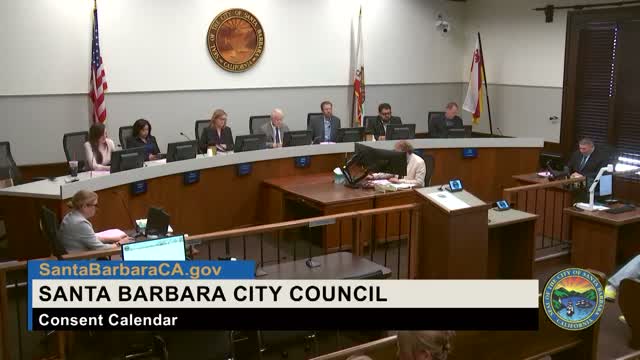
SANTA BARBARA — On Jan. 27, 2026, the Santa Barbara City Council approved a temporary moratorium on rent increases as staff prepares a permanent rent‑stabilization program, voting 4‑3 after several hours of public comment and council debate.
The ordinance motion, described by staff as a temporary pause on rent increases while the city crafts a stabilization policy, passed with three council members—Ross, Freeman and Jordan—recorded as voting no. The council did not record detailed roll-call votes for each yes vote in the spoken record; the motion was announced as passing "4 votes to 3." The council also directed staff to compile frequently asked questions and to coordinate with the City Attorney and the housing mediation program to respond to resident inquiries.
The decision followed multiple public speakers urging different approaches. Betty Hepsen, president of the Santa Barbara Rental Association, warned of legal risk and argued the moratorium could amount to a constitutional taking, saying in part, "La moratoria reduce los valores de las propiedades en alquiler, por lo que constituye una expropiación," and citing recent federal cases as precedent. Several tenants and housing advocates pressed the council in the opposite direction, urging prompt protections to prevent displacement during the ordinance’s development. Anna, who identified herself as a policy advocate and environmental analyst, said temporary protections were "a standard and legally sound approach" to preserve housing while a permanent program is finalized.
Councilmembers questioned the ordinance’s scope and exemptions. Staff and the City Attorney clarified that many unit types would be exempt under state law and the draft language: units built after 1995, certain accessory dwelling units (ADUs) depending on when they were legalized, and some single‑family or duplex configurations can be excluded from local rent regulation. Councilmember Mikey Jordan pressed staff to provide clear, bilingual materials outlining exemptions and compliance steps; staff agreed to prepare FAQs and a public contact point in the rental housing program to collect and triage questions.
Several speakers urged protecting naturally affordable privately owned units. Public commenter Ben Romo, who said his remarks were personal, asked whether small non‑profit and privately owned below‑market units would be treated equally; he recommended exempting units rented at or below 120% of area median income (AMI) or offering incentives for small local providers.
The council’s debate reflected competing priorities: advocates and some council members emphasized urgency to protect renters from imminent increases and evictions, while critics warned of legal exposure and administrative costs. Betty Hepsen estimated potential owner damages in the hearing record and cautioned the council about litigation risk, while supporters said temporary protections would maintain stability until the long‑term ordinance took effect.
Next steps: staff will publish FAQs and create a single point of contact within the rental housing program to collect questions and coordinate with the City Attorney’s office. The moratorium is set to remain in effect until a stabilization program is adopted or until the timeline described in the ordinance (as noted in the staff recommendation) concludes; public testimony referenced a potential end date of Dec. 31, 2026, if a program has not been adopted. The council then moved on to member reports.
The ordinance motion, described by staff as a temporary pause on rent increases while the city crafts a stabilization policy, passed with three council members—Ross, Freeman and Jordan—recorded as voting no. The council did not record detailed roll-call votes for each yes vote in the spoken record; the motion was announced as passing "4 votes to 3." The council also directed staff to compile frequently asked questions and to coordinate with the City Attorney and the housing mediation program to respond to resident inquiries.
The decision followed multiple public speakers urging different approaches. Betty Hepsen, president of the Santa Barbara Rental Association, warned of legal risk and argued the moratorium could amount to a constitutional taking, saying in part, "La moratoria reduce los valores de las propiedades en alquiler, por lo que constituye una expropiación," and citing recent federal cases as precedent. Several tenants and housing advocates pressed the council in the opposite direction, urging prompt protections to prevent displacement during the ordinance’s development. Anna, who identified herself as a policy advocate and environmental analyst, said temporary protections were "a standard and legally sound approach" to preserve housing while a permanent program is finalized.
Councilmembers questioned the ordinance’s scope and exemptions. Staff and the City Attorney clarified that many unit types would be exempt under state law and the draft language: units built after 1995, certain accessory dwelling units (ADUs) depending on when they were legalized, and some single‑family or duplex configurations can be excluded from local rent regulation. Councilmember Mikey Jordan pressed staff to provide clear, bilingual materials outlining exemptions and compliance steps; staff agreed to prepare FAQs and a public contact point in the rental housing program to collect and triage questions.
Several speakers urged protecting naturally affordable privately owned units. Public commenter Ben Romo, who said his remarks were personal, asked whether small non‑profit and privately owned below‑market units would be treated equally; he recommended exempting units rented at or below 120% of area median income (AMI) or offering incentives for small local providers.
The council’s debate reflected competing priorities: advocates and some council members emphasized urgency to protect renters from imminent increases and evictions, while critics warned of legal exposure and administrative costs. Betty Hepsen estimated potential owner damages in the hearing record and cautioned the council about litigation risk, while supporters said temporary protections would maintain stability until the long‑term ordinance took effect.
Next steps: staff will publish FAQs and create a single point of contact within the rental housing program to collect questions and coordinate with the City Attorney’s office. The moratorium is set to remain in effect until a stabilization program is adopted or until the timeline described in the ordinance (as noted in the staff recommendation) concludes; public testimony referenced a potential end date of Dec. 31, 2026, if a program has not been adopted. The council then moved on to member reports.
View the Full Meeting & All Its Details
This article offers just a summary. Unlock complete video, transcripts, and insights as a Founder Member.
✓
Watch full, unedited meeting videos
✓
Search every word spoken in unlimited transcripts
✓
AI summaries & real-time alerts (all government levels)
✓
Permanent access to expanding government content
30-day money-back guarantee
