Senate panel advances bill to require autism training and create educator loan forgiveness
January 28, 2026 | 2026 Legislature FL, Florida
This article was created by AI summarizing key points discussed. AI makes mistakes, so for full details and context, please refer to the video of the full meeting. Please report any errors so we can fix them. Report an error »
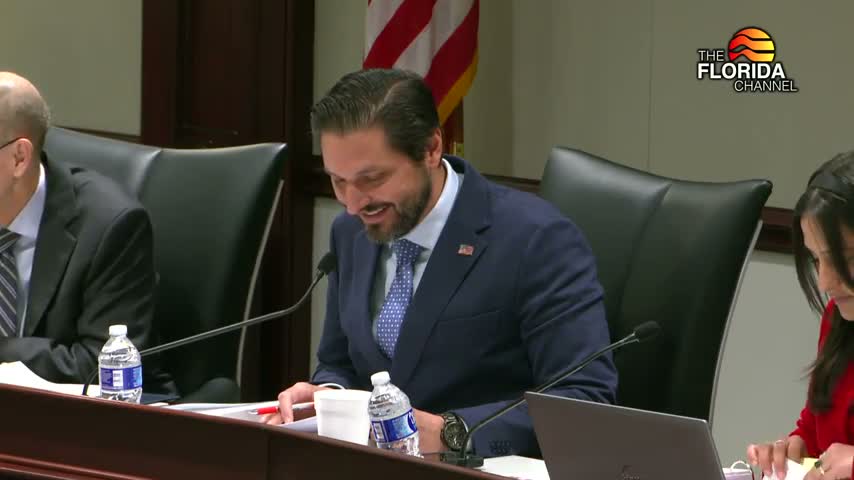
Sen. Gail Harrell, the sponsor of CS/ SB 206, told the Senate Appropriations Committee on PreK‑12 Education that the bill would require educator‑preparation programs to offer autism‑specific micro‑credentials, require certain ESE teachers to complete an autism micro‑credential, and create incentives to recruit and retain teachers who serve students with autism spectrum disorder (ASD).
Supporters — including special‑education teachers, students with autism and advocacy groups — described persistent shortages of trained educators and urged the committee to fund and move the bill. "Requiring autism micro‑credentials for certain educator preparation participants would make it easier for students like me to get the support they need," said Catherine Novadogarty, a recent graduate who testified in favor of the bill.
The bill’s sponsor said CS/ SB 206 also would authorize a loan‑forgiveness program for educators who complete advanced coursework or an ASD endorsement. Harrell described the program as allowing "up to five annual payments totaling $17,000," and said the committee’s funding recommendation would be critical to making incentives predictable and accessible. The measure would also require district professional‑development systems to include at least one autism‑specific training in cooperation with local center(s) that provide autism services.
Committee members praised the bill’s focus on classroom readiness and workforce stability. Senator Masulo and others cited rising prevalence statistics and urged attention to ancillary services such as occupational and speech therapy. Senators also emphasized that high‑quality training must be grounded in classroom realities and delivered by experienced special‑education practitioners.
Multiple advocacy organizations, including Sea Alliance and local classroom teachers’ groups, asked for implementation guardrails: training should be evidence‑based, developed with experienced special‑education staff and disability experts, and the loan‑forgiveness program should be "fully funded, predictable and easy to access," representatives said.
After extended public testimony and sponsor remarks, the committee voted to report CS/ SB 206 favorably to the next legislative stop. Chair Burgess thanked witnesses and said the appropriations committee would consider funding details as the bill moves through the process.
Supporters — including special‑education teachers, students with autism and advocacy groups — described persistent shortages of trained educators and urged the committee to fund and move the bill. "Requiring autism micro‑credentials for certain educator preparation participants would make it easier for students like me to get the support they need," said Catherine Novadogarty, a recent graduate who testified in favor of the bill.
The bill’s sponsor said CS/ SB 206 also would authorize a loan‑forgiveness program for educators who complete advanced coursework or an ASD endorsement. Harrell described the program as allowing "up to five annual payments totaling $17,000," and said the committee’s funding recommendation would be critical to making incentives predictable and accessible. The measure would also require district professional‑development systems to include at least one autism‑specific training in cooperation with local center(s) that provide autism services.
Committee members praised the bill’s focus on classroom readiness and workforce stability. Senator Masulo and others cited rising prevalence statistics and urged attention to ancillary services such as occupational and speech therapy. Senators also emphasized that high‑quality training must be grounded in classroom realities and delivered by experienced special‑education practitioners.
Multiple advocacy organizations, including Sea Alliance and local classroom teachers’ groups, asked for implementation guardrails: training should be evidence‑based, developed with experienced special‑education staff and disability experts, and the loan‑forgiveness program should be "fully funded, predictable and easy to access," representatives said.
After extended public testimony and sponsor remarks, the committee voted to report CS/ SB 206 favorably to the next legislative stop. Chair Burgess thanked witnesses and said the appropriations committee would consider funding details as the bill moves through the process.
View the Full Meeting & All Its Details
This article offers just a summary. Unlock complete video, transcripts, and insights as a Founder Member.
✓
Watch full, unedited meeting videos
✓
Search every word spoken in unlimited transcripts
✓
AI summaries & real-time alerts (all government levels)
✓
Permanent access to expanding government content
30-day money-back guarantee
