Florida panel advances bill allowing limited release of conservation easements on small parcels
January 28, 2026 | 2026 Legislature FL, Florida
This article was created by AI summarizing key points discussed. AI makes mistakes, so for full details and context, please refer to the video of the full meeting. Please report any errors so we can fix them. Report an error »
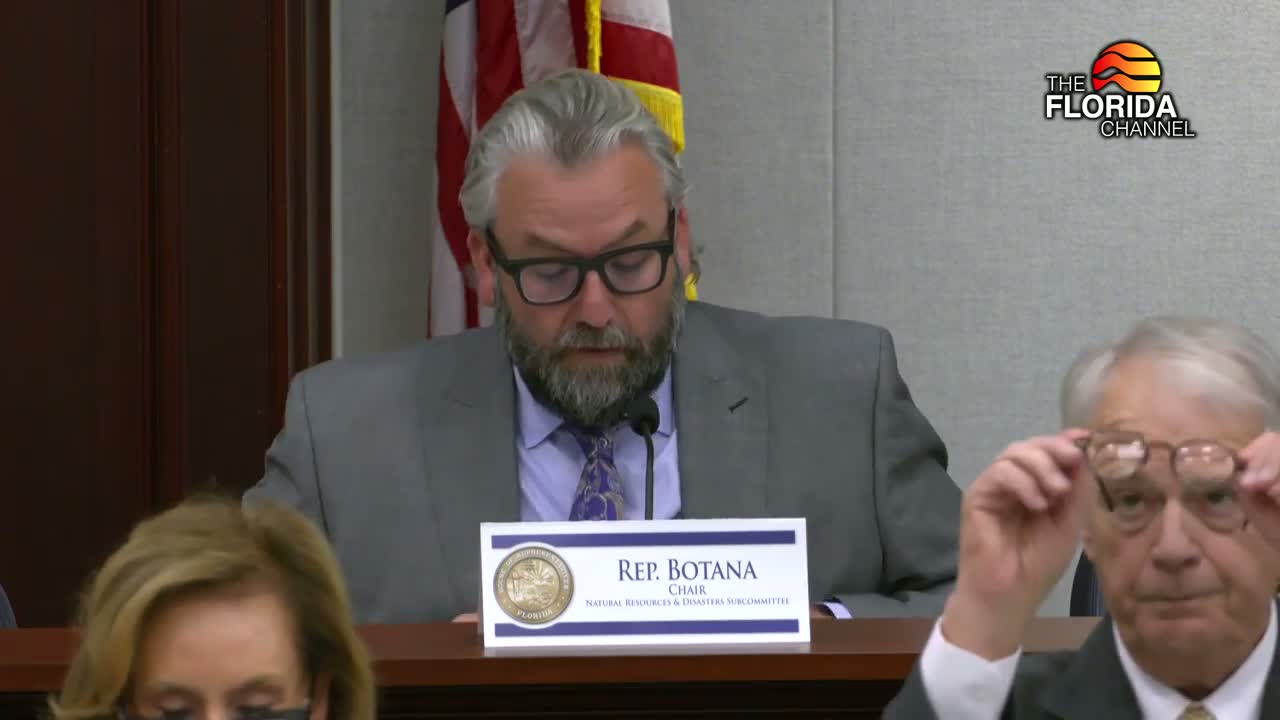
Speaker Pro Tem Duggan introduced HB 673, saying the measure would let owners of small parcels seek release of conservation easements where surrounding development has left the conserved parcel isolated. He said the proposal targets parcels “15 acres and or less” that are now “covered with impervious surface” and would let the relevant water management district release the easement if owners provide compensatory conservation elsewhere and comply with development requirements.
The bill’s sponsor, Speaker Pro Tem Duggan, offered an amendment requiring that landowners who develop released parcels comply with all applicable local development ordinances and seek modification of any existing permits; the amendment also defines "proprietary conservation easement" for the bill’s purposes. Duggan summarized the amendment: “property owners of land that is released from a conservation easement and subsequently developed must assume responsibility for all applicable requirements to develop, comply with all local ordinances related to development.”
Members questioned the 15-acre threshold and verification of surrounding impervious surfaces. Representative Raynor asked why 15 acres was the cutoff and how many parcels statewide would qualify; Duggan said he did not have statewide counts and would seek data from water management districts. Raynor also asked whether districts could verify that surrounding parcels were truly impervious and not slated for future redevelopment; Duggan said he was open to adding verification measures at later stops.
Opposition testimony included Chadwick Leonard of 1000 Friends of Florida, who waved in opposition. Representative Cross said he was concerned the bill could open a “Pandora’s box” by allowing releases that could reduce flood protection and recreational space. Representative Conley, a licensed engineer, expressed support, saying aggregated conservation lands and mitigation banks can add value and that new nutrient rules for future development would require performance-based nutrient removal.
After debate and the sponsor’s closing, the committee adopted the amendment and voted to report HB 673 favorably with a committee substitute (15 yeas, 2 nays). The bill will move to subsequent committee stops for further work and possible data-driven refinements to definitions and verification procedures.
The bill’s sponsor, Speaker Pro Tem Duggan, offered an amendment requiring that landowners who develop released parcels comply with all applicable local development ordinances and seek modification of any existing permits; the amendment also defines "proprietary conservation easement" for the bill’s purposes. Duggan summarized the amendment: “property owners of land that is released from a conservation easement and subsequently developed must assume responsibility for all applicable requirements to develop, comply with all local ordinances related to development.”
Members questioned the 15-acre threshold and verification of surrounding impervious surfaces. Representative Raynor asked why 15 acres was the cutoff and how many parcels statewide would qualify; Duggan said he did not have statewide counts and would seek data from water management districts. Raynor also asked whether districts could verify that surrounding parcels were truly impervious and not slated for future redevelopment; Duggan said he was open to adding verification measures at later stops.
Opposition testimony included Chadwick Leonard of 1000 Friends of Florida, who waved in opposition. Representative Cross said he was concerned the bill could open a “Pandora’s box” by allowing releases that could reduce flood protection and recreational space. Representative Conley, a licensed engineer, expressed support, saying aggregated conservation lands and mitigation banks can add value and that new nutrient rules for future development would require performance-based nutrient removal.
After debate and the sponsor’s closing, the committee adopted the amendment and voted to report HB 673 favorably with a committee substitute (15 yeas, 2 nays). The bill will move to subsequent committee stops for further work and possible data-driven refinements to definitions and verification procedures.
Don't Miss a Word: See the Full Meeting!
Go beyond summaries. Unlock every video, transcript, and key insight with a Founder Membership.
✓
Get instant access to full meeting videos
✓
Search and clip any phrase from complete transcripts
✓
Receive AI-powered summaries & custom alerts
✓
Enjoy lifetime, unrestricted access to government data
30-day money-back guarantee
