Miami-Dade prosecutor urges stronger statewide coordination, cites surge in trafficking victims
January 28, 2026 | 2026 Legislature FL, Florida
This article was created by AI summarizing key points discussed. AI makes mistakes, so for full details and context, please refer to the video of the full meeting. Please report any errors so we can fix them. Report an error »
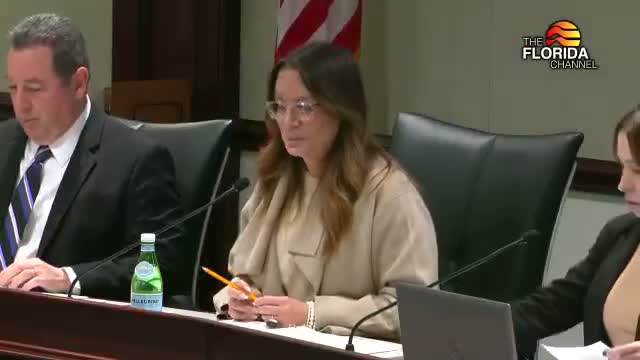
State Attorney Catherine Fernandez Rundle told the Senate Appropriations Committee on Criminal and Civil Justice that Florida and Miami-Dade face an acute human-trafficking problem and urged expanded statewide coordination and support.
Fernandez Rundle said Florida ranked third nationally for the number of identified trafficking victims and that Miami‑Dade was the state’s top county. She described the trafficking market as “about money,” citing national figures she displayed: a $150 billion global industry and roughly $32 billion in the United States. She said victims’ ages skew young, often in the early teens through the early 20s, and described cases in which runaways and other young people were lured online or on the street, coerced and forced into exploitation.
“We have almost 1,000 criminal human‑trafficking cases,” Fernandez Rundle said, and described how recruitment has shifted online: “40% of the recruitment is done online.” She recounted trafficking investigations and prosecutions in Miami‑Dade, including a case in which a 13‑year‑old was branded and could not testify; the office secured convictions using a tattoo artist as a witness, and later pushed for statutory changes restricting tattooing minors.
Fernandez Rundle described Miami‑Dade’s task force as a multi‑agency effort with about 70 sworn officers from local, state and federal partners, working alongside agencies such as Homeland Security, the FBI and the U.S. Marshals Service. She highlighted local victim services that operate alongside law enforcement: Camilla’s House, which retrofitted a wing to serve trafficking victims, Project Phoenix (seeded in part by $600,000 in legislative support), and the Thrive Clinic, developed with University of Miami medical partners to meet victims’ acute health needs.
She also described community outreach before major events — hotlines, QR codes, hotel training, and Amtrak cooperation — and recommended expanded information sharing about offenders who cross state lines: “There’s got to be, in my mind, a better form of communication of who these predators are because they move around circuit to circuit, destination to destination.” Fernandez Rundle offered training materials and technical assistance to schools, law enforcement and community groups.
The committee followed the presentation with questions about inter‑state data sharing, training for school personnel and how prosecution strategies minimize retraumatizing victims. Fernandez Rundle said her office pursues a victim‑centered prosecution model that looks for corroborating evidence when victims cannot safely testify, and praised technology provided by FDLE to image phones and obtain cell‑site information quickly.
The committee did not take formal action on the presentation. Fernandez Rundle invited members to visit local programs she described as national models.
Fernandez Rundle said Florida ranked third nationally for the number of identified trafficking victims and that Miami‑Dade was the state’s top county. She described the trafficking market as “about money,” citing national figures she displayed: a $150 billion global industry and roughly $32 billion in the United States. She said victims’ ages skew young, often in the early teens through the early 20s, and described cases in which runaways and other young people were lured online or on the street, coerced and forced into exploitation.
“We have almost 1,000 criminal human‑trafficking cases,” Fernandez Rundle said, and described how recruitment has shifted online: “40% of the recruitment is done online.” She recounted trafficking investigations and prosecutions in Miami‑Dade, including a case in which a 13‑year‑old was branded and could not testify; the office secured convictions using a tattoo artist as a witness, and later pushed for statutory changes restricting tattooing minors.
Fernandez Rundle described Miami‑Dade’s task force as a multi‑agency effort with about 70 sworn officers from local, state and federal partners, working alongside agencies such as Homeland Security, the FBI and the U.S. Marshals Service. She highlighted local victim services that operate alongside law enforcement: Camilla’s House, which retrofitted a wing to serve trafficking victims, Project Phoenix (seeded in part by $600,000 in legislative support), and the Thrive Clinic, developed with University of Miami medical partners to meet victims’ acute health needs.
She also described community outreach before major events — hotlines, QR codes, hotel training, and Amtrak cooperation — and recommended expanded information sharing about offenders who cross state lines: “There’s got to be, in my mind, a better form of communication of who these predators are because they move around circuit to circuit, destination to destination.” Fernandez Rundle offered training materials and technical assistance to schools, law enforcement and community groups.
The committee followed the presentation with questions about inter‑state data sharing, training for school personnel and how prosecution strategies minimize retraumatizing victims. Fernandez Rundle said her office pursues a victim‑centered prosecution model that looks for corroborating evidence when victims cannot safely testify, and praised technology provided by FDLE to image phones and obtain cell‑site information quickly.
The committee did not take formal action on the presentation. Fernandez Rundle invited members to visit local programs she described as national models.
Don't Miss a Word: See the Full Meeting!
Go beyond summaries. Unlock every video, transcript, and key insight with a Founder Membership.
✓
Get instant access to full meeting videos
✓
Search and clip any phrase from complete transcripts
✓
Receive AI-powered summaries & custom alerts
✓
Enjoy lifetime, unrestricted access to government data
30-day money-back guarantee
