Committee backs bill letting workers opt into time-limited, work-based learning positions that waive state minimum wage
January 28, 2026 | 2026 Legislature FL, Florida
This article was created by AI summarizing key points discussed. AI makes mistakes, so for full details and context, please refer to the video of the full meeting. Please report any errors so we can fix them. Report an error »
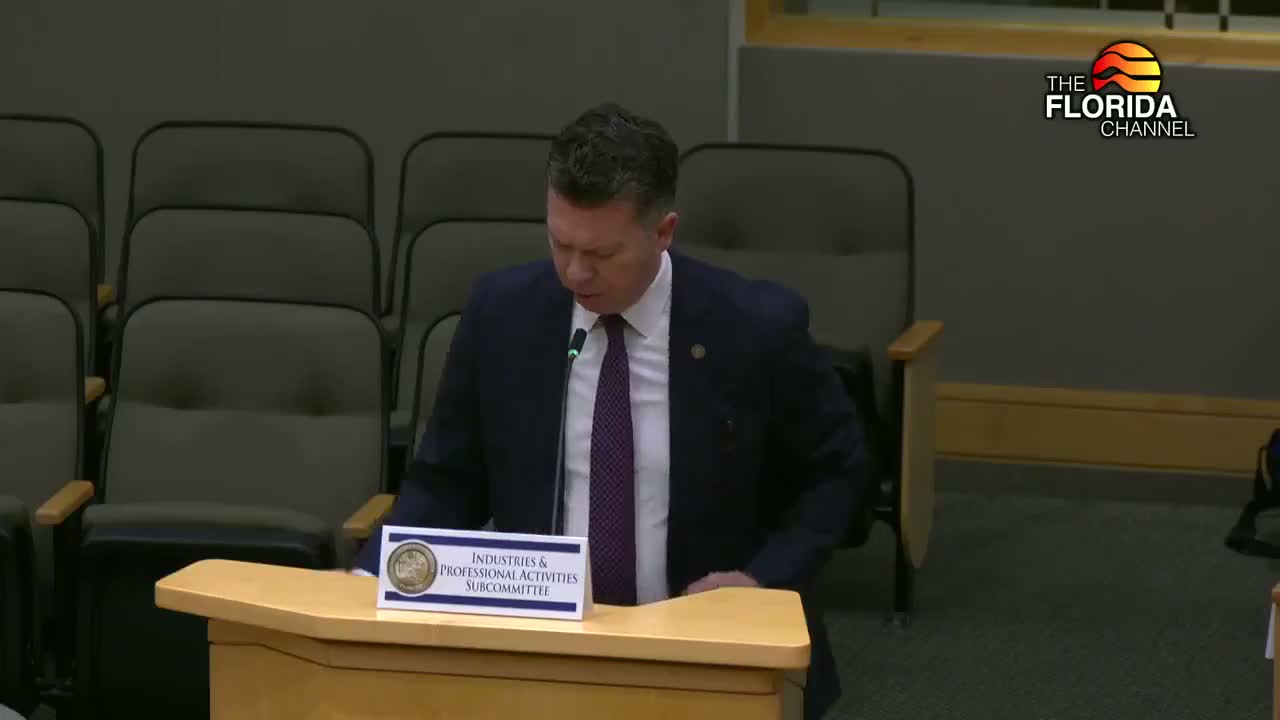
Representative Rip Chamberlain introduced HB 221 as a measure to create time-limited work-based learning opportunities that employees may accept in lieu of the state minimum wage. The sponsor said the bill is intended to expand pathways into careers that don’t require a college degree.
The committee heard extensive questioning about the bill’s scope and constitutionality. Several members — including Representative Henson, Representative Eskamani and Representative Valdez — asked whether the bill preempts local regulations and how it would avoid coercion or misuse by employers. Representative Chamberlain answered that the amendment under consideration would define work-based learning, set maximum participation periods and require documentation and compliance with state and federal labor laws.
The adopted amendment (barcode 329,405) establishes a maximum participation period of 252 days (two semesters) for adults and 126 days (one semester) for minors; it requires parental or guardian signature for participants under 18 and defines “work-based learning” to include documented learning objectives, assessment, and compliance with labor laws. Sponsor and several members emphasized that the program would not override federal minimum wage protections.
Public testimony was strongly opposed: Amina Spahich of Florida for All/SEIU called the measure a vehicle for “free labor” and warned courts have found unpaid internships prone to abuse; Brian Nathan (an apprenticeship alumnus) and Dr. Richard Templin (Florida AFL-CIO) highlighted affordability concerns and the lack of an enforcement mechanism to prevent coercion or wage theft. Supporters and small-business representatives said the measure could create narrowly tailored opportunities — for example, on-the-job training aligned with semester OJT schedules — that small employers otherwise cannot afford to provide under current rules.
Committee debate was sharply divided. Supporters (including Representatives Yeager, Boyles and Sapp) emphasized opportunities for technical-school students and small businesses; opponents (including Representatives Nixon, Eskamani and Valdez) argued the bill risks undercutting a voter-approved state minimum wage and could facilitate wage theft. Despite those objections, the committee adopted the amendment and voted to report HB 221 favorably.
Next steps: The bill is reported favorably from committee as amended. The amendment and substantial public opposition suggest future floor debate and potential litigation on constitutionality and enforcement mechanisms.
The committee heard extensive questioning about the bill’s scope and constitutionality. Several members — including Representative Henson, Representative Eskamani and Representative Valdez — asked whether the bill preempts local regulations and how it would avoid coercion or misuse by employers. Representative Chamberlain answered that the amendment under consideration would define work-based learning, set maximum participation periods and require documentation and compliance with state and federal labor laws.
The adopted amendment (barcode 329,405) establishes a maximum participation period of 252 days (two semesters) for adults and 126 days (one semester) for minors; it requires parental or guardian signature for participants under 18 and defines “work-based learning” to include documented learning objectives, assessment, and compliance with labor laws. Sponsor and several members emphasized that the program would not override federal minimum wage protections.
Public testimony was strongly opposed: Amina Spahich of Florida for All/SEIU called the measure a vehicle for “free labor” and warned courts have found unpaid internships prone to abuse; Brian Nathan (an apprenticeship alumnus) and Dr. Richard Templin (Florida AFL-CIO) highlighted affordability concerns and the lack of an enforcement mechanism to prevent coercion or wage theft. Supporters and small-business representatives said the measure could create narrowly tailored opportunities — for example, on-the-job training aligned with semester OJT schedules — that small employers otherwise cannot afford to provide under current rules.
Committee debate was sharply divided. Supporters (including Representatives Yeager, Boyles and Sapp) emphasized opportunities for technical-school students and small businesses; opponents (including Representatives Nixon, Eskamani and Valdez) argued the bill risks undercutting a voter-approved state minimum wage and could facilitate wage theft. Despite those objections, the committee adopted the amendment and voted to report HB 221 favorably.
Next steps: The bill is reported favorably from committee as amended. The amendment and substantial public opposition suggest future floor debate and potential litigation on constitutionality and enforcement mechanisms.
View the Full Meeting & All Its Details
This article offers just a summary. Unlock complete video, transcripts, and insights as a Founder Member.
✓
Watch full, unedited meeting videos
✓
Search every word spoken in unlimited transcripts
✓
AI summaries & real-time alerts (all government levels)
✓
Permanent access to expanding government content
30-day money-back guarantee
