DEP outlines 10‑year needs for Florida State Parks, estimates $759M in repairs and $1.39B for new projects
January 28, 2026 | 2026 Legislature FL, Florida
This article was created by AI summarizing key points discussed. AI makes mistakes, so for full details and context, please refer to the video of the full meeting. Please report any errors so we can fix them. Report an error »
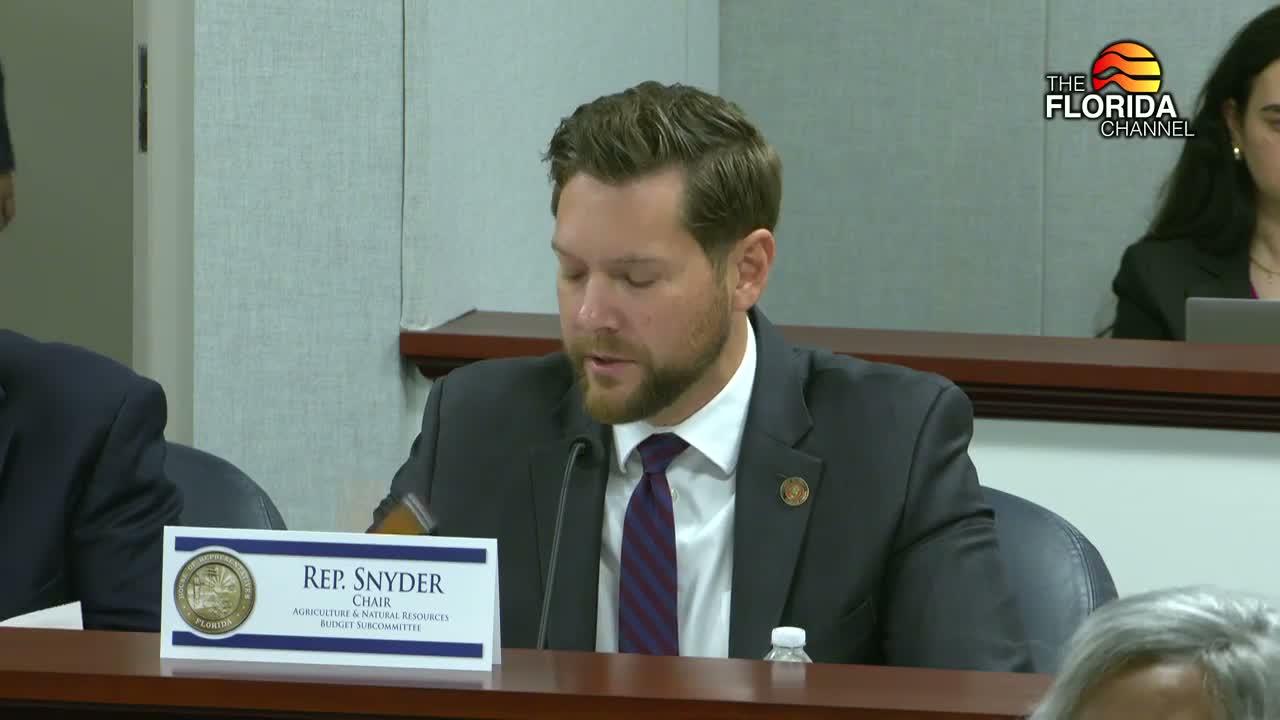
Brian Bradner, deputy secretary for land and recreation at the Department of Environmental Protection, briefed the Agriculture and Natural Resources Budget Subcommittee on the scope and financing of the Florida Park Service and its 10‑year needs.
Bradner said the Florida Park Service manages roughly 176 state parks, trails and historic sites encompassing about 800,000 acres, 3,000 miles of trails and roughly 101 miles of sandy beach. He told the panel the park system hosts more than 28 million visitors annually, generated over $75 million in revenue last fiscal year, and has an estimated $3.6 billion economic impact to local communities.
On budget figures, Bradner said the service’s current operating budget is about $182 million total, including roughly $143 million for operating costs and $39 million for fixed capital outlay. Of the fixed capital outlay, he said more than half is dedicated to grants for local acquisition or development and that $15 million in the current cycle was allocated for state park facility improvements. The governor’s recommended budget for fiscal year 2026‑27, Bradner said, proposes $224 million for state parks, including $50 million specifically for facility improvements.
Bradner described a department assessment that identified nearly $759 million in repair, maintenance and upgrades needed across the system over the next 10 years and an additional estimated $1.39 billion in new construction and development contemplated within approved unit management plans (UMPs) across all parks. He emphasized those UMP figures are an inventory and a planning estimate (the department added an inflation factor for the 10‑year window) and are not an immediate legislative budget request.
Members asked why revenue fell in a year when visitation remained stable; Bradner cited storm impacts that closed parks and reduced camping revenue while renovations were underway. He said every dollar previously appropriated to State Parks is encumbered and tied to projects in design, permitting or construction phases. Members also asked about public‑private partnerships; Bradner said the system has roughly 90 concession agreements that have generated about $6.7 million in capital improvements for the parks where they operate and that concessionaires contribute a share of gross revenue and negotiated capital amounts at procurement.
Committee members requested examples of UMPs for parks in their districts and more detailed budget breakouts; Bradner agreed to follow up and provide materials. He said UMPs identify potential activities for parks on a 10‑year cycle and do not mean construction will occur without funding approval.
The briefing concluded with members praising the park system and encouraging park visits; the meeting adjourned.
Bradner said the Florida Park Service manages roughly 176 state parks, trails and historic sites encompassing about 800,000 acres, 3,000 miles of trails and roughly 101 miles of sandy beach. He told the panel the park system hosts more than 28 million visitors annually, generated over $75 million in revenue last fiscal year, and has an estimated $3.6 billion economic impact to local communities.
On budget figures, Bradner said the service’s current operating budget is about $182 million total, including roughly $143 million for operating costs and $39 million for fixed capital outlay. Of the fixed capital outlay, he said more than half is dedicated to grants for local acquisition or development and that $15 million in the current cycle was allocated for state park facility improvements. The governor’s recommended budget for fiscal year 2026‑27, Bradner said, proposes $224 million for state parks, including $50 million specifically for facility improvements.
Bradner described a department assessment that identified nearly $759 million in repair, maintenance and upgrades needed across the system over the next 10 years and an additional estimated $1.39 billion in new construction and development contemplated within approved unit management plans (UMPs) across all parks. He emphasized those UMP figures are an inventory and a planning estimate (the department added an inflation factor for the 10‑year window) and are not an immediate legislative budget request.
Members asked why revenue fell in a year when visitation remained stable; Bradner cited storm impacts that closed parks and reduced camping revenue while renovations were underway. He said every dollar previously appropriated to State Parks is encumbered and tied to projects in design, permitting or construction phases. Members also asked about public‑private partnerships; Bradner said the system has roughly 90 concession agreements that have generated about $6.7 million in capital improvements for the parks where they operate and that concessionaires contribute a share of gross revenue and negotiated capital amounts at procurement.
Committee members requested examples of UMPs for parks in their districts and more detailed budget breakouts; Bradner agreed to follow up and provide materials. He said UMPs identify potential activities for parks on a 10‑year cycle and do not mean construction will occur without funding approval.
The briefing concluded with members praising the park system and encouraging park visits; the meeting adjourned.
View the Full Meeting & All Its Details
This article offers just a summary. Unlock complete video, transcripts, and insights as a Founder Member.
✓
Watch full, unedited meeting videos
✓
Search every word spoken in unlimited transcripts
✓
AI summaries & real-time alerts (all government levels)
✓
Permanent access to expanding government content
30-day money-back guarantee
