Committee pauses work on bill to reestablish parole, citing drafting questions
January 28, 2026 | 2026 Legislature ME, Maine
This article was created by AI summarizing key points discussed. AI makes mistakes, so for full details and context, please refer to the video of the full meeting. Please report any errors so we can fix them. Report an error »
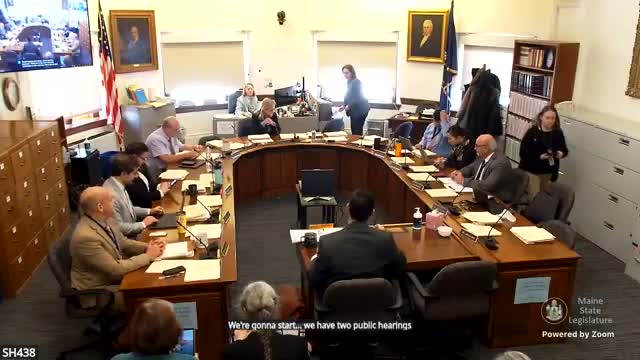
Rep. Anne Carney, chair of the Joint Standing Committee on the Judiciary, opened a work session on LD 1941, an act to implement recommendations to reestablish parole in Maine.
OPLA analyst Eli Murphy told the committee the draft would rename the state parole board, expand membership from five to seven with at least one formerly incarcerated person, allow parole eligibility for some sentences imposed after 05/01/1976, and require sentencing courts to specify whether life sentences are parole-eligible. Murphy said the bill would not change the Department of Corrections supervised community confinement program and pointed members to recidivism reports included in the packet.
Sponsor Representative Nina Milliken walked the committee through a sponsor amendment that makes multiple changes, including demographic and qualification guidance for board appointments, annual training requirements, a proposal to raise minimum sentence length for parole eligibility (from five to ten years in the amendment she described), and language on technical violations and revocation standards. Milliken described a change to the standard of proof for parole revocations that, in the sponsor’s latest drafting, would replace “clear and convincing” evidence with a “preponderance of the evidence” standard.
Committee members raised detailed drafting and policy questions on whether an expanded parole board might be dominated by gubernatorial appointments, how technical violations should be handled (for example, curfew or substance-use breaches), and how the revocation and appeals processes would interact with existing court review. Several members noted inconsistencies between the emailed amendment and the printed copies on the committee table; staff agreed to produce a manipulable Word version so members could track changes.
After a short caucus to allow staff to distribute corrected materials and for members to prepare proposed changes, Representative Lee moved to table the bill to permit further drafting and coordination with the Department of Corrections and other stakeholders. The motion carried by voice/show of hands. The committee asked staff to supply corrected amendment copies and additional materials at the next work session.
The committee did not take final action on policy details; staff and the sponsor said they would return with corrected amendments and follow-up information for the committee to consider.
OPLA analyst Eli Murphy told the committee the draft would rename the state parole board, expand membership from five to seven with at least one formerly incarcerated person, allow parole eligibility for some sentences imposed after 05/01/1976, and require sentencing courts to specify whether life sentences are parole-eligible. Murphy said the bill would not change the Department of Corrections supervised community confinement program and pointed members to recidivism reports included in the packet.
Sponsor Representative Nina Milliken walked the committee through a sponsor amendment that makes multiple changes, including demographic and qualification guidance for board appointments, annual training requirements, a proposal to raise minimum sentence length for parole eligibility (from five to ten years in the amendment she described), and language on technical violations and revocation standards. Milliken described a change to the standard of proof for parole revocations that, in the sponsor’s latest drafting, would replace “clear and convincing” evidence with a “preponderance of the evidence” standard.
Committee members raised detailed drafting and policy questions on whether an expanded parole board might be dominated by gubernatorial appointments, how technical violations should be handled (for example, curfew or substance-use breaches), and how the revocation and appeals processes would interact with existing court review. Several members noted inconsistencies between the emailed amendment and the printed copies on the committee table; staff agreed to produce a manipulable Word version so members could track changes.
After a short caucus to allow staff to distribute corrected materials and for members to prepare proposed changes, Representative Lee moved to table the bill to permit further drafting and coordination with the Department of Corrections and other stakeholders. The motion carried by voice/show of hands. The committee asked staff to supply corrected amendment copies and additional materials at the next work session.
The committee did not take final action on policy details; staff and the sponsor said they would return with corrected amendments and follow-up information for the committee to consider.
View the Full Meeting & All Its Details
This article offers just a summary. Unlock complete video, transcripts, and insights as a Founder Member.
✓
Watch full, unedited meeting videos
✓
Search every word spoken in unlimited transcripts
✓
AI summaries & real-time alerts (all government levels)
✓
Permanent access to expanding government content
30-day money-back guarantee
