Families and providers urge longer protections for two‑person residential homes; DHHS cautions on costs and system drivers
January 28, 2026 | 2026 Legislature ME, Maine
This article was created by AI summarizing key points discussed. AI makes mistakes, so for full details and context, please refer to the video of the full meeting. Please report any errors so we can fix them. Report an error »
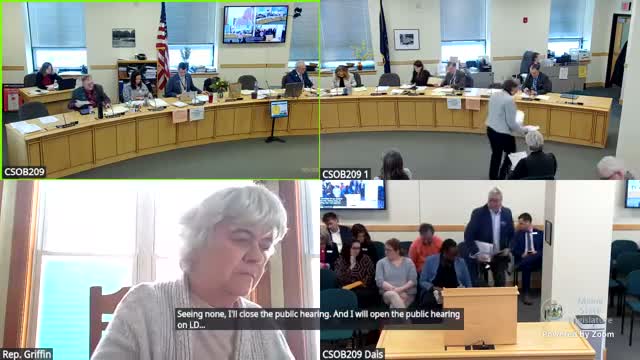
Representative Melanie Sachs presented LD 2117 on Jan. 28, seeking modest changes to MaineCare policy for two‑person residential settings in Section 21 of the MaineCare Benefits Manual. The resolve would extend bed‑hold payments during hospitalizations from 30 to 60 days, lengthen initial vacancy timelines from 90 to 120 days, permit time‑limited extensions when providers document active matching efforts, and create a residency exception for long‑term residents (5 years) to prevent forced moves that advocates say amount to eviction of a person’s home.
Families and providers delivered personal testimony. Alice Pelletier described converting her Freeport family home into a licensed two‑person residential home for her adult daughter Natalie, who is nonverbal and needs 24/7 care; Pelletier said providers have searched for more than a year for a compatible roommate and that a 30‑day vacancy rule would force a disruptive move. Provider representatives from Serenity Residential Care, Ubuntu Care, Skills, Inc., Woodfords and other organizations testified they routinely face difficult vendor‑matching problems; they asked for limited extensions and clearer, predictable processes rather than sudden displacements.
Providers and case managers described the vendor call list and lengthy matching and approval processes, and noted that person‑centered planning and ADA modification requests sometimes take many weeks. Witnesses gave examples of individuals where introducing a roommate would threaten safety or regress clinical progress, arguing that short mandatory vacancy timelines are inconsistent with HCBS (home‑and‑community‑based services) principles.
DHHS associate director Derek Fales testified in opposition (or with reservations), saying the department shares the goal of stability but that extending timelines statewide would increase waiver costs and not remedy underlying placement‑matching drivers. Fales noted the waiver rules and CMS constraints (federal approval of waiver design) and pointed to existing exception processes—ADA modifications and grievance procedures—that can be used to address specific situations. DHHS reported ~1,984 people choosing group homes under Section 21 and highlighted about 98 approved single‑person placements (ADA‑based) already in the system.
Committee members asked for more data about ADA denials, the grievance timeline and the vendor call list mechanics. Supporters said LD 2117 was narrowly targeted to avoid unnecessary displacement; opponents asked the committee to consider system‑level fixes tied to occupancy incentives, placement coordination, and targeted exceptions rather than a blanket timeline extension.
Next steps: the committee closed public hearing testimony and signaled the matter would be revisited in a work session with requests for additional DHHS data on ADA exceptions, grievance timelines and counts of single‑person placements.
Families and providers delivered personal testimony. Alice Pelletier described converting her Freeport family home into a licensed two‑person residential home for her adult daughter Natalie, who is nonverbal and needs 24/7 care; Pelletier said providers have searched for more than a year for a compatible roommate and that a 30‑day vacancy rule would force a disruptive move. Provider representatives from Serenity Residential Care, Ubuntu Care, Skills, Inc., Woodfords and other organizations testified they routinely face difficult vendor‑matching problems; they asked for limited extensions and clearer, predictable processes rather than sudden displacements.
Providers and case managers described the vendor call list and lengthy matching and approval processes, and noted that person‑centered planning and ADA modification requests sometimes take many weeks. Witnesses gave examples of individuals where introducing a roommate would threaten safety or regress clinical progress, arguing that short mandatory vacancy timelines are inconsistent with HCBS (home‑and‑community‑based services) principles.
DHHS associate director Derek Fales testified in opposition (or with reservations), saying the department shares the goal of stability but that extending timelines statewide would increase waiver costs and not remedy underlying placement‑matching drivers. Fales noted the waiver rules and CMS constraints (federal approval of waiver design) and pointed to existing exception processes—ADA modifications and grievance procedures—that can be used to address specific situations. DHHS reported ~1,984 people choosing group homes under Section 21 and highlighted about 98 approved single‑person placements (ADA‑based) already in the system.
Committee members asked for more data about ADA denials, the grievance timeline and the vendor call list mechanics. Supporters said LD 2117 was narrowly targeted to avoid unnecessary displacement; opponents asked the committee to consider system‑level fixes tied to occupancy incentives, placement coordination, and targeted exceptions rather than a blanket timeline extension.
Next steps: the committee closed public hearing testimony and signaled the matter would be revisited in a work session with requests for additional DHHS data on ADA exceptions, grievance timelines and counts of single‑person placements.
Don't Miss a Word: See the Full Meeting!
Go beyond summaries. Unlock every video, transcript, and key insight with a Founder Membership.
✓
Get instant access to full meeting videos
✓
Search and clip any phrase from complete transcripts
✓
Receive AI-powered summaries & custom alerts
✓
Enjoy lifetime, unrestricted access to government data
30-day money-back guarantee
