Small‑store pharmacy carve‑out proposed for tobacco sales; grocers and pharmacists warn of rural closures, health advocates object
January 28, 2026 | 2026 Legislature ME, Maine
This article was created by AI summarizing key points discussed. AI makes mistakes, so for full details and context, please refer to the video of the full meeting. Please report any errors so we can fix them. Report an error »
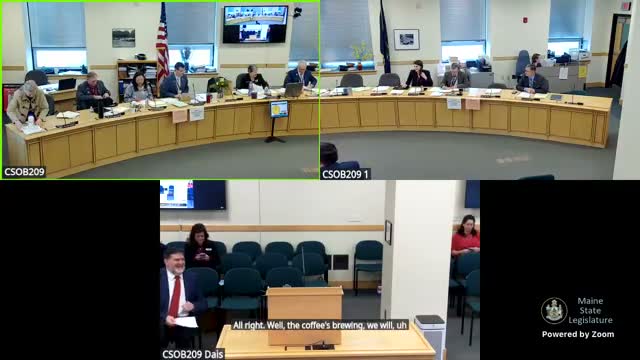
Sen. Chip Curry told the Health and Human Services Committee on Jan. 28 that LD 2134 is a narrow fix to an unintended consequence of last year’s law prohibiting tobacco sales in establishments containing pharmacies. The bill would allow small grocery stores under 26,000 square feet with an independently licensed, separately leased pharmacy (and where the arrangement existed before July 7, 2025) to continue selling tobacco products while preserving the pharmacy’s separate licensing and point‑of‑sale systems.
Several small grocery owners and independently leased pharmacists testified that the change is necessary to keep neighborhood pharmacies open in rural towns. Brett Danforth, who owns groceries in Hermon and Pittsfield, said his leased pharmacy allowed neighbors to obtain prescriptions without a 15–30 minute drive and that removing tobacco sales threatened the store’s financial viability and the pharmacy lease.
Pharmacy trade groups supported the targeted carve‑out as a rural access measure; they emphasized that the proposal would not permit tobacco sales inside the licensed pharmacy space itself and would include eligibility limits. Grocers provided an initial list of roughly eight affected pairings (Oakland, Randolph, Cornish, Corinth, Hermon, Fort Kent, Presque Isle and Unity) and the committee asked proponents to supply a geographic map and nearest‑pharmacy distances for the work session.
Public‑health organizations—including the Campaign for Tobacco‑Free Kids, the American Cancer Society Cancer Action Network, the American Lung Association and Maine Public Health Association—opposed the carve‑out. They argued the last session’s pharmacy sales prohibition was a deliberate public‑health policy to dissociate health care access points from products that cause preventable death. Opponents urged targeted health‑focused alternatives—telepharmacy, grants, incentives to support rural pharmacy viability—rather than legislating an exception that could erode the statewide standard.
Committee members requested follow‑up material: a map showing the eight sites, distances to the nearest alternative pharmacies, and further evidence about what closures or lease terminations the proponents expect without the carve‑out. The matter will be revisited in work session with those data.
Several small grocery owners and independently leased pharmacists testified that the change is necessary to keep neighborhood pharmacies open in rural towns. Brett Danforth, who owns groceries in Hermon and Pittsfield, said his leased pharmacy allowed neighbors to obtain prescriptions without a 15–30 minute drive and that removing tobacco sales threatened the store’s financial viability and the pharmacy lease.
Pharmacy trade groups supported the targeted carve‑out as a rural access measure; they emphasized that the proposal would not permit tobacco sales inside the licensed pharmacy space itself and would include eligibility limits. Grocers provided an initial list of roughly eight affected pairings (Oakland, Randolph, Cornish, Corinth, Hermon, Fort Kent, Presque Isle and Unity) and the committee asked proponents to supply a geographic map and nearest‑pharmacy distances for the work session.
Public‑health organizations—including the Campaign for Tobacco‑Free Kids, the American Cancer Society Cancer Action Network, the American Lung Association and Maine Public Health Association—opposed the carve‑out. They argued the last session’s pharmacy sales prohibition was a deliberate public‑health policy to dissociate health care access points from products that cause preventable death. Opponents urged targeted health‑focused alternatives—telepharmacy, grants, incentives to support rural pharmacy viability—rather than legislating an exception that could erode the statewide standard.
Committee members requested follow‑up material: a map showing the eight sites, distances to the nearest alternative pharmacies, and further evidence about what closures or lease terminations the proponents expect without the carve‑out. The matter will be revisited in work session with those data.
Don't Miss a Word: See the Full Meeting!
Go beyond summaries. Unlock every video, transcript, and key insight with a Founder Membership.
✓
Get instant access to full meeting videos
✓
Search and clip any phrase from complete transcripts
✓
Receive AI-powered summaries & custom alerts
✓
Enjoy lifetime, unrestricted access to government data
30-day money-back guarantee
