Glenwood Springs planning panel approves variances for Iron Mountain Hot Springs sign, 4–3
January 28, 2026 | Glenwood Springs, Garfield County, Colorado
This article was created by AI summarizing key points discussed. AI makes mistakes, so for full details and context, please refer to the video of the full meeting. Please report any errors so we can fix them. Report an error »
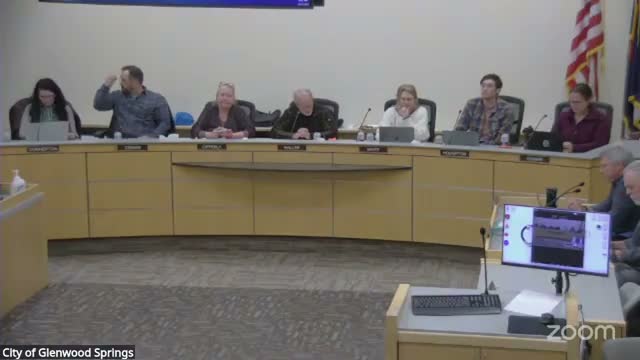
The Glenwood Springs Planning and Zoning Commission voted 4–3 on Jan. 27 to grant two variances requested by Iron Mountain Hot Springs that will allow a multi‑pole poll sign and greater sign height than the code normally permits in the RE Resort district. Commissioner Connorton moved to approve both variances and Commissioner Cowan seconded the motion; the commission recorded a 4–3 favorable outcome.
Staff had recommended denial. Jim, a planning staff member, told commissioners the application met only two of the seven variance criteria in the code and that the prior 2014 approval had expired; he also said reviewing agencies including CDOT raised no conflict with the Highway Beautification Act of 1965. No public commenters spoke during the hearing and staff said public notice requirements were met.
Applicant consultant Bruce Barth of Red House Architecture said the proposed design reduces total sign area compared with the earlier submission and argued that topography and the property’s distance below I‑70 make standard pole signage ineffective for wayfinding. Barth told the commission the current proposal has a total structure height of roughly 47 feet (the sign lettering band is about 43 feet) and a sign face area of 195 square feet versus 224 square feet in the 2014 submittal. He also said the proposed tower would sit about 100 feet from the edge of the eastbound I‑70 lane and about 50 feet from the property line/right-of-way.
Commissioners were split. Supporters said the site’s river adjacency and drop in elevation from the interstate create a practical difficulty that justifies relief and that the revised design is more integrated and contextual than a standard multi‑pole commercial sign. Opponents argued the applicant’s design choices created the condition and that approving a sign twice the allowable height would set a harmful precedent and harm community character. Commissioner Connorton summarized his rationale by listing findings he believed were supported by the record — exceptional site conditions, undue hardship, hardship not self‑created, no harm to public or code intent, and minimum relief necessary.
The commission’s approval covers both requested actions: (1) allowing a freestanding poll sign/support structure configuration with multiple supports (the applicant sought four poles rather than the single‑pole limit), and (2) exceeding the RE district’s sign height limit to the dimensions described in the application. Staff provided alternate findings language in the packet for commissioners who wished to adopt an approval.
Next steps for the project include complying with building‑permit and sign‑permit processes and any required coordination with CDOT; the staff presentation noted the observation‑tower aspect of the earlier approval is not part of this application because the prior permit expired. The record shows no additional public hearing items on these variances before the commission; any design or location adjustments will require a return to city review or a new submittal.
(Reporting note: quotes and measurements above are taken from the commission hearing record and applicant materials presented during the Jan. 27 meeting.)
Staff had recommended denial. Jim, a planning staff member, told commissioners the application met only two of the seven variance criteria in the code and that the prior 2014 approval had expired; he also said reviewing agencies including CDOT raised no conflict with the Highway Beautification Act of 1965. No public commenters spoke during the hearing and staff said public notice requirements were met.
Applicant consultant Bruce Barth of Red House Architecture said the proposed design reduces total sign area compared with the earlier submission and argued that topography and the property’s distance below I‑70 make standard pole signage ineffective for wayfinding. Barth told the commission the current proposal has a total structure height of roughly 47 feet (the sign lettering band is about 43 feet) and a sign face area of 195 square feet versus 224 square feet in the 2014 submittal. He also said the proposed tower would sit about 100 feet from the edge of the eastbound I‑70 lane and about 50 feet from the property line/right-of-way.
Commissioners were split. Supporters said the site’s river adjacency and drop in elevation from the interstate create a practical difficulty that justifies relief and that the revised design is more integrated and contextual than a standard multi‑pole commercial sign. Opponents argued the applicant’s design choices created the condition and that approving a sign twice the allowable height would set a harmful precedent and harm community character. Commissioner Connorton summarized his rationale by listing findings he believed were supported by the record — exceptional site conditions, undue hardship, hardship not self‑created, no harm to public or code intent, and minimum relief necessary.
The commission’s approval covers both requested actions: (1) allowing a freestanding poll sign/support structure configuration with multiple supports (the applicant sought four poles rather than the single‑pole limit), and (2) exceeding the RE district’s sign height limit to the dimensions described in the application. Staff provided alternate findings language in the packet for commissioners who wished to adopt an approval.
Next steps for the project include complying with building‑permit and sign‑permit processes and any required coordination with CDOT; the staff presentation noted the observation‑tower aspect of the earlier approval is not part of this application because the prior permit expired. The record shows no additional public hearing items on these variances before the commission; any design or location adjustments will require a return to city review or a new submittal.
(Reporting note: quotes and measurements above are taken from the commission hearing record and applicant materials presented during the Jan. 27 meeting.)
View the Full Meeting & All Its Details
This article offers just a summary. Unlock complete video, transcripts, and insights as a Founder Member.
✓
Watch full, unedited meeting videos
✓
Search every word spoken in unlimited transcripts
✓
AI summaries & real-time alerts (all government levels)
✓
Permanent access to expanding government content
30-day money-back guarantee
