Glenwood Springs commission opens review of lighting code, weighs dark‑sky measures and sign curfew
January 28, 2026 | Glenwood Springs, Garfield County, Colorado
This article was created by AI summarizing key points discussed. AI makes mistakes, so for full details and context, please refer to the video of the full meeting. Please report any errors so we can fix them. Report an error »
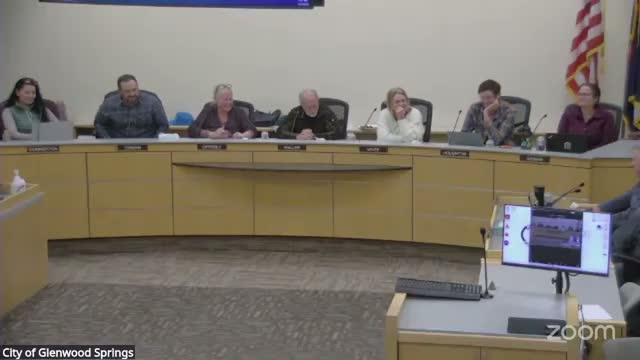
The Glenwood Springs Planning and Zoning Commission held a work session on Jan. 27 to review lighting and illumination standards, focusing on how the city measures and regulates exterior light, how signage is illuminated, and possible updates to protect night skies.
Emery, city staff, walked commissioners through basic measurement (lumens for source, foot‑candles for illumination), the city’s three lighting districts and typical foot‑candle limits at the property line and 10 feet beyond. He explained fixture classifications (shielded, partially shielded, full cut‑off) and described tradeoffs between externally and internally illuminated signs and the special case of halo signage. Emery noted guidance from Dark Sky International and said the organization generally recommends not exceeding 3,000 Kelvin for exterior lighting.
Commissioners raised multiple implementation questions: whether the existing 300‑foot rule for turning off signs near residences should be expanded citywide, how color temperature limits and full‑cutoff fixture requirements would interact with shielded lighting and security needs, and what incentives or rebate programs (for example through Garfield Clean Energy) might ease transitions for businesses. Commissioners also discussed bi‑level parking‑lot lighting that dims when unused, concerns about bright city fixtures at locations such as 2 Rivers Park and under-bridge lighting, and the tension between dark‑sky goals and safety or security considerations.
Staff said there are many legal nonconforming signs in town and recommended focused outreach, analysis of model ordinances (Flagstaff and others were cited as examples), and consultation with police and insurers on safety implications before proposing code amendments. Commissioners asked staff to return with candidate amendments, examples of other municipal programs, cost estimates, and suggested public‑engagement steps.
The work session produced no immediate code changes; staff will research options including a potential citywide sign curfew, Kelvin/color limits (≤3,000 K), shielding requirements, and incentive programs, and will present findings at a future commission meeting for further direction.
(Reporting note: technical terms and numeric examples are summarized from the staff presentation and commissioner discussion recorded in the meeting transcript.)
Emery, city staff, walked commissioners through basic measurement (lumens for source, foot‑candles for illumination), the city’s three lighting districts and typical foot‑candle limits at the property line and 10 feet beyond. He explained fixture classifications (shielded, partially shielded, full cut‑off) and described tradeoffs between externally and internally illuminated signs and the special case of halo signage. Emery noted guidance from Dark Sky International and said the organization generally recommends not exceeding 3,000 Kelvin for exterior lighting.
Commissioners raised multiple implementation questions: whether the existing 300‑foot rule for turning off signs near residences should be expanded citywide, how color temperature limits and full‑cutoff fixture requirements would interact with shielded lighting and security needs, and what incentives or rebate programs (for example through Garfield Clean Energy) might ease transitions for businesses. Commissioners also discussed bi‑level parking‑lot lighting that dims when unused, concerns about bright city fixtures at locations such as 2 Rivers Park and under-bridge lighting, and the tension between dark‑sky goals and safety or security considerations.
Staff said there are many legal nonconforming signs in town and recommended focused outreach, analysis of model ordinances (Flagstaff and others were cited as examples), and consultation with police and insurers on safety implications before proposing code amendments. Commissioners asked staff to return with candidate amendments, examples of other municipal programs, cost estimates, and suggested public‑engagement steps.
The work session produced no immediate code changes; staff will research options including a potential citywide sign curfew, Kelvin/color limits (≤3,000 K), shielding requirements, and incentive programs, and will present findings at a future commission meeting for further direction.
(Reporting note: technical terms and numeric examples are summarized from the staff presentation and commissioner discussion recorded in the meeting transcript.)
View the Full Meeting & All Its Details
This article offers just a summary. Unlock complete video, transcripts, and insights as a Founder Member.
✓
Watch full, unedited meeting videos
✓
Search every word spoken in unlimited transcripts
✓
AI summaries & real-time alerts (all government levels)
✓
Permanent access to expanding government content
30-day money-back guarantee
