AODA warns legacy systems are end‑of‑life; seeks funding for case management and cybersecurity
January 23, 2026 | Appropriations & Finance, House of Representatives, Committees, Legislative, New Mexico
This article was created by AI summarizing key points discussed. AI makes mistakes, so for full details and context, please refer to the video of the full meeting. Please report any errors so we can fix them. Report an error »
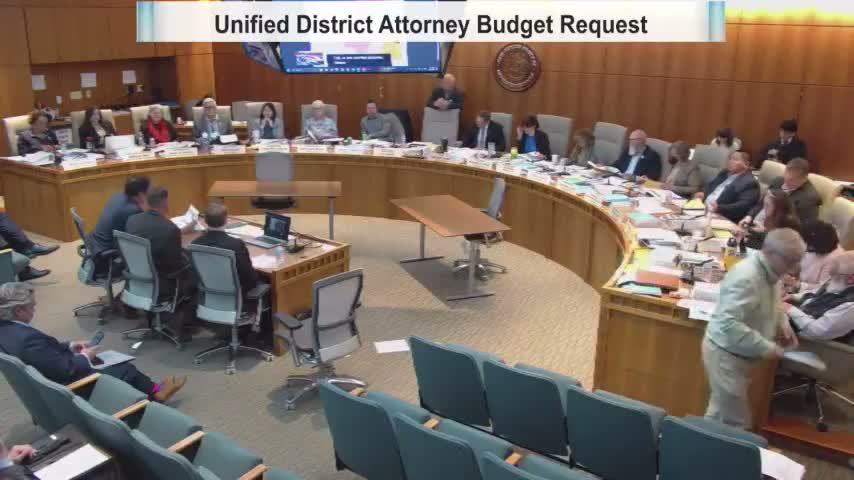
AODA Director Rick Tedrow summarized an agency‑wide IT and cybersecurity request, arguing that legacy on‑premise case‑management systems and server hardware have reached end‑of‑life and need migration to modern, managed cloud services. "We need to protect the data that is in the case management systems for the DAs," he said, noting the administrative office provides digital services to district attorneys and several other state agencies.
Analysts reported an executive recommendation that includes nonrecurring line items for enterprise licensing and some maintenance; the AODA requested a larger package to cover migration, cloud hosting, licensing and cybersecurity hardening. Tedrow said the AODA has been coordinating with the Department of Information Technology (DoIT) but noted constitutional and statutory limits because the courts and elected DA offices are not part of the executive branch; DoIT can supply technical expertise but not automatically assume operations without statutory changes.
District attorneys testified that today’s criminal prosecutions depend on secure systems: they described evidence storage needs (body camera cloud storage), expert witness travel, vehicle/travel costs for rural trials, and the risk that data breaches could expose victim and witness information. Several DAs urged committee follow‑up on DoIT collaboration and budget pathways for migration and ongoing cybersecurity operations.
Committee action: The committee adopted the LFC recommendation for AODA with the creation of a working group to reconcile Executive vs LFC funding for IT/cybersecurity, evaluate options to leverage DoIT and to scope a realistic migration plan with phased costs and timelines.
Analysts reported an executive recommendation that includes nonrecurring line items for enterprise licensing and some maintenance; the AODA requested a larger package to cover migration, cloud hosting, licensing and cybersecurity hardening. Tedrow said the AODA has been coordinating with the Department of Information Technology (DoIT) but noted constitutional and statutory limits because the courts and elected DA offices are not part of the executive branch; DoIT can supply technical expertise but not automatically assume operations without statutory changes.
District attorneys testified that today’s criminal prosecutions depend on secure systems: they described evidence storage needs (body camera cloud storage), expert witness travel, vehicle/travel costs for rural trials, and the risk that data breaches could expose victim and witness information. Several DAs urged committee follow‑up on DoIT collaboration and budget pathways for migration and ongoing cybersecurity operations.
Committee action: The committee adopted the LFC recommendation for AODA with the creation of a working group to reconcile Executive vs LFC funding for IT/cybersecurity, evaluate options to leverage DoIT and to scope a realistic migration plan with phased costs and timelines.
View the Full Meeting & All Its Details
This article offers just a summary. Unlock complete video, transcripts, and insights as a Founder Member.
✓
Watch full, unedited meeting videos
✓
Search every word spoken in unlimited transcripts
✓
AI summaries & real-time alerts (all government levels)
✓
Permanent access to expanding government content
30-day money-back guarantee
