Experts urge statewide early intervention, community-based alternatives for youth in New Mexico
January 26, 2026 | Health and Public Affairs, Senate, Committees, Legislative, New Mexico
This article was created by AI summarizing key points discussed. AI makes mistakes, so for full details and context, please refer to the video of the full meeting. Please report any errors so we can fix them. Report an error »
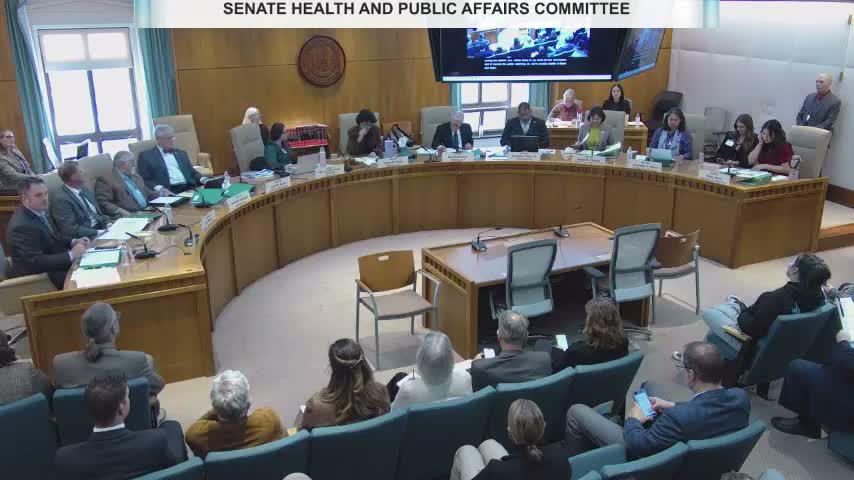
Nina Solomon, deputy division director at the Council of State Governments Justice Center, told the Senate Health and Public Affairs Committee that New Mexico lacks a statewide, research‑based approach to adolescent early intervention and behavioral health and that many young people enter the juvenile justice system because of unmet service needs rather than public‑safety danger. "When we looked at CYFD's data over the last several years, we see that upwards of 75 percent of charges that are referred to CYFD juvenile justice are for lower level offenses," Solomon said while summarizing the Collaborating for Youth and Public Safety Initiative.
Local providers described community alternatives that they say reduce recidivism and improve placement stability. Jerry Bachicha, chief program officer at New Day Youth and Family Services, described a 24‑hour reception and assessment center that serves as diversion and emergency shelter, reporting strong outcomes: "The outcomes are 90 percent, 90 percent successful lack of recidivism within 90 days from them leaving successfully from our program," he said. Bachicha urged the legislature to support replication and investment so other counties can adopt similar models.
Rodrigo Rodriguez of La Placita Institute, which coordinates a 28‑organization Justice for Youth Community Collaborative, called for legislative protections and broader reforms. He said advocates found practices they consider abusive — "we found out in 2023 after an incident on Christmas day at the d home that there were cameras in the showers of that facility" — and asked the committee to consider bans on cameras in juvenile showers and on strip searches, to avoid expanding detention facilities, and to raise the age of prosecution. Rodriguez also described the collaborative's funding history — an initial $500,000 investment and roughly $3.5 million mobilized since — and urged lawmakers to invest in community‑led, evidence‑based interventions.
Presenters and committee members repeatedly emphasized gaps in data and coordination: Solomon said limited tracking of youth gun offenses makes it difficult to understand scope and geography, and speakers urged a statewide convening and a cross‑systems table focused on adolescent behavioral health to standardize referrals and quality of services.
No formal committee action was taken on these presentations. Chair Linda Lopez thanked the presenters and moved the committee on to scheduled bills; members said they would use the findings to inform future legislation and asked staff for more detail on program costs and statewide scalability.
Local providers described community alternatives that they say reduce recidivism and improve placement stability. Jerry Bachicha, chief program officer at New Day Youth and Family Services, described a 24‑hour reception and assessment center that serves as diversion and emergency shelter, reporting strong outcomes: "The outcomes are 90 percent, 90 percent successful lack of recidivism within 90 days from them leaving successfully from our program," he said. Bachicha urged the legislature to support replication and investment so other counties can adopt similar models.
Rodrigo Rodriguez of La Placita Institute, which coordinates a 28‑organization Justice for Youth Community Collaborative, called for legislative protections and broader reforms. He said advocates found practices they consider abusive — "we found out in 2023 after an incident on Christmas day at the d home that there were cameras in the showers of that facility" — and asked the committee to consider bans on cameras in juvenile showers and on strip searches, to avoid expanding detention facilities, and to raise the age of prosecution. Rodriguez also described the collaborative's funding history — an initial $500,000 investment and roughly $3.5 million mobilized since — and urged lawmakers to invest in community‑led, evidence‑based interventions.
Presenters and committee members repeatedly emphasized gaps in data and coordination: Solomon said limited tracking of youth gun offenses makes it difficult to understand scope and geography, and speakers urged a statewide convening and a cross‑systems table focused on adolescent behavioral health to standardize referrals and quality of services.
No formal committee action was taken on these presentations. Chair Linda Lopez thanked the presenters and moved the committee on to scheduled bills; members said they would use the findings to inform future legislation and asked staff for more detail on program costs and statewide scalability.
View the Full Meeting & All Its Details
This article offers just a summary. Unlock complete video, transcripts, and insights as a Founder Member.
✓
Watch full, unedited meeting videos
✓
Search every word spoken in unlimited transcripts
✓
AI summaries & real-time alerts (all government levels)
✓
Permanent access to expanding government content
30-day money-back guarantee
