Committee hears bills to restore cursive instruction in elementary schools
January 21, 2026 | 2026 Legislature MO, Missouri
This article was created by AI summarizing key points discussed. AI makes mistakes, so for full details and context, please refer to the video of the full meeting. Please report any errors so we can fix them. Report an error »
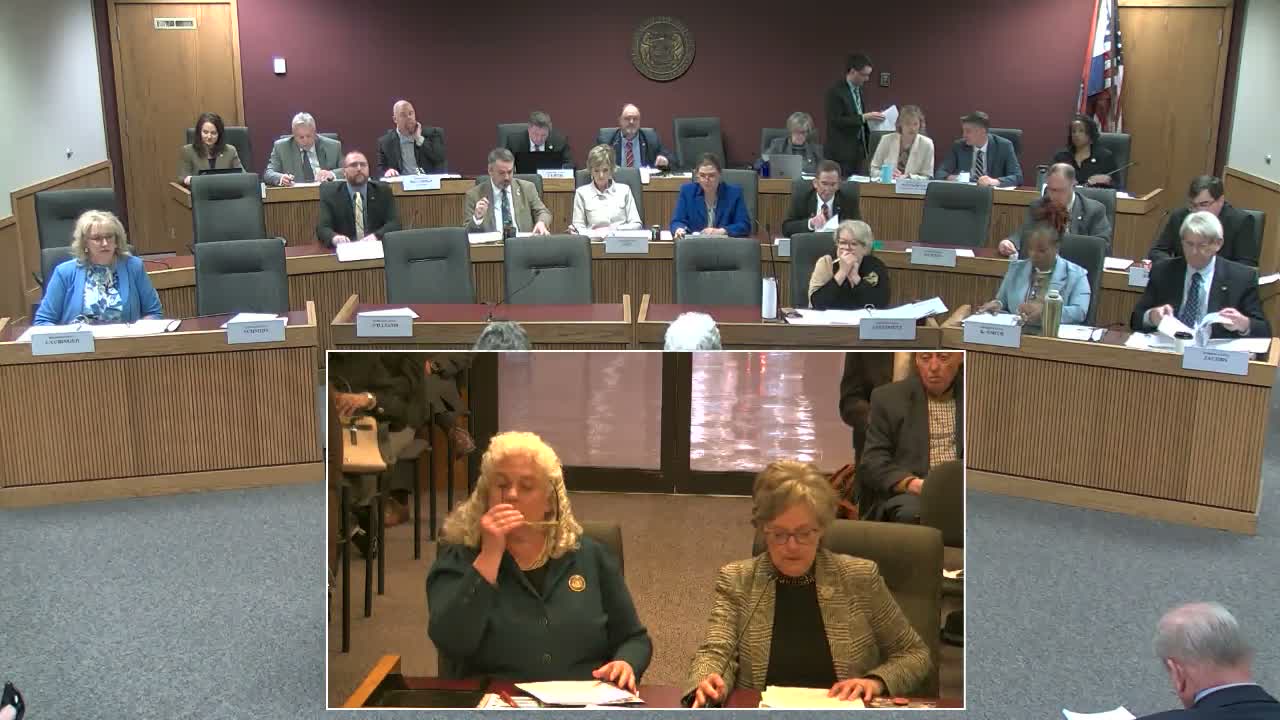
The House Elementary and Secondary Education Committee heard two bills proposing statewide cursive instruction requirements for elementary students: HB 1876 and HB 2115.
Representative Peggy McGaw, sponsor of HB 2115, told the committee the measure would require school districts and charter schools to provide cursive instruction so students can produce legible cursive by the end of fifth grade and pass a locally constructed test demonstrating reading and writing competency. McGaw and others framed the bills as restoring a foundational skill needed to access historical documents and to support literacy, fine-motor development and memory. She cited anecdotal examples such as difficulty reading handwritten death certificates and expressed concern that overreliance on technology and artificial intelligence could weaken future citizens’ ability to read original handwritten documents.
Committee members asked technical and practical questions. Representative Burns cited research about handwriting’s role in phonics and fluency; Representative Boyko and others asked how many instruction hours would be required and whether the required instruction would reduce time for other core subjects. Members and the sponsor discussed whether the requirement should be phased in (concerning current fourth and fifth graders who have not been taught cursive) and whether assessment should be limited to screening versus diagnostic testing. The sponsor said she expects DESE and local schools to design the curriculum and assessments, and the committee emphasized the role of local control in deciding specific instructional hours.
Public testimony included support from the Missouri National Education Association, which offered to help refine language and urged focus on best-practice literacy. Committee members asked the sponsor and witnesses for implementation and cost clarifications; the transcript shows the committee plans further review but did not record a committee vote on these two bills in the hearing.
The hearing highlighted a split between members who prioritized civic and historical literacy and those emphasizing practical implementation, teacher training and budgetary implications. Committee discussion referenced an upcoming literacy bill and possible coordination between policy efforts.
Representative Peggy McGaw, sponsor of HB 2115, told the committee the measure would require school districts and charter schools to provide cursive instruction so students can produce legible cursive by the end of fifth grade and pass a locally constructed test demonstrating reading and writing competency. McGaw and others framed the bills as restoring a foundational skill needed to access historical documents and to support literacy, fine-motor development and memory. She cited anecdotal examples such as difficulty reading handwritten death certificates and expressed concern that overreliance on technology and artificial intelligence could weaken future citizens’ ability to read original handwritten documents.
Committee members asked technical and practical questions. Representative Burns cited research about handwriting’s role in phonics and fluency; Representative Boyko and others asked how many instruction hours would be required and whether the required instruction would reduce time for other core subjects. Members and the sponsor discussed whether the requirement should be phased in (concerning current fourth and fifth graders who have not been taught cursive) and whether assessment should be limited to screening versus diagnostic testing. The sponsor said she expects DESE and local schools to design the curriculum and assessments, and the committee emphasized the role of local control in deciding specific instructional hours.
Public testimony included support from the Missouri National Education Association, which offered to help refine language and urged focus on best-practice literacy. Committee members asked the sponsor and witnesses for implementation and cost clarifications; the transcript shows the committee plans further review but did not record a committee vote on these two bills in the hearing.
The hearing highlighted a split between members who prioritized civic and historical literacy and those emphasizing practical implementation, teacher training and budgetary implications. Committee discussion referenced an upcoming literacy bill and possible coordination between policy efforts.
View the Full Meeting & All Its Details
This article offers just a summary. Unlock complete video, transcripts, and insights as a Founder Member.
✓
Watch full, unedited meeting videos
✓
Search every word spoken in unlimited transcripts
✓
AI summaries & real-time alerts (all government levels)
✓
Permanent access to expanding government content
30-day money-back guarantee
