Debate sharpens over bill to license foreign-trained dentists in Michigan
January 22, 2026 | 2025-2026 House Legislature MI, Michigan
This article was created by AI summarizing key points discussed. AI makes mistakes, so for full details and context, please refer to the video of the full meeting. Please report any errors so we can fix them. Report an error »
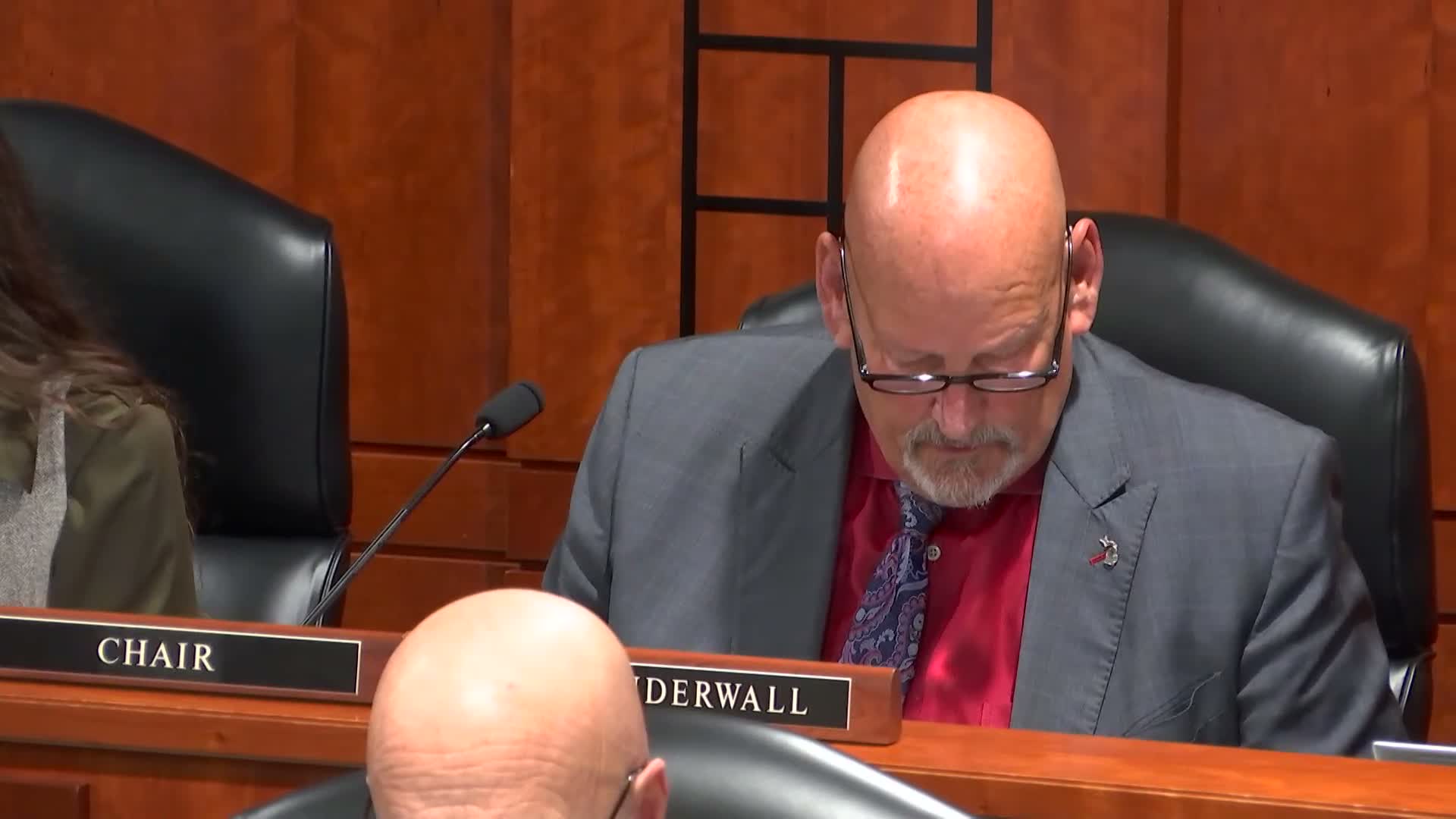
LANSING — Testimony before the Michigan House Health Policy Committee on House Bill 49-21 split sharply over whether the state should broaden pathways for dentists educated outside the United States to obtain Michigan licensure.
Josh, staff for Representative Jenkins Arnaud, told the committee the bill would modernize dental licensure "while maintaining strong safety standards," authorizing the Board of Dentistry to grant licenses when an applicant's education is judged "substantially equivalent" and when applicants pass required licensure examinations. He said the change would expand access to dental care in rural and low-access communities and help address workforce shortages.
Opposing the bill, Dr. Craig Spangler, a dentist with more than four decades of practice and a former member of the State Board of Dentistry, urged lawmakers to reject the measure. "This legislation does not protect the public," Spangler said, repeatedly stressing that hands-on, manual skills testing is essential to determine clinical competence and that the bill, as written or in related drafts, does not clearly require that testing.
Spangler warned that the term "substantially equivalent" is vague and said relying on private credential-evaluation services could put patients at risk. He recounted instances from his experience grading competency exams where he found serious deficiencies among some internationally trained candidates and said that accreditation and hands-on exams foster trust and protect patients.
Committee members pressed Spangler on alternatives. Representative Carter, noting long waiting lists in some clinics, asked whether expanding licensure pathways would reduce access gaps; Spangler replied that state-supported training and targeted recruitment of Michigan students — including reserving seats for applicants from underserved regions — would be better solutions to maldistribution than admitting graduates of nonaccredited programs.
Other discussion touched on recent rule changes at the Board of Dentistry that allow foreign graduates to complete advanced U.S. training programs (two-year GPR or AEGD programs) and on the differences in licensing rules across states. Spangler said the Michigan rules requiring two years of additional supervised training should remain the standard.
The committee did not take a final vote on House Bill 49-21 during the session; testimony and questioning were the primary outcomes. Representatives signaled interest in workforce solutions but also concern about ensuring consistent hands-on competency standards.
The committee adjourned after reading one additional public card and excusing absent members. The bill's next steps were not decided in committee during this meeting.
Josh, staff for Representative Jenkins Arnaud, told the committee the bill would modernize dental licensure "while maintaining strong safety standards," authorizing the Board of Dentistry to grant licenses when an applicant's education is judged "substantially equivalent" and when applicants pass required licensure examinations. He said the change would expand access to dental care in rural and low-access communities and help address workforce shortages.
Opposing the bill, Dr. Craig Spangler, a dentist with more than four decades of practice and a former member of the State Board of Dentistry, urged lawmakers to reject the measure. "This legislation does not protect the public," Spangler said, repeatedly stressing that hands-on, manual skills testing is essential to determine clinical competence and that the bill, as written or in related drafts, does not clearly require that testing.
Spangler warned that the term "substantially equivalent" is vague and said relying on private credential-evaluation services could put patients at risk. He recounted instances from his experience grading competency exams where he found serious deficiencies among some internationally trained candidates and said that accreditation and hands-on exams foster trust and protect patients.
Committee members pressed Spangler on alternatives. Representative Carter, noting long waiting lists in some clinics, asked whether expanding licensure pathways would reduce access gaps; Spangler replied that state-supported training and targeted recruitment of Michigan students — including reserving seats for applicants from underserved regions — would be better solutions to maldistribution than admitting graduates of nonaccredited programs.
Other discussion touched on recent rule changes at the Board of Dentistry that allow foreign graduates to complete advanced U.S. training programs (two-year GPR or AEGD programs) and on the differences in licensing rules across states. Spangler said the Michigan rules requiring two years of additional supervised training should remain the standard.
The committee did not take a final vote on House Bill 49-21 during the session; testimony and questioning were the primary outcomes. Representatives signaled interest in workforce solutions but also concern about ensuring consistent hands-on competency standards.
The committee adjourned after reading one additional public card and excusing absent members. The bill's next steps were not decided in committee during this meeting.
View the Full Meeting & All Its Details
This article offers just a summary. Unlock complete video, transcripts, and insights as a Founder Member.
✓
Watch full, unedited meeting videos
✓
Search every word spoken in unlimited transcripts
✓
AI summaries & real-time alerts (all government levels)
✓
Permanent access to expanding government content
30-day money-back guarantee
