Michigan committee hears plan to levy per-mile tax on commercial electric trucks to fund roads
January 26, 2026 | 2025-2026 House Legislature MI, Michigan
This article was created by AI summarizing key points discussed. AI makes mistakes, so for full details and context, please refer to the video of the full meeting. Please report any errors so we can fix them. Report an error »
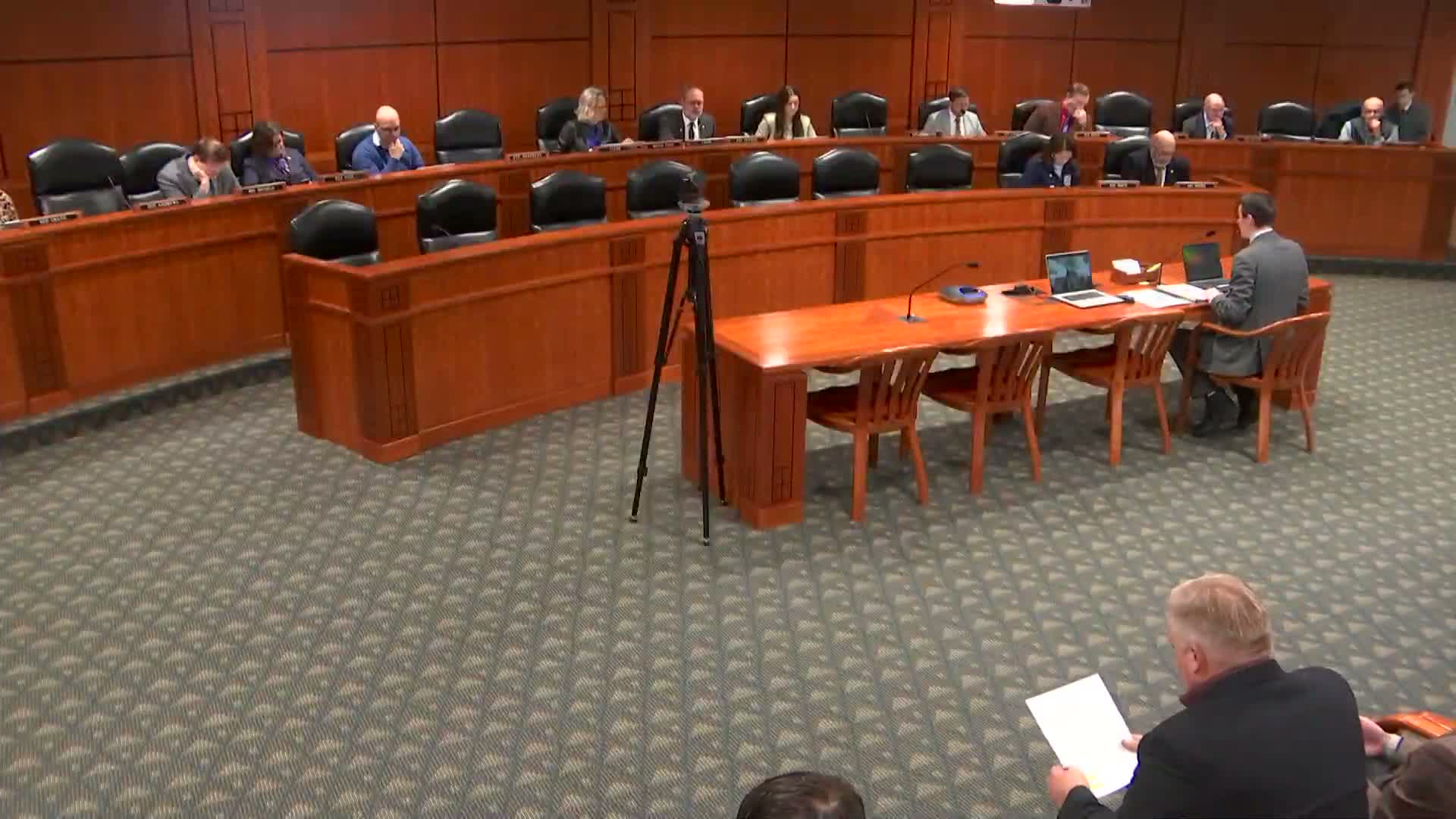
Representative Altman, chair of the House Transportation and Infrastructure Committee, introduced a package of bills intended to update Michigan’s road-funding system to account for commercial vehicles that use electricity rather than diesel. "Electric semitrucks . . . can currently operate without contributing under that same structure," Altman said, arguing that the current system is not equipped to capture revenue from battery-powered commercial freight.
The bills would apply a per-mile taxable measure to commercial vehicles that use electric fuel, limited to commercial classes, and would tie the calculation to the existing motor-fuel tax rate (52.6¢ per gallon) so that electric carriers pay in proportion to miles driven on Michigan roads. Altman told the committee the legislation is designed to mirror current commercial diesel reporting and to avoid creating a patchwork of state rules.
The package relies on the International Fuel Tax Association (IFTA) architecture to allocate taxable miles across jurisdictions. Carmen Martirano of IFTA testified remotely that the association’s 40-year platform, used by the 48 contiguous U.S. states and 10 Canadian provinces, can accommodate reporting electric vehicle operations on the fuel-use return. "The platform is there," Martirano said; "the architecture is there."
Industry witnesses expressed general support for tax parity but urged careful calibration. Justin Carpenter, director of policy at the Michigan Energy Innovation Business Council, said the bills are a "sensible and fair approach" to match tax treatment of electric motor carriers to diesel counterparts while cautioning that policy should not slow investment. Chase Ottanosio of Clean Fuels Michigan likewise warned that the state should avoid unintentionally burdening an emerging fleet market.
Committee members questioned whether carriers would be "double charged" through registration fees plus a mileage fee. Altman responded that interstate carriers already pay an IRP/registration fee and fuel-use taxes under IFTA, and said the bill’s user-fee approach is intended to equalize contributions: "They'll pay the registration, but they'll also pay a user fee for the roads just like traditional trucks do today."
No committee votes were taken on the bills during this hearing. Committee staff and sponsors said they have coordinated with stakeholders and would continue drafting to ensure administration by existing treasury and carrier-reporting systems.
What happens next: The package will return for further committee consideration in subsequent hearings; no enactment or roll call vote occurred at this session.
The bills would apply a per-mile taxable measure to commercial vehicles that use electric fuel, limited to commercial classes, and would tie the calculation to the existing motor-fuel tax rate (52.6¢ per gallon) so that electric carriers pay in proportion to miles driven on Michigan roads. Altman told the committee the legislation is designed to mirror current commercial diesel reporting and to avoid creating a patchwork of state rules.
The package relies on the International Fuel Tax Association (IFTA) architecture to allocate taxable miles across jurisdictions. Carmen Martirano of IFTA testified remotely that the association’s 40-year platform, used by the 48 contiguous U.S. states and 10 Canadian provinces, can accommodate reporting electric vehicle operations on the fuel-use return. "The platform is there," Martirano said; "the architecture is there."
Industry witnesses expressed general support for tax parity but urged careful calibration. Justin Carpenter, director of policy at the Michigan Energy Innovation Business Council, said the bills are a "sensible and fair approach" to match tax treatment of electric motor carriers to diesel counterparts while cautioning that policy should not slow investment. Chase Ottanosio of Clean Fuels Michigan likewise warned that the state should avoid unintentionally burdening an emerging fleet market.
Committee members questioned whether carriers would be "double charged" through registration fees plus a mileage fee. Altman responded that interstate carriers already pay an IRP/registration fee and fuel-use taxes under IFTA, and said the bill’s user-fee approach is intended to equalize contributions: "They'll pay the registration, but they'll also pay a user fee for the roads just like traditional trucks do today."
No committee votes were taken on the bills during this hearing. Committee staff and sponsors said they have coordinated with stakeholders and would continue drafting to ensure administration by existing treasury and carrier-reporting systems.
What happens next: The package will return for further committee consideration in subsequent hearings; no enactment or roll call vote occurred at this session.
Don't Miss a Word: See the Full Meeting!
Go beyond summaries. Unlock every video, transcript, and key insight with a Founder Membership.
✓
Get instant access to full meeting videos
✓
Search and clip any phrase from complete transcripts
✓
Receive AI-powered summaries & custom alerts
✓
Enjoy lifetime, unrestricted access to government data
30-day money-back guarantee
