Washington Accords signed; testimony to congressional subcommittee highlights peace, monitoring and mineral security
January 25, 2026 | House Committee on Foreign Affairs, House Committee, House, Legislative, Federal
This article was created by AI summarizing key points discussed. AI makes mistakes, so for full details and context, please refer to the video of the full meeting. Please report any errors so we can fix them. Report an error »
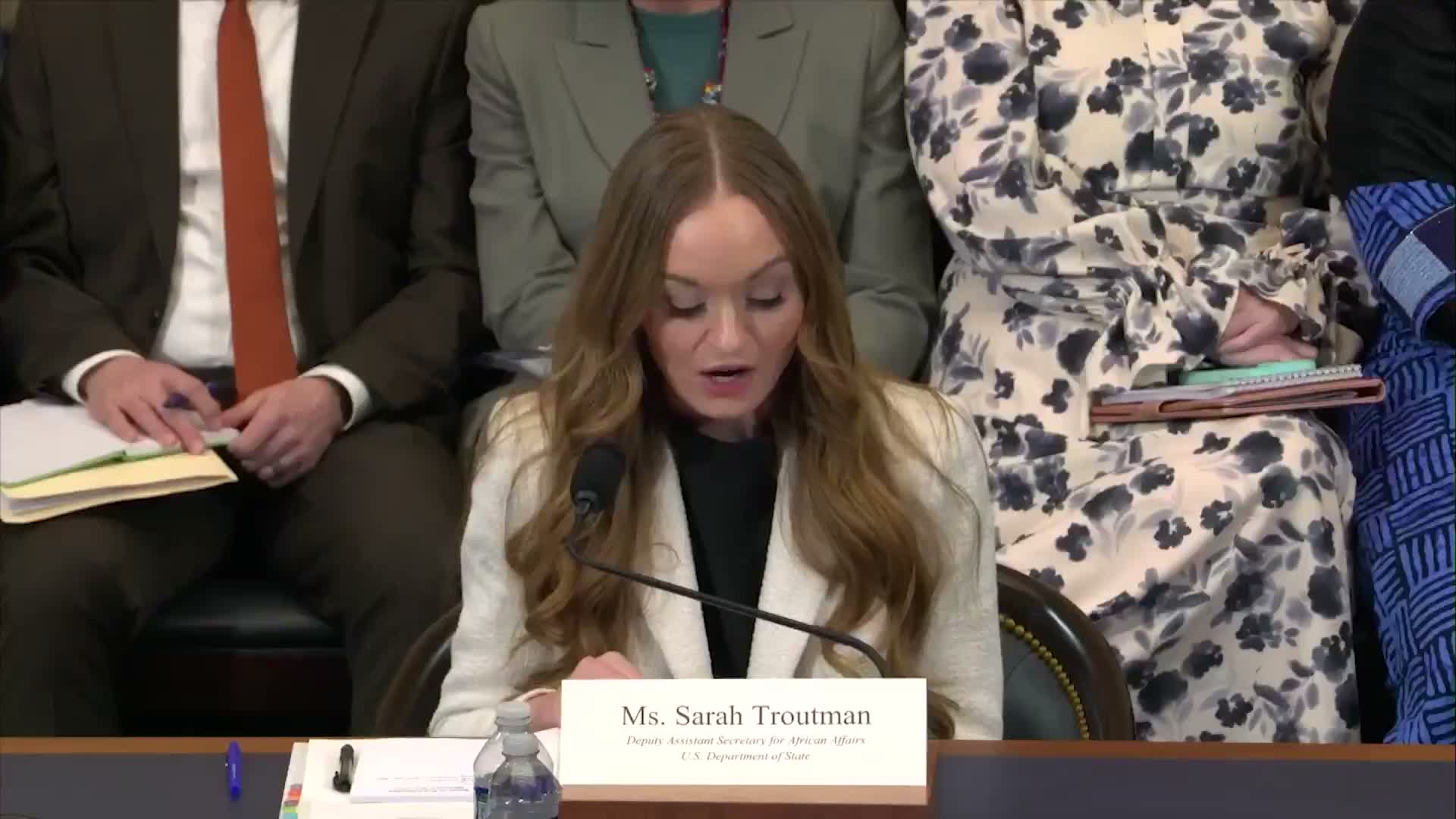
On December 4, at the Donald J. Trump Institute for Peace, President Shisekedi and President Kagame signed the Washington Accords, an agreement described in testimony to a congressional subcommittee as a major step toward ending decades of conflict in the Great Lakes region.
The witness told the subcommittee the accords "mark the most meaningful advance toward resolving this conflict in decades," and called the agreement both "a historic achievement" and "a call to action." The testimony credited high-level U.S. engagement in the negotiations and cited a new strategic partnership intended to draw U.S. investment into critical minerals and infrastructure in the Democratic Republic of the Congo (DRC).
The testimony outlined specific claims about the accords' terms and expected effects. The speaker said the accords establish commitments by the parties to respect territorial integrity, to stop providing support to armed groups, and to cooperate on border security and economic development. The witness said the United States, Qatar and the African Union would play central roles in monitoring and oversight.
The witness highlighted minerals central to U.S. manufacturing and defense — "cobalt and coltan" — and said the accords would help secure American supply chains and reduce reliance on competitors such as China. The testimony also referenced a "strategic partnership agreement with the DRC" and cited the Secania Lobito corridor as an example of strategic infrastructure the partnership would support.
On implementation, the speaker said the work does not end with signing: U.S. support would include backing Qatari-led talks between the DRC and the M23 armed group, strengthening African Union mediation structures, and mobilizing resources for post-conflict recovery while sharing burdens with international partners.
The witness emphasized accountability: "Those who threaten peace will be held responsible," and, citing Secretary Rubio, said the U.S. would "take action to ensure promises made in Washington are kept." The testimony closed with thanks to the subcommittee for its attention and support and reiterated that the accords are intended to produce tangible improvements on the ground for people in the DRC and Rwanda.
No formal congressional action or vote on the accords is recorded in the testimony. The testimony frames next steps as implementation and sustained international monitoring and resource mobilization.
The witness told the subcommittee the accords "mark the most meaningful advance toward resolving this conflict in decades," and called the agreement both "a historic achievement" and "a call to action." The testimony credited high-level U.S. engagement in the negotiations and cited a new strategic partnership intended to draw U.S. investment into critical minerals and infrastructure in the Democratic Republic of the Congo (DRC).
The testimony outlined specific claims about the accords' terms and expected effects. The speaker said the accords establish commitments by the parties to respect territorial integrity, to stop providing support to armed groups, and to cooperate on border security and economic development. The witness said the United States, Qatar and the African Union would play central roles in monitoring and oversight.
The witness highlighted minerals central to U.S. manufacturing and defense — "cobalt and coltan" — and said the accords would help secure American supply chains and reduce reliance on competitors such as China. The testimony also referenced a "strategic partnership agreement with the DRC" and cited the Secania Lobito corridor as an example of strategic infrastructure the partnership would support.
On implementation, the speaker said the work does not end with signing: U.S. support would include backing Qatari-led talks between the DRC and the M23 armed group, strengthening African Union mediation structures, and mobilizing resources for post-conflict recovery while sharing burdens with international partners.
The witness emphasized accountability: "Those who threaten peace will be held responsible," and, citing Secretary Rubio, said the U.S. would "take action to ensure promises made in Washington are kept." The testimony closed with thanks to the subcommittee for its attention and support and reiterated that the accords are intended to produce tangible improvements on the ground for people in the DRC and Rwanda.
No formal congressional action or vote on the accords is recorded in the testimony. The testimony frames next steps as implementation and sustained international monitoring and resource mobilization.
View the Full Meeting & All Its Details
This article offers just a summary. Unlock complete video, transcripts, and insights as a Founder Member.
✓
Watch full, unedited meeting videos
✓
Search every word spoken in unlimited transcripts
✓
AI summaries & real-time alerts (all government levels)
✓
Permanent access to expanding government content
30-day money-back guarantee
