Lawmakers hear competing views on requiring coverage for prescriber‑directed non‑opioid acute‑pain treatments
January 22, 2026 | 2026 Legislature MO, Missouri
This article was created by AI summarizing key points discussed. AI makes mistakes, so for full details and context, please refer to the video of the full meeting. Please report any errors so we can fix them. Report an error »
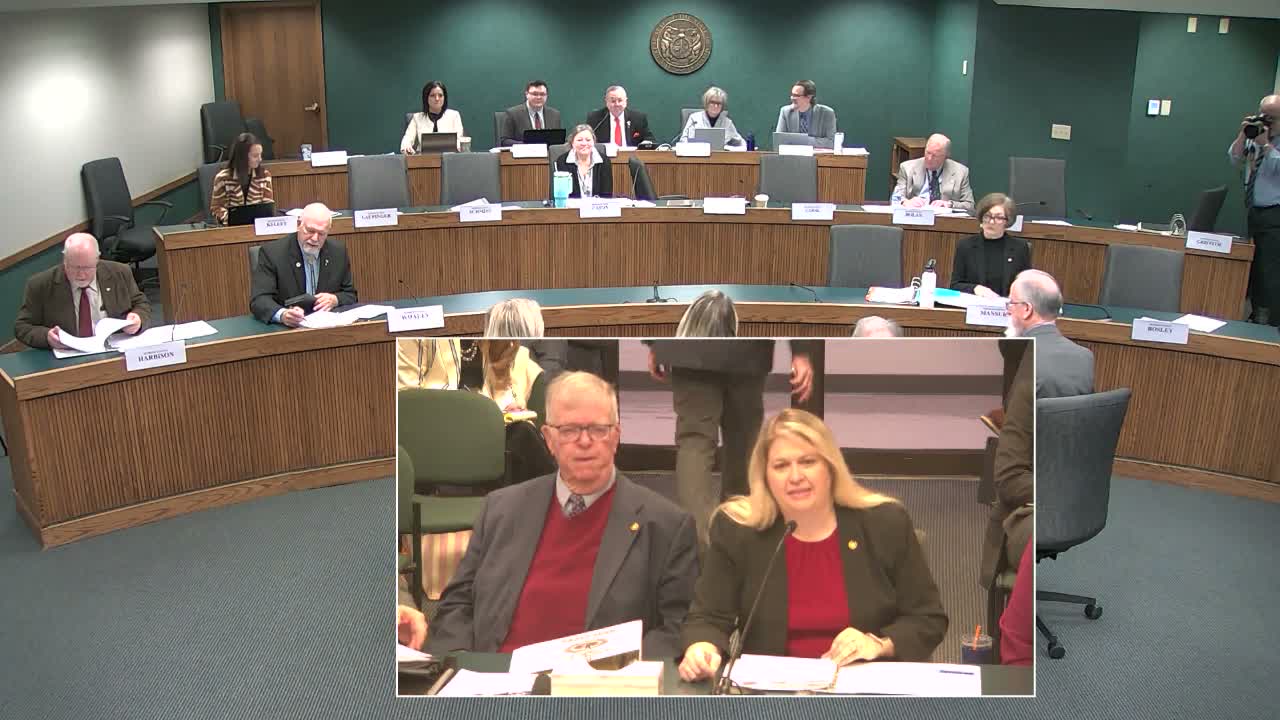
State lawmakers and witnesses debated a package of bills aiming to require health plans to cover prescriber‑directed non‑opioid treatments for acute pain without forcing patients to try opioids first or pay higher cost‑sharing.
Representative Melanie Stinnett, a sponsor, told the committee the legislation is narrowly focused: "When a health care provider prescribes a non opioid medication for acute pain, a health benefit plan must cover that non‑opioid alternative." Sponsors framed the bills as a tool to reduce the risk that short opioid prescriptions become long‑term dependence.
Supporters — including Jessica Petrie of the Reach Healthcare Foundation and the National Association of Social Workers Missouri Chapter, Jacob Scott of the Missouri State Medical Association, and recovery and treatment groups — said patients need immediate access to alternatives and that decisions about pain management should be between patient and prescriber. Petrie summarized that "the decision needs to be between the patient and the physician to have that immediate access to the non opioid alternative medications."
Witnesses for insurers and coalitions pushed back on drafting and cost concerns. Hampton Woods of the Missouri Insurance Coalition said the bill's current language appears narrowly tailored to the single FDA‑approved non‑opioid product on the market and warned that the drafting could functionally mandate coverage of a brand‑name drug. Shannon Cooper, representing America’s Health Insurance Plans, said AHIP agrees with the bill's aims but opposes language that would remove insurers' tools for managing formularies. "We never force somebody to take an opioid drug," Cooper said, and she cautioned that clinical trials for the new product were not strong.
Committee members asked several technical questions about whether the bill could be broadened to reference a 'treatment plan' rather than 'medication' and whether states such as Illinois used information‑sharing approaches rather than mandated coverage. Insurance witnesses suggested alternatives such as requiring plans to publish non‑opioid alternatives or directing regulators to collect and post information about plan offerings.
Chair Stinnett closed the hearing on the package of bills after committee questioning; no committee vote on those bills was recorded in the public hearing transcript.
Next steps for the bills were not specified in the transcript. The committee's discussion centered on drafting choices — whether to broaden definitions and how to preserve insurers' ability to use step therapy and prior authorization while ensuring access for patients.
Representative Melanie Stinnett, a sponsor, told the committee the legislation is narrowly focused: "When a health care provider prescribes a non opioid medication for acute pain, a health benefit plan must cover that non‑opioid alternative." Sponsors framed the bills as a tool to reduce the risk that short opioid prescriptions become long‑term dependence.
Supporters — including Jessica Petrie of the Reach Healthcare Foundation and the National Association of Social Workers Missouri Chapter, Jacob Scott of the Missouri State Medical Association, and recovery and treatment groups — said patients need immediate access to alternatives and that decisions about pain management should be between patient and prescriber. Petrie summarized that "the decision needs to be between the patient and the physician to have that immediate access to the non opioid alternative medications."
Witnesses for insurers and coalitions pushed back on drafting and cost concerns. Hampton Woods of the Missouri Insurance Coalition said the bill's current language appears narrowly tailored to the single FDA‑approved non‑opioid product on the market and warned that the drafting could functionally mandate coverage of a brand‑name drug. Shannon Cooper, representing America’s Health Insurance Plans, said AHIP agrees with the bill's aims but opposes language that would remove insurers' tools for managing formularies. "We never force somebody to take an opioid drug," Cooper said, and she cautioned that clinical trials for the new product were not strong.
Committee members asked several technical questions about whether the bill could be broadened to reference a 'treatment plan' rather than 'medication' and whether states such as Illinois used information‑sharing approaches rather than mandated coverage. Insurance witnesses suggested alternatives such as requiring plans to publish non‑opioid alternatives or directing regulators to collect and post information about plan offerings.
Chair Stinnett closed the hearing on the package of bills after committee questioning; no committee vote on those bills was recorded in the public hearing transcript.
Next steps for the bills were not specified in the transcript. The committee's discussion centered on drafting choices — whether to broaden definitions and how to preserve insurers' ability to use step therapy and prior authorization while ensuring access for patients.
View the Full Meeting & All Its Details
This article offers just a summary. Unlock complete video, transcripts, and insights as a Founder Member.
✓
Watch full, unedited meeting videos
✓
Search every word spoken in unlimited transcripts
✓
AI summaries & real-time alerts (all government levels)
✓
Permanent access to expanding government content
30-day money-back guarantee
