Air District finds AB 617 retrofit standard met after California Resources Corp. upgrades one engine
January 23, 2026 | Sacramento County, California
This article was created by AI summarizing key points discussed. AI makes mistakes, so for full details and context, please refer to the video of the full meeting. Please report any errors so we can fix them. Report an error »
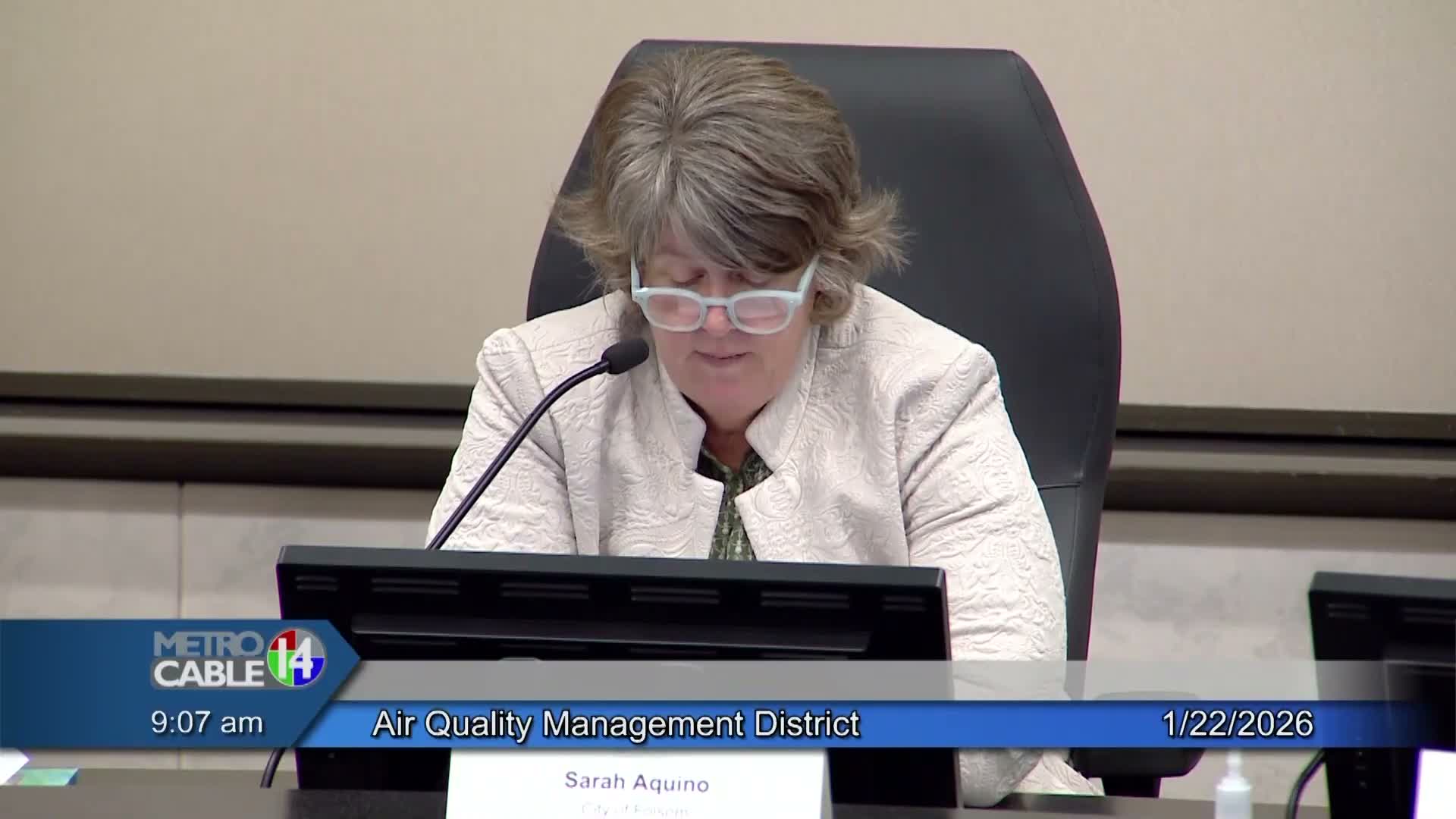
The Sacramento Metropolitan Air Quality Management District on Jan. 22 accepted a staff determination under Assembly Bill 617 that existing internal combustion (IC) engines in the Sacramento Basin meet the district’s proposed retrofit emission limits after a voluntary equipment upgrade at California Resources Corporation.
Diana Colazo, a district rural development staffer, told the board staff had reviewed local, state and federal standards and compared peer-district limits, concluding that a best-available retrofit control technology (BART) limit of 0.15 grams per brake horsepower-hour for both nitrogen oxides (NOx) and volatile organic compounds (VOCs) is achievable for IC engines. “Staff determined the BART limits as 0.15 grams of pollutant per brake horsepower hour for both NOx and VOC,” Colazo said.
Colazo said the district identified only two industrial sources subject to the cap-and-trade threshold and that the only IC engines of concern in the Sacramento Basin were at California Resources Corporation (CRC). She said CRC voluntarily replaced an inefficient three-way catalyst on one engine with a more effective control, which a newly issued permit reflects as an emissions reduction of more than 80 percent for NOx and brings that engine into compliance with the BART limit.
“The engine now meets BARQ standards,” Colazo said, and with that the district concluded BART requirements have been satisfied and “no additional rulemaking is necessary.” The board opened a public hearing on the staff determination but received no public comment before taking action.
Chair Aquino called for a motion to accept staff’s recommendation; the motion was made and seconded and carried on a voice vote. The chair announced the motion carried unanimously.
What the board approved is a staff finding to submit the district’s determination to the California Air Resources Board; it is a procedural, regulatory step under AB 617 rather than a new local ordinance. The staff recommendation also included a determination that the adoption of the analysis is exempt from the California Environmental Quality Act (CEQA) and that current permits and implementation satisfy the district’s obligations under AB 617.
Next steps: staff will transmit the district’s determination to the California Air Resources Board as required by statute.
Diana Colazo, a district rural development staffer, told the board staff had reviewed local, state and federal standards and compared peer-district limits, concluding that a best-available retrofit control technology (BART) limit of 0.15 grams per brake horsepower-hour for both nitrogen oxides (NOx) and volatile organic compounds (VOCs) is achievable for IC engines. “Staff determined the BART limits as 0.15 grams of pollutant per brake horsepower hour for both NOx and VOC,” Colazo said.
Colazo said the district identified only two industrial sources subject to the cap-and-trade threshold and that the only IC engines of concern in the Sacramento Basin were at California Resources Corporation (CRC). She said CRC voluntarily replaced an inefficient three-way catalyst on one engine with a more effective control, which a newly issued permit reflects as an emissions reduction of more than 80 percent for NOx and brings that engine into compliance with the BART limit.
“The engine now meets BARQ standards,” Colazo said, and with that the district concluded BART requirements have been satisfied and “no additional rulemaking is necessary.” The board opened a public hearing on the staff determination but received no public comment before taking action.
Chair Aquino called for a motion to accept staff’s recommendation; the motion was made and seconded and carried on a voice vote. The chair announced the motion carried unanimously.
What the board approved is a staff finding to submit the district’s determination to the California Air Resources Board; it is a procedural, regulatory step under AB 617 rather than a new local ordinance. The staff recommendation also included a determination that the adoption of the analysis is exempt from the California Environmental Quality Act (CEQA) and that current permits and implementation satisfy the district’s obligations under AB 617.
Next steps: staff will transmit the district’s determination to the California Air Resources Board as required by statute.
View the Full Meeting & All Its Details
This article offers just a summary. Unlock complete video, transcripts, and insights as a Founder Member.
✓
Watch full, unedited meeting videos
✓
Search every word spoken in unlimited transcripts
✓
AI summaries & real-time alerts (all government levels)
✓
Permanent access to expanding government content
30-day money-back guarantee
