Bill to replace percolation tests with soil morphology for septic systems draws industry support and regulatory concerns
January 21, 2026 | 2026 Legislature MO, Missouri
This article was created by AI summarizing key points discussed. AI makes mistakes, so for full details and context, please refer to the video of the full meeting. Please report any errors so we can fix them. Report an error »
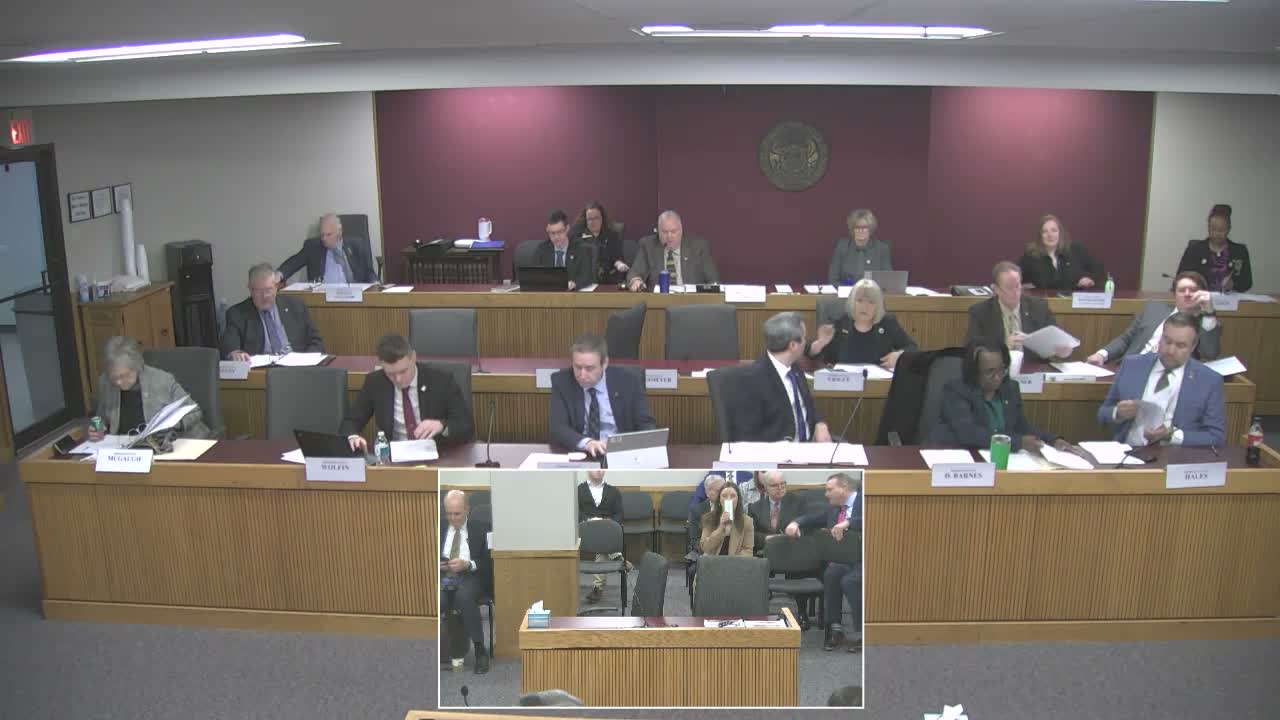
Representative Bill Faulkner introduced House Bill 2395 to the Local Government Committee on Jan. 27, proposing that septic-system siting and design rely on a uniform soil morphology analysis instead of the percolation ('perk') test. "This basically, puts the uniform application of soil analysis when they're putting in a septic tank instead of perk test," Faulkner said, adding that the fiscal note shows the change is not meant to generate revenue and should impose no net cost on communities.
Industry witnesses argued the change would better protect groundwater and homeowners. Curtis Clucky of Infiltrator Water Technologies, which manufactures on-site wastewater products, said percolation tests have led to system failures during dry seasons and described studies showing most failures were tied to percolation testing. "We're protecting the homeowner, it protects our waters of the state," Clucky said. Nicholas Dykes, president of the Missouri Small Flows Organization and an on-site wastewater installer, also testified in favor, calling percolation tests "antiquated" and saying morphology is a "large step above."
The state public advocate, Arnie C. A. C. Dienof, testified in opposition and said he favors choice rather than mandates: "I don't think that we should be mandating additional regulations, additional staff to administer the program and do the inspections," he said, adding concerns that registration requirements and extra costs could fall to residents even if the sponsor said the state would not assess fees. Representative Wolfen asked specifically about subsection 5 (page 2) and whether the bill's language replaces locally enforced requirements; Faulkner said the bill modernizes licensing and brings standards in line with other states.
The committee heard public-health support from Katie Gamble of the Missouri Center for Public Health Excellence, who said local health departments support the change and that it can reduce redundant testing. The public hearing was closed and the committee adjourned.
Industry witnesses argued the change would better protect groundwater and homeowners. Curtis Clucky of Infiltrator Water Technologies, which manufactures on-site wastewater products, said percolation tests have led to system failures during dry seasons and described studies showing most failures were tied to percolation testing. "We're protecting the homeowner, it protects our waters of the state," Clucky said. Nicholas Dykes, president of the Missouri Small Flows Organization and an on-site wastewater installer, also testified in favor, calling percolation tests "antiquated" and saying morphology is a "large step above."
The state public advocate, Arnie C. A. C. Dienof, testified in opposition and said he favors choice rather than mandates: "I don't think that we should be mandating additional regulations, additional staff to administer the program and do the inspections," he said, adding concerns that registration requirements and extra costs could fall to residents even if the sponsor said the state would not assess fees. Representative Wolfen asked specifically about subsection 5 (page 2) and whether the bill's language replaces locally enforced requirements; Faulkner said the bill modernizes licensing and brings standards in line with other states.
The committee heard public-health support from Katie Gamble of the Missouri Center for Public Health Excellence, who said local health departments support the change and that it can reduce redundant testing. The public hearing was closed and the committee adjourned.
View the Full Meeting & All Its Details
This article offers just a summary. Unlock complete video, transcripts, and insights as a Founder Member.
✓
Watch full, unedited meeting videos
✓
Search every word spoken in unlimited transcripts
✓
AI summaries & real-time alerts (all government levels)
✓
Permanent access to expanding government content
30-day money-back guarantee
