Senate housing committee flags Upstate electric-capacity limits, previews Feb. 25 budget hearing
January 27, 2026 | 2026 Legislature NY, New York
This article was created by AI summarizing key points discussed. AI makes mistakes, so for full details and context, please refer to the video of the full meeting. Please report any errors so we can fix them. Report an error »
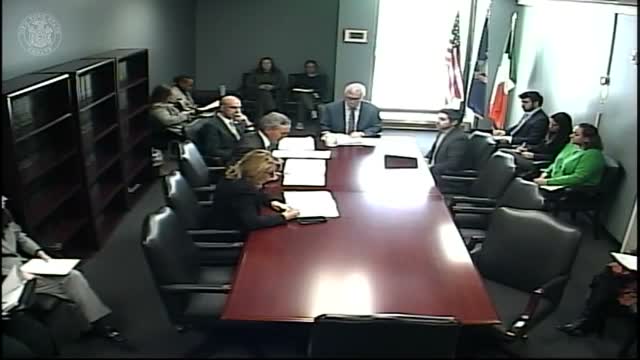
Committee Chairman Brian Kavanaugh opened the New York State Senate Standing Committee on Housing, Construction and Community Development's first 2026 meeting and said the committee will focus this year on affordability and expanding housing supply while reviewing the housing portions of the governor's executive budget.
"The governor's executive budget was released last week, and there are a lot of proposals there that are intended to lower barriers to build more housing," said Chairman Brian Kavanaugh.
The committee scheduled a joint Senate-Assembly budget hearing on housing for Feb. 25 at 2 p.m., Kavanaugh added, and invited stakeholders and advocates to participate.
An unidentified senator who spoke at the meeting raised a practical constraint for many Upstate projects: electrical capacity. "It's been well documented over and over and over again," the senator said, arguing that some projects encompassing about "650 new homes" have stalled because local electric capacity does not exist or because the cost to bring service to a site is prohibitively high.
The same speaker said they introduced legislation to clarify that building permits obtained before Jan. 1, 2027, would remain exempt from compliance with currently paused all-electric building mandates, to give developers certainty during the implementation pause: "as long as the building permit is obtained before 01/01/2027, that they're exempt from compliance with the all electric building mandates that are currently paused."
Kavanaugh acknowledged the concern and noted the budget contains a $3,750,000,000 proposal to expand water and sewer capacity in parts of the state where utilities are a major obstacle to development, and said statutory provisions already allow exceptions when electrical capacity is not available. He also said aspects of the All Electric Building Act he sponsored have been upheld in court but remain on appeal.
Committee members signaled they expect continued conversation with colleagues in energy and utilities policy about how to align utility capacity with housing goals. The committee did not adopt a formal policy at the meeting; members said they will pursue the issue further in upcoming hearings and stakeholder meetings.
"The governor's executive budget was released last week, and there are a lot of proposals there that are intended to lower barriers to build more housing," said Chairman Brian Kavanaugh.
The committee scheduled a joint Senate-Assembly budget hearing on housing for Feb. 25 at 2 p.m., Kavanaugh added, and invited stakeholders and advocates to participate.
An unidentified senator who spoke at the meeting raised a practical constraint for many Upstate projects: electrical capacity. "It's been well documented over and over and over again," the senator said, arguing that some projects encompassing about "650 new homes" have stalled because local electric capacity does not exist or because the cost to bring service to a site is prohibitively high.
The same speaker said they introduced legislation to clarify that building permits obtained before Jan. 1, 2027, would remain exempt from compliance with currently paused all-electric building mandates, to give developers certainty during the implementation pause: "as long as the building permit is obtained before 01/01/2027, that they're exempt from compliance with the all electric building mandates that are currently paused."
Kavanaugh acknowledged the concern and noted the budget contains a $3,750,000,000 proposal to expand water and sewer capacity in parts of the state where utilities are a major obstacle to development, and said statutory provisions already allow exceptions when electrical capacity is not available. He also said aspects of the All Electric Building Act he sponsored have been upheld in court but remain on appeal.
Committee members signaled they expect continued conversation with colleagues in energy and utilities policy about how to align utility capacity with housing goals. The committee did not adopt a formal policy at the meeting; members said they will pursue the issue further in upcoming hearings and stakeholder meetings.
View the Full Meeting & All Its Details
This article offers just a summary. Unlock complete video, transcripts, and insights as a Founder Member.
✓
Watch full, unedited meeting videos
✓
Search every word spoken in unlimited transcripts
✓
AI summaries & real-time alerts (all government levels)
✓
Permanent access to expanding government content
30-day money-back guarantee
