House approves expanded pharmacist authority in SB2402, allowing limited prescribing and therapeutic substitutions with guardrails
January 23, 2026 | 2026 Legislature ND, North Dakota
This article was created by AI summarizing key points discussed. AI makes mistakes, so for full details and context, please refer to the video of the full meeting. Please report any errors so we can fix them. Report an error »
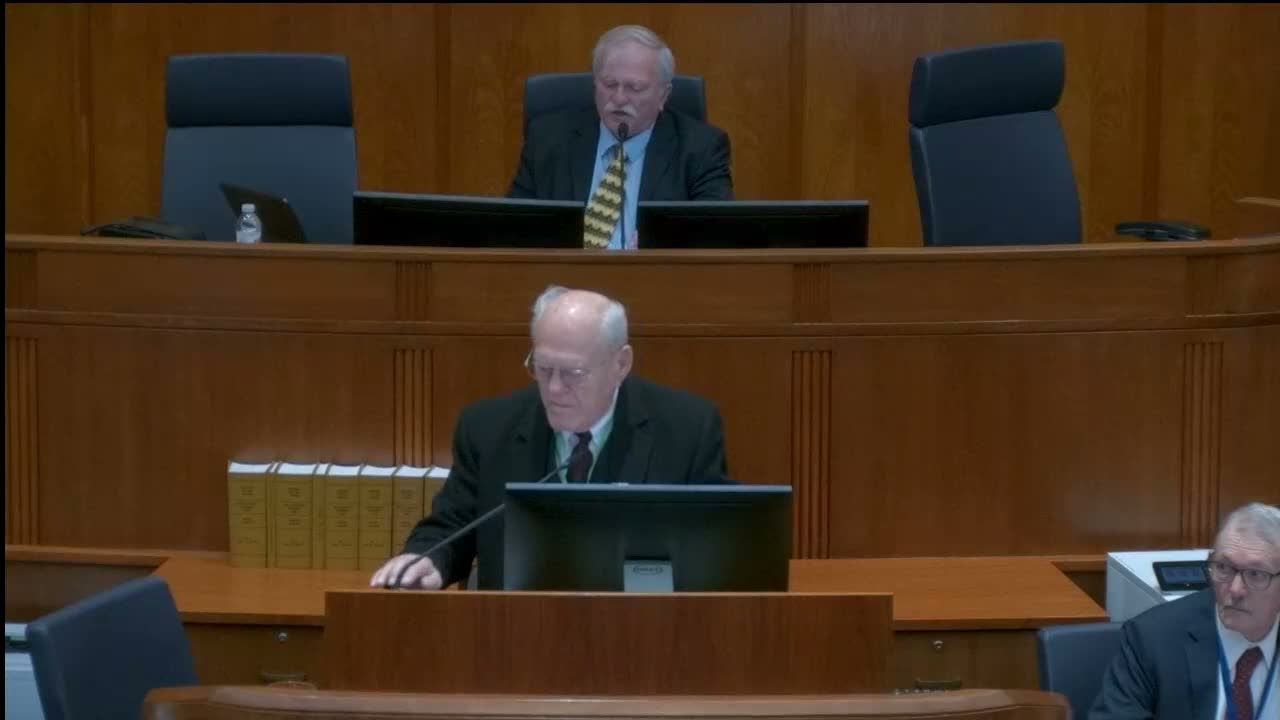
The North Dakota House passed Senate Bill 2402, which expands limited prescriptive authority, testing, and therapeutic substitution powers for pharmacists while including explicit exclusions and oversight requirements.
Representative Rohr, the bill carrier, said the bill adds two sections to chapter 43-15 to permit pharmacists to independently test, prescribe and substitute therapeutically equivalent drugs under defined circumstances. She tied the legislation to the state's rural health transformation work and said passage was important to secure roughly $3.9 million in federal rural health transformation funding that depended on the state demonstrating legislative progress.
Rohr listed several provisions in the amended bill: pharmacists must communicate test results and any prescriptions to the patient’s primary care provider within three business days; uncomplicated urinary tract infections were removed from the independent-prescription list; pharmacists may prescribe certain items such as motion-sickness remedies, treatments for lice and cold sores, and provide auto-injectors for documented anaphylaxis; and therapeutic substitution is allowed except for antidepressants, antipsychotics, chemotherapy agents, Schedule II controlled substances, biological products, and narrow therapeutic index drugs. Rohr said a prescribing provider "is not liable for substitution made by a pharmacist under this section."
During floor questioning, Representative Carls asked what illnesses pharmacists could treat and whether pharmacies would need separate exam rooms. Rohr replied the bill lists treatable conditions and noted pharmacies already sometimes use private spaces for patient encounters; she said the board will help set facility and protocol expectations.
Representative Murphy asked how the bill would ensure pharmacists have the clinical skills to perform diagnostic assessments. Rohr said pharmacists receive clinical training and that the board and pharmacy groups would establish algorithms, evidence-based treatment plans and evaluation processes.
Representative Van Winkle asked whether an out-of-state diabetic who runs out of needles could receive an emergency supply; Rohr pointed to an emergent-provision in the bill allowing short-term supplies to get the patient back to their home state and said she would consult the board about needles specifically.
The clerk opened the electronic voting key. The final recorded vote was 91 yays, 1 nay and Senate Bill 2402 was declared passed.
Why it matters: Supporters say the bill expands access to timely care in rural areas by using pharmacists as an underused clinical resource and could reduce avoidable emergency department visits. The statute includes substantive guardrails designed to limit risk and preserve prescribing boundaries for higher-risk drugs.
Next steps: The bill will proceed to enrollment following the House vote; implementing rules and board-level protocols will be critical to how the expanded authorities operate in practice.
Representative Rohr, the bill carrier, said the bill adds two sections to chapter 43-15 to permit pharmacists to independently test, prescribe and substitute therapeutically equivalent drugs under defined circumstances. She tied the legislation to the state's rural health transformation work and said passage was important to secure roughly $3.9 million in federal rural health transformation funding that depended on the state demonstrating legislative progress.
Rohr listed several provisions in the amended bill: pharmacists must communicate test results and any prescriptions to the patient’s primary care provider within three business days; uncomplicated urinary tract infections were removed from the independent-prescription list; pharmacists may prescribe certain items such as motion-sickness remedies, treatments for lice and cold sores, and provide auto-injectors for documented anaphylaxis; and therapeutic substitution is allowed except for antidepressants, antipsychotics, chemotherapy agents, Schedule II controlled substances, biological products, and narrow therapeutic index drugs. Rohr said a prescribing provider "is not liable for substitution made by a pharmacist under this section."
During floor questioning, Representative Carls asked what illnesses pharmacists could treat and whether pharmacies would need separate exam rooms. Rohr replied the bill lists treatable conditions and noted pharmacies already sometimes use private spaces for patient encounters; she said the board will help set facility and protocol expectations.
Representative Murphy asked how the bill would ensure pharmacists have the clinical skills to perform diagnostic assessments. Rohr said pharmacists receive clinical training and that the board and pharmacy groups would establish algorithms, evidence-based treatment plans and evaluation processes.
Representative Van Winkle asked whether an out-of-state diabetic who runs out of needles could receive an emergency supply; Rohr pointed to an emergent-provision in the bill allowing short-term supplies to get the patient back to their home state and said she would consult the board about needles specifically.
The clerk opened the electronic voting key. The final recorded vote was 91 yays, 1 nay and Senate Bill 2402 was declared passed.
Why it matters: Supporters say the bill expands access to timely care in rural areas by using pharmacists as an underused clinical resource and could reduce avoidable emergency department visits. The statute includes substantive guardrails designed to limit risk and preserve prescribing boundaries for higher-risk drugs.
Next steps: The bill will proceed to enrollment following the House vote; implementing rules and board-level protocols will be critical to how the expanded authorities operate in practice.
Don't Miss a Word: See the Full Meeting!
Go beyond summaries. Unlock every video, transcript, and key insight with a Founder Membership.
✓
Get instant access to full meeting videos
✓
Search and clip any phrase from complete transcripts
✓
Receive AI-powered summaries & custom alerts
✓
Enjoy lifetime, unrestricted access to government data
30-day money-back guarantee
