House passes SB2403 to create a temporary bridge-loan option for distressed rural hospitals, capped at $5 million
January 23, 2026 | 2026 Legislature ND, North Dakota
This article was created by AI summarizing key points discussed. AI makes mistakes, so for full details and context, please refer to the video of the full meeting. Please report any errors so we can fix them. Report an error »
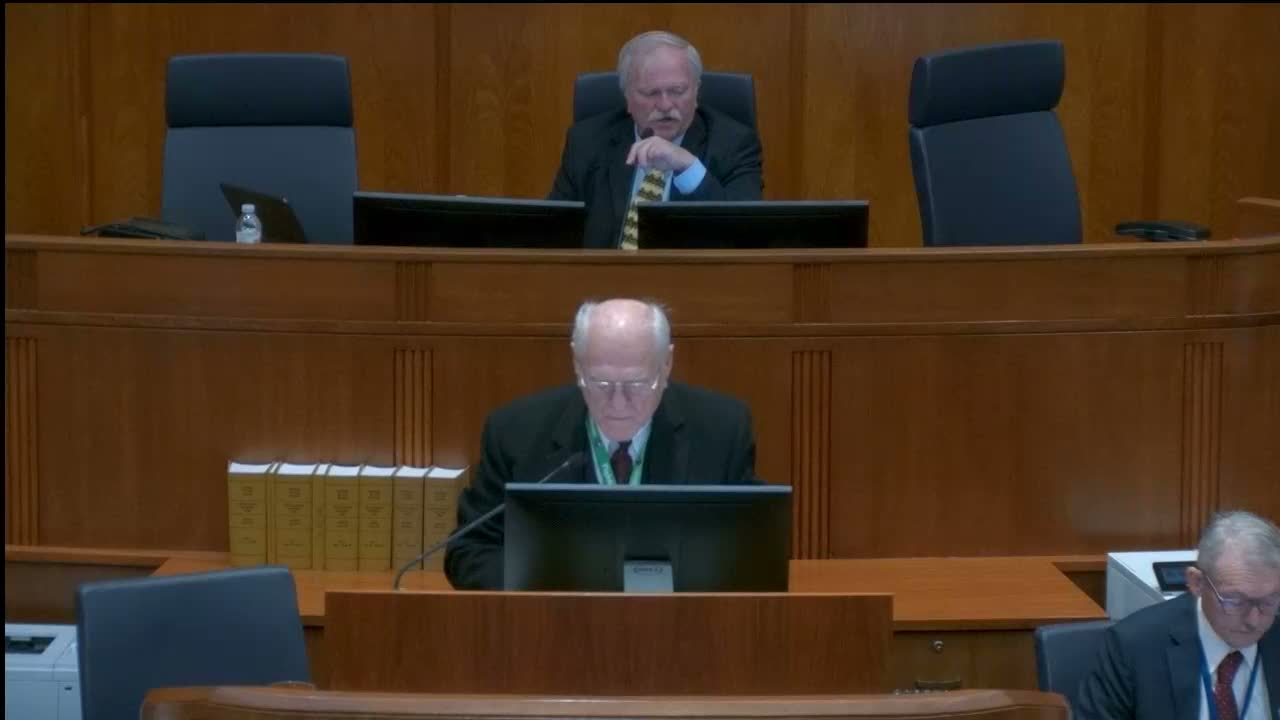
The North Dakota House passed Senate Bill 2403 creating a narrowly tailored, temporary bridge-loan option to stabilize small rural hospitals facing acute financial distress. The loan program would be administered with fiduciary oversight by the Bank of North Dakota (BND), require a formal application and bank review, and provide loans of up to $5,000,000 for eligible nonprofit hospitals serving communities under 2,500 population.
Representative Metzcott explained the bill's purpose: to offer an interim operating loan to help qualifying hospitals stabilize operations while they implement business plans and structural changes. "The bill requires a formal application, full bank review, and clearly defined loan terms," Metzcott said, and noted the program sunsets on 06/30/2027.
Sponsors and supporters described the loan as one-time operating assistance rather than an ongoing commitment or a grant. Representative Rohrer said the measure "is not a bailout" but a targeted stabilization tool and named James Tom Jacobson Memorial Hospital care center and clinic as an example of an at‑risk facility in her district.
Members raised constitutional and fairness questions. Representative Van Winkle asked whether the plan might violate the anti-gifting clause of the state constitution; Representative Holly responded that because the program is competitive and administered by the bank it would not constitute a prohibited gift. Representative Kapanek reiterated that the BND would be the fiduciary and that loan repayments would return to the general fund.
Members pressed about loan mechanics, vendor debt and payoff options. Sponsors and the appropriations chair described due diligence by BND and said roughly $2.68 million in vendor debt and $1.1 million owed to a financial institution were among the obligations informing the $5 million figure; they said early payoff and default consequences would be governed by loan documents with the bank.
On final consideration the clerk opened the voting key and the House recorded a vote. The floor transcript records the final vote line in an ambiguous form (the transcript shows "Final vote shows ADA, 12 nay") but declares Senate Bill 2403 passed. The transcript’s vote tally is unclear in the record provided.
Why it matters: The bill creates a short-term financing mechanism to prevent closure of critical access hospitals that provide emergency and basic inpatient care to remote communities; supporters argued the social and economic costs of losing rural hospitals are severe.
Next steps: The House declared SB2403 passed; details on loan awards, terms, and bank documentation will be determined through BND review and implementing documents.
Representative Metzcott explained the bill's purpose: to offer an interim operating loan to help qualifying hospitals stabilize operations while they implement business plans and structural changes. "The bill requires a formal application, full bank review, and clearly defined loan terms," Metzcott said, and noted the program sunsets on 06/30/2027.
Sponsors and supporters described the loan as one-time operating assistance rather than an ongoing commitment or a grant. Representative Rohrer said the measure "is not a bailout" but a targeted stabilization tool and named James Tom Jacobson Memorial Hospital care center and clinic as an example of an at‑risk facility in her district.
Members raised constitutional and fairness questions. Representative Van Winkle asked whether the plan might violate the anti-gifting clause of the state constitution; Representative Holly responded that because the program is competitive and administered by the bank it would not constitute a prohibited gift. Representative Kapanek reiterated that the BND would be the fiduciary and that loan repayments would return to the general fund.
Members pressed about loan mechanics, vendor debt and payoff options. Sponsors and the appropriations chair described due diligence by BND and said roughly $2.68 million in vendor debt and $1.1 million owed to a financial institution were among the obligations informing the $5 million figure; they said early payoff and default consequences would be governed by loan documents with the bank.
On final consideration the clerk opened the voting key and the House recorded a vote. The floor transcript records the final vote line in an ambiguous form (the transcript shows "Final vote shows ADA, 12 nay") but declares Senate Bill 2403 passed. The transcript’s vote tally is unclear in the record provided.
Why it matters: The bill creates a short-term financing mechanism to prevent closure of critical access hospitals that provide emergency and basic inpatient care to remote communities; supporters argued the social and economic costs of losing rural hospitals are severe.
Next steps: The House declared SB2403 passed; details on loan awards, terms, and bank documentation will be determined through BND review and implementing documents.
Don't Miss a Word: See the Full Meeting!
Go beyond summaries. Unlock every video, transcript, and key insight with a Founder Membership.
✓
Get instant access to full meeting videos
✓
Search and clip any phrase from complete transcripts
✓
Receive AI-powered summaries & custom alerts
✓
Enjoy lifetime, unrestricted access to government data
30-day money-back guarantee
