House accepts rural health transformation federal funds, approves gap‑funding and loans
January 22, 2026 | 2026 Legislature ND, North Dakota
This article was created by AI summarizing key points discussed. AI makes mistakes, so for full details and context, please refer to the video of the full meeting. Please report any errors so we can fix them. Report an error »
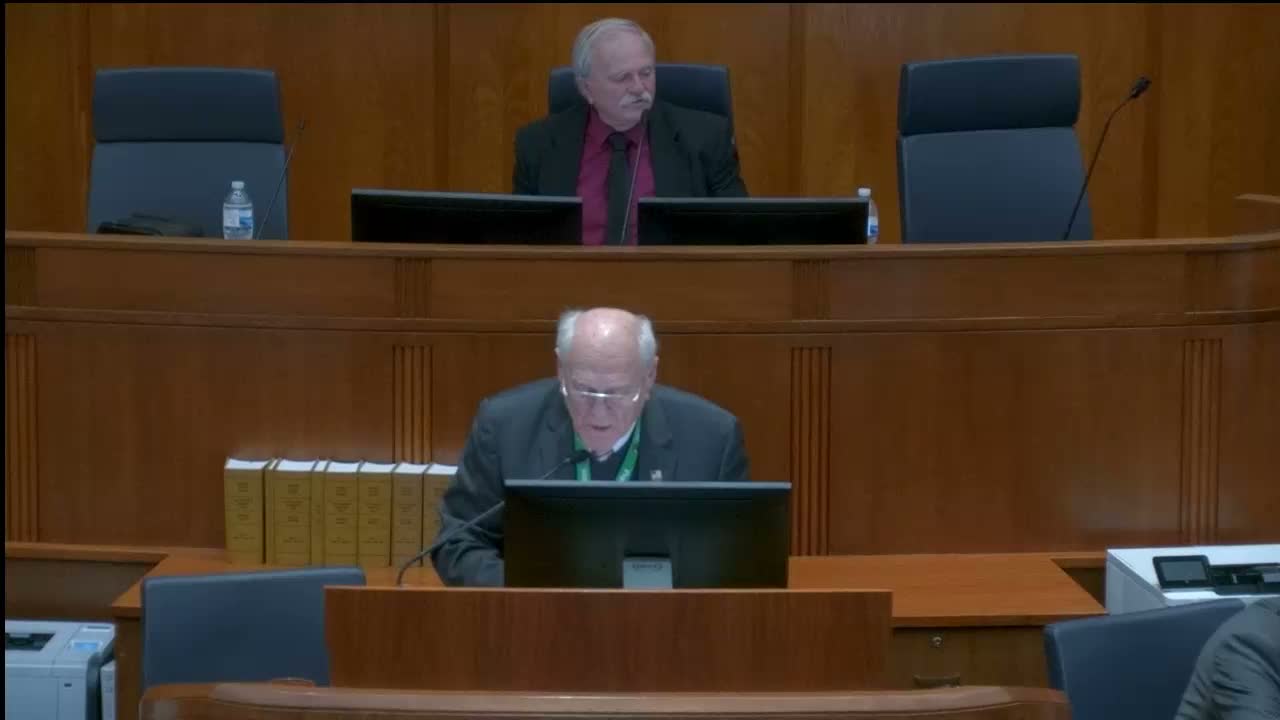
The North Dakota House voted 90–2 on Jan. 23 to accept and authorize implementation of federal rural health transformation grant funds under House Bill 16-23.
Representative Mike Nelson, sponsor of HB 16-23, told members the bill is the principal reason for the special session and described a comprehensive package to position North Dakota to receive multi-year federal funds to strengthen rural health services. "Section 1, accepts the $397,873,940," Nelson said while outlining the bill’s sections and the legislative approach to match CMS timelines.
Key elements include authorization for the Department of Health and Human Services to accept federal awards, a $600,000 administrative allocation to enable Bank of North Dakota gap funding operations, and a $40,000,000 transfer from Bank of North Dakota undivided profits to provide short‑term gap financing to local entities that must spend funds up front and be reimbursed. The bill also authorizes a 2% loan program administered by the Bank of North Dakota for short-term gap funding; sponsors described the loan as a one-time stopgap rather than a revolving fund.
Supporters said the funding would target workforce development, behavioral health, aging services, EMS and critical-access medical infrastructure, with reporting requirements back to the legislature. Representative Nelson emphasized the tight schedule imposed by the federal program and the need to commit projects quickly: he said projects would generally need to be committed by Oct. 1 to meet federal timelines.
During floor debate some members expressed philosophical caution about accepting federal dollars and cautioned about inflationary or long-term effects; others said the federal money would be spent in North Dakota or redeployed elsewhere if the state declined. Representative Porter and others highlighted EMS and rural workforce shortages as immediate priorities the funds could address.
On final consideration the House recorded a vote of 90 yay and 2 nay and declared the bill passed. The bill includes reporting requirements and procurement streamlining to meet federal deadlines.
Representative Mike Nelson, sponsor of HB 16-23, told members the bill is the principal reason for the special session and described a comprehensive package to position North Dakota to receive multi-year federal funds to strengthen rural health services. "Section 1, accepts the $397,873,940," Nelson said while outlining the bill’s sections and the legislative approach to match CMS timelines.
Key elements include authorization for the Department of Health and Human Services to accept federal awards, a $600,000 administrative allocation to enable Bank of North Dakota gap funding operations, and a $40,000,000 transfer from Bank of North Dakota undivided profits to provide short‑term gap financing to local entities that must spend funds up front and be reimbursed. The bill also authorizes a 2% loan program administered by the Bank of North Dakota for short-term gap funding; sponsors described the loan as a one-time stopgap rather than a revolving fund.
Supporters said the funding would target workforce development, behavioral health, aging services, EMS and critical-access medical infrastructure, with reporting requirements back to the legislature. Representative Nelson emphasized the tight schedule imposed by the federal program and the need to commit projects quickly: he said projects would generally need to be committed by Oct. 1 to meet federal timelines.
During floor debate some members expressed philosophical caution about accepting federal dollars and cautioned about inflationary or long-term effects; others said the federal money would be spent in North Dakota or redeployed elsewhere if the state declined. Representative Porter and others highlighted EMS and rural workforce shortages as immediate priorities the funds could address.
On final consideration the House recorded a vote of 90 yay and 2 nay and declared the bill passed. The bill includes reporting requirements and procurement streamlining to meet federal deadlines.
View the Full Meeting & All Its Details
This article offers just a summary. Unlock complete video, transcripts, and insights as a Founder Member.
✓
Watch full, unedited meeting videos
✓
Search every word spoken in unlimited transcripts
✓
AI summaries & real-time alerts (all government levels)
✓
Permanent access to expanding government content
30-day money-back guarantee
