Senate Appropriations Committee advances dozens of measures in suspense-file votes; chair closes term
January 22, 2026 | California State Senate, Senate, Legislative, California
This article was created by AI summarizing key points discussed. AI makes mistakes, so for full details and context, please refer to the video of the full meeting. Please report any errors so we can fix them. Report an error »
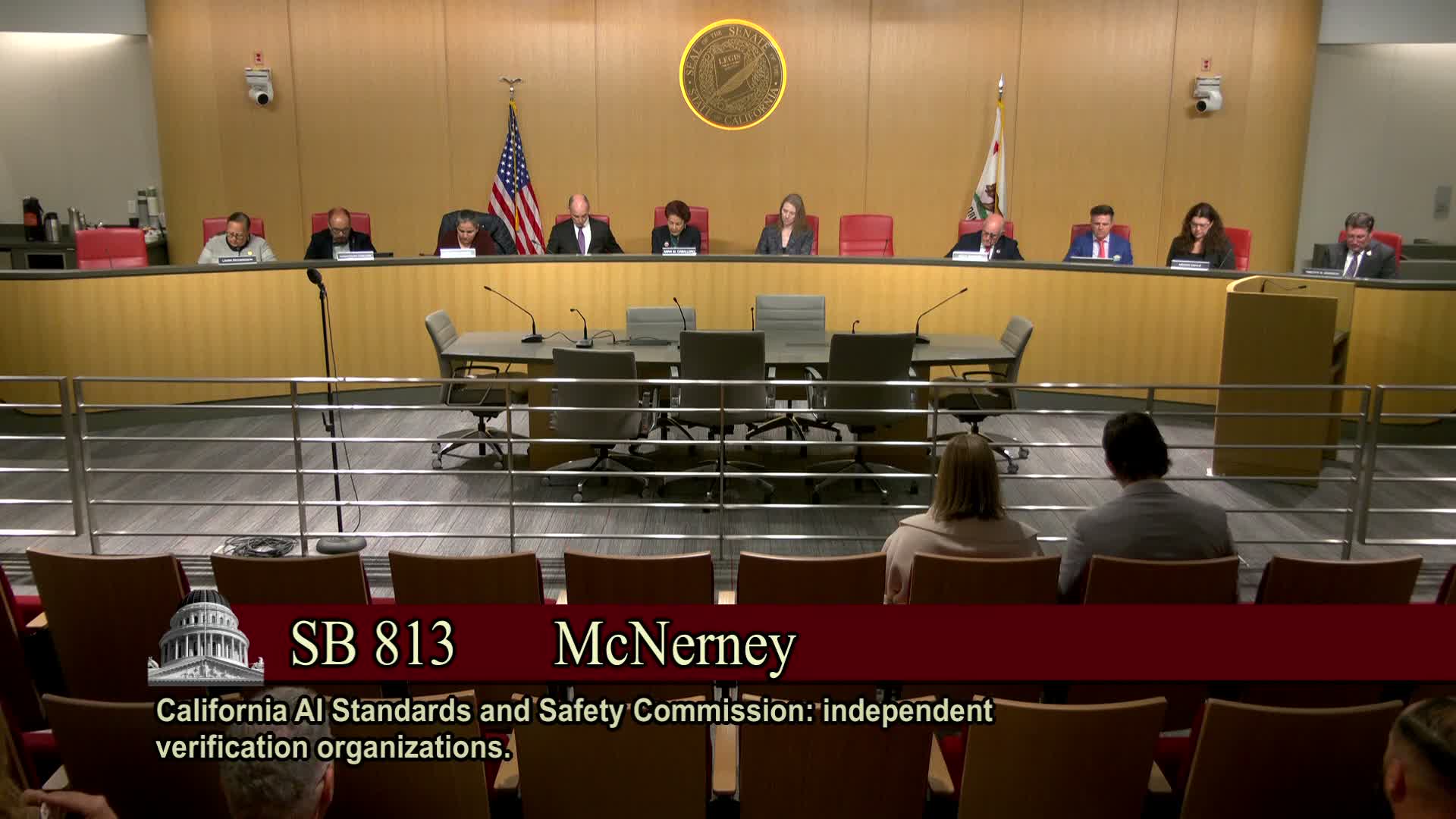
The Senate Committee on Appropriations met in Room 2200 of the Old Street Building on Jan. 27, 2026, and held a vote-only, suspense-file hearing that advanced a broad set of bills ranging from housing bonds to technology and public-safety measures. Several bills passed unanimously while others were approved on 5–2 roll-call votes, and committee leadership said hearing results and addendum analyses will be posted on the committee website.
The hearing was conducted alphabetically by author and consisted solely of items on the suspense file; no public testimony was taken. Unidentified Speaker 1 opened the meeting with procedural instructions, including that any bills amended during the session would be accompanied by an addendum analysis summarizing fiscal impacts. After roll call confirmed a quorum, the committee proceeded through the agenda and recorded votes on each measure.
Votes at a glance
- SB 501 (Responsible Battery Recycling Act) — Do pass; approved 5 to 2.
- SB 623 (Property taxation exemptions) — Do pass; approved 7 to 0.
- SB 667 (Wayside detector systems; amended to limit spacing for hot wheel bearing detectors and revise CPUC rulemaking provisions) — Passed (roll-call result reported).
- SB 99 (Military protective orders; as amended to remove court search requirement) — Approved 7 to 0.
- SB 417 (Affordable Housing Bond Act of 2026; amended to move measure to November general election, add coauthors) — Approved 5 to 2.
- SB 828 (Fireworks licenses and permits) — Approved 7 to 0.
- SB 555 (Workers' compensation average annual earnings; amended to replace increase formula with a one-time increase of unspecified amount) — Approved 5 to 2.
- SB 811 (Metal shredding facilities; amendments specify DTSC enforcement and water protections) — Approved 7 to 0.
- SB 73 (Elections inspection of voting systems) — Approved 5 to 2.
- SB 557 (Family resource centers) — Approved 7 to 0.
- SB 327 (Electrical rates and political influence activities) — Approved 5 to 2.
- SB 813 (California AI Standards and Safety Commission) — Approved 5 to 2.
- SB 492 (Youth Housing Bond Act of 2026; amended to authorize a sale of $1,000,000,000 in general obligation bonds and specify funding for youth centers and housing) — Approved 5 to 2.
- SB 608 (Student health) — Approved 5 to 2.
- SB 58 (Air quality: hydrogen sulfide) — Approved 7 to 0.
- SB 742 (Electrical infrastructure — permanently abandoned facilities) — Approved (roll-call result reported).
- SB 288 (Property taxation: family homes and farms; technical changes) — Approved 7 to 0.
- SB 247 (State agency contracts bid preference) — Approved 5 to 2.
- SB 4046 (Presidential elections qualifications for office) — Approved (vote reported).
- SB 342 (Contractors, unlicensed work) — Approved 7 to 0.
- SB 490 (Alcohol and drug programs) — Approved 7 to 0.
- SB 574 (Generative AI attorneys and arbitrators) — Approved 7 to 0.
- SB 758 (Kratom and nitrous oxide; amended to strike certain provisions) — Approved 7 to 0.
- SB 260 (Unmanned aircraft) — Approved 7 to 0.
- SB 381 (Adoptee birth certificate; as amended to add coauthors) — Approved 7 to 0.
- SB 691 (Body-worn cameras) — Approved 6 to 0 (reported in roll call).
- SB 849 (Physicians; revocation of certificate) — Approved 7 to 0.
- SB 747 (Deprivation of constitutional rights; amended to narrow retroactive remedies and strike urgency clause) — Approved 5 to 2.
Context and notable items
SB 492 was presented as amended to authorize the sale of $1,000,000,000 in general obligation bonds dedicated in part to youth centers and housing; the transcript records the amount and the committee's approval on a 5–2 vote. Multiple public-safety and technology measures (for example, SB 691 on body-worn cameras and SB 813 on an AI standards commission) were also advanced. Several environmental and health-related bills were approved unanimously.
Unidentified Speaker 1 closed the session by thanking staff and colleagues and noting, "This is my last meeting chairing the Appropriations Committee," adding gratitude for their work. The committee said addendum analyses for amended bills and the official hearing results will be posted on the committee's website.
What happens next
This hearing was a procedural, vote-only session that forwards measures to the next steps in the Senate process or to the general-election ballot where noted; the committee directed staff to post formal results and addendum analyses for amended measures. No public testimony was taken during this session.
The hearing was conducted alphabetically by author and consisted solely of items on the suspense file; no public testimony was taken. Unidentified Speaker 1 opened the meeting with procedural instructions, including that any bills amended during the session would be accompanied by an addendum analysis summarizing fiscal impacts. After roll call confirmed a quorum, the committee proceeded through the agenda and recorded votes on each measure.
Votes at a glance
- SB 501 (Responsible Battery Recycling Act) — Do pass; approved 5 to 2.
- SB 623 (Property taxation exemptions) — Do pass; approved 7 to 0.
- SB 667 (Wayside detector systems; amended to limit spacing for hot wheel bearing detectors and revise CPUC rulemaking provisions) — Passed (roll-call result reported).
- SB 99 (Military protective orders; as amended to remove court search requirement) — Approved 7 to 0.
- SB 417 (Affordable Housing Bond Act of 2026; amended to move measure to November general election, add coauthors) — Approved 5 to 2.
- SB 828 (Fireworks licenses and permits) — Approved 7 to 0.
- SB 555 (Workers' compensation average annual earnings; amended to replace increase formula with a one-time increase of unspecified amount) — Approved 5 to 2.
- SB 811 (Metal shredding facilities; amendments specify DTSC enforcement and water protections) — Approved 7 to 0.
- SB 73 (Elections inspection of voting systems) — Approved 5 to 2.
- SB 557 (Family resource centers) — Approved 7 to 0.
- SB 327 (Electrical rates and political influence activities) — Approved 5 to 2.
- SB 813 (California AI Standards and Safety Commission) — Approved 5 to 2.
- SB 492 (Youth Housing Bond Act of 2026; amended to authorize a sale of $1,000,000,000 in general obligation bonds and specify funding for youth centers and housing) — Approved 5 to 2.
- SB 608 (Student health) — Approved 5 to 2.
- SB 58 (Air quality: hydrogen sulfide) — Approved 7 to 0.
- SB 742 (Electrical infrastructure — permanently abandoned facilities) — Approved (roll-call result reported).
- SB 288 (Property taxation: family homes and farms; technical changes) — Approved 7 to 0.
- SB 247 (State agency contracts bid preference) — Approved 5 to 2.
- SB 4046 (Presidential elections qualifications for office) — Approved (vote reported).
- SB 342 (Contractors, unlicensed work) — Approved 7 to 0.
- SB 490 (Alcohol and drug programs) — Approved 7 to 0.
- SB 574 (Generative AI attorneys and arbitrators) — Approved 7 to 0.
- SB 758 (Kratom and nitrous oxide; amended to strike certain provisions) — Approved 7 to 0.
- SB 260 (Unmanned aircraft) — Approved 7 to 0.
- SB 381 (Adoptee birth certificate; as amended to add coauthors) — Approved 7 to 0.
- SB 691 (Body-worn cameras) — Approved 6 to 0 (reported in roll call).
- SB 849 (Physicians; revocation of certificate) — Approved 7 to 0.
- SB 747 (Deprivation of constitutional rights; amended to narrow retroactive remedies and strike urgency clause) — Approved 5 to 2.
Context and notable items
SB 492 was presented as amended to authorize the sale of $1,000,000,000 in general obligation bonds dedicated in part to youth centers and housing; the transcript records the amount and the committee's approval on a 5–2 vote. Multiple public-safety and technology measures (for example, SB 691 on body-worn cameras and SB 813 on an AI standards commission) were also advanced. Several environmental and health-related bills were approved unanimously.
Unidentified Speaker 1 closed the session by thanking staff and colleagues and noting, "This is my last meeting chairing the Appropriations Committee," adding gratitude for their work. The committee said addendum analyses for amended bills and the official hearing results will be posted on the committee's website.
What happens next
This hearing was a procedural, vote-only session that forwards measures to the next steps in the Senate process or to the general-election ballot where noted; the committee directed staff to post formal results and addendum analyses for amended measures. No public testimony was taken during this session.
View the Full Meeting & All Its Details
This article offers just a summary. Unlock complete video, transcripts, and insights as a Founder Member.
✓
Watch full, unedited meeting videos
✓
Search every word spoken in unlimited transcripts
✓
AI summaries & real-time alerts (all government levels)
✓
Permanent access to expanding government content
30-day money-back guarantee
