Behavioral health board highlights online licensing, growth and counseling‑compact fees
January 21, 2026 | 2026 Legislature OK, Oklahoma
This article was created by AI summarizing key points discussed. AI makes mistakes, so for full details and context, please refer to the video of the full meeting. Please report any errors so we can fix them. Report an error »
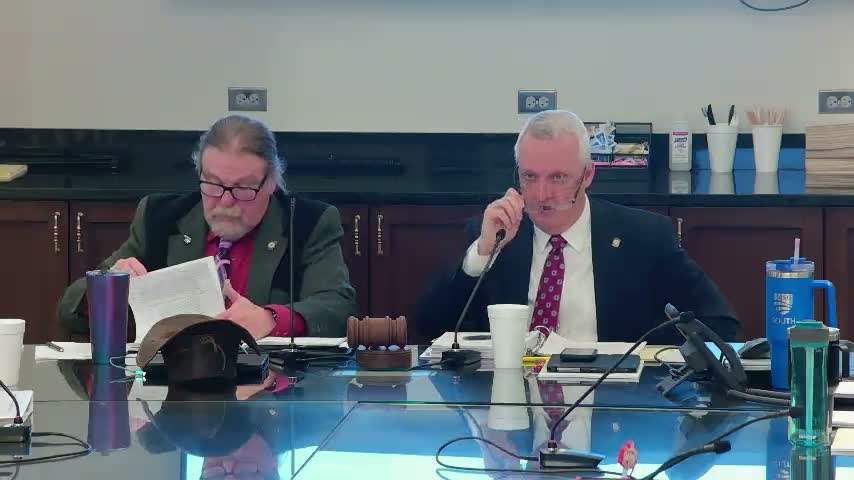
Eric Ashmore, executive director of the State Board of Behavioral Health Licensure, and Dr. Kelly Collins, the board chair, told the Administrative Rules Committee that the board has prioritized administrative efficiencies and public data access. Ashmore said the board implemented an online licensing system and has focused on collecting demographic data to target workforce shortages and geographic gaps.
Dr. Collins said the agency moved from near‑bankruptcy several years ago to a healthier fiscal position after rule changes and renewed licensing activity. The board reported carryover reserves of roughly $1.3 million, which members attributed to a period of increased licensing volume and reduced staff costs. “When I took over as director, we were about two years out from being bankrupt if we didn't increase our fees,” Ashmore said, describing a multi‑year effort to improve operations and licensing throughput.
The board discussed participation in the national counseling compact. Dr. Johnny Fredman, the board’s representative on the compact commission, said there is a flat federal participation fee paid to the compact and that each state may set additional fees to permit privilege practice; the Oklahoma board plans to absorb the compact participation fee for Oklahoma licensees where possible so as not to pass the cost to practitioners.
Committee members asked about the board’s reserve levels, the licensing platform (Thentia/Sentia) and how the board handles endorsements from other states. Ashmore said licensure by endorsement can be processed in as little as four days if applications are complete. The committee requested contact and follow‑up documentation; no formal action was taken at the hearing.
Dr. Collins said the agency moved from near‑bankruptcy several years ago to a healthier fiscal position after rule changes and renewed licensing activity. The board reported carryover reserves of roughly $1.3 million, which members attributed to a period of increased licensing volume and reduced staff costs. “When I took over as director, we were about two years out from being bankrupt if we didn't increase our fees,” Ashmore said, describing a multi‑year effort to improve operations and licensing throughput.
The board discussed participation in the national counseling compact. Dr. Johnny Fredman, the board’s representative on the compact commission, said there is a flat federal participation fee paid to the compact and that each state may set additional fees to permit privilege practice; the Oklahoma board plans to absorb the compact participation fee for Oklahoma licensees where possible so as not to pass the cost to practitioners.
Committee members asked about the board’s reserve levels, the licensing platform (Thentia/Sentia) and how the board handles endorsements from other states. Ashmore said licensure by endorsement can be processed in as little as four days if applications are complete. The committee requested contact and follow‑up documentation; no formal action was taken at the hearing.
View the Full Meeting & All Its Details
This article offers just a summary. Unlock complete video, transcripts, and insights as a Founder Member.
✓
Watch full, unedited meeting videos
✓
Search every word spoken in unlimited transcripts
✓
AI summaries & real-time alerts (all government levels)
✓
Permanent access to expanding government content
30-day money-back guarantee
