DUI testing board reports interlock program growth and unveils Intoxilyzer 9000 plans
January 21, 2026 | 2026 Legislature OK, Oklahoma
This article was created by AI summarizing key points discussed. AI makes mistakes, so for full details and context, please refer to the video of the full meeting. Please report any errors so we can fix them. Report an error »
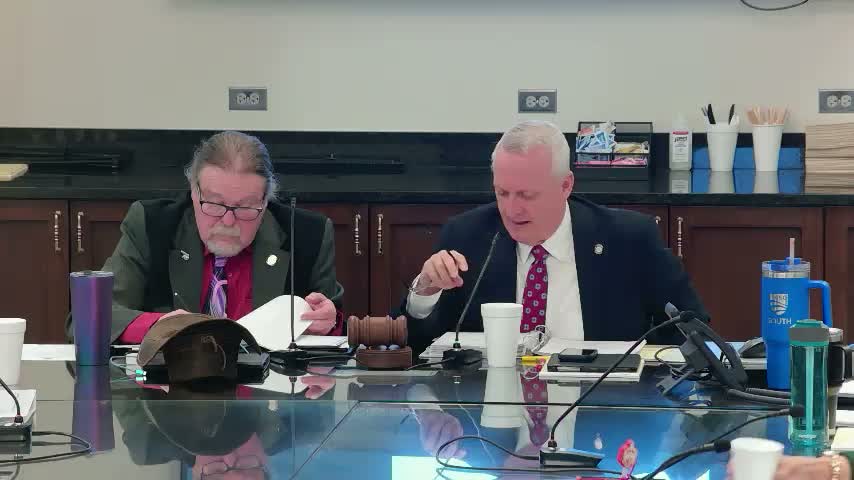
Joshua Smith, director of the Board of Tests for Alcohol and Drug Influence, briefed the committee on breath, blood and ignition‑interlock programs used in impaired‑driving enforcement and post‑adjudication monitoring. Smith said the board took over an interlock program in 2022 and has had 3,385 participants complete the program, with current active participation around 2,347 and roughly 35% of applicants who do not complete enrollment.
Smith warned that increasing drug‑involved impaired driving complicates testing because drug presence does not always equate to impairment; blood testing remains the evidential standard. He described administrative steps taken to track fee schedules for ignition interlock providers so the legislature can monitor predatory pricing in a largely unregulated vendor market.
The board also described plans for a next‑generation evidential breath instrument, the Intoxilyzer 9000, being developed with manufacturer CMI. Smith said the device will support electronic submissions, digital signature capture and transmission directly to Service Oklahoma and will include better detection of interfering compounds. He said the board is conducting studies (including on keto diet effects) to establish detection thresholds and guide evidentiary practice.
Committee members asked about oral‑fluid screening tools for drug detection, evidence reliability, and how new instruments integrate with Service Oklahoma; Smith said oral‑fluid tools have utility for screening but rely on lab confirmation and that device accuracy data are limited and sometimes pilot‑stage. No formal votes were taken.
Smith warned that increasing drug‑involved impaired driving complicates testing because drug presence does not always equate to impairment; blood testing remains the evidential standard. He described administrative steps taken to track fee schedules for ignition interlock providers so the legislature can monitor predatory pricing in a largely unregulated vendor market.
The board also described plans for a next‑generation evidential breath instrument, the Intoxilyzer 9000, being developed with manufacturer CMI. Smith said the device will support electronic submissions, digital signature capture and transmission directly to Service Oklahoma and will include better detection of interfering compounds. He said the board is conducting studies (including on keto diet effects) to establish detection thresholds and guide evidentiary practice.
Committee members asked about oral‑fluid screening tools for drug detection, evidence reliability, and how new instruments integrate with Service Oklahoma; Smith said oral‑fluid tools have utility for screening but rely on lab confirmation and that device accuracy data are limited and sometimes pilot‑stage. No formal votes were taken.
View the Full Meeting & All Its Details
This article offers just a summary. Unlock complete video, transcripts, and insights as a Founder Member.
✓
Watch full, unedited meeting videos
✓
Search every word spoken in unlimited transcripts
✓
AI summaries & real-time alerts (all government levels)
✓
Permanent access to expanding government content
30-day money-back guarantee
