Committee hears sharp public opposition to HB13 "Lake and Riley Act" over profiling, constitutional concerns
January 22, 2026 | Judiciary, House, Alabama Legislative Sessions, Alabama
This article was created by AI summarizing key points discussed. AI makes mistakes, so for full details and context, please refer to the video of the full meeting. Please report any errors so we can fix them. Report an error »
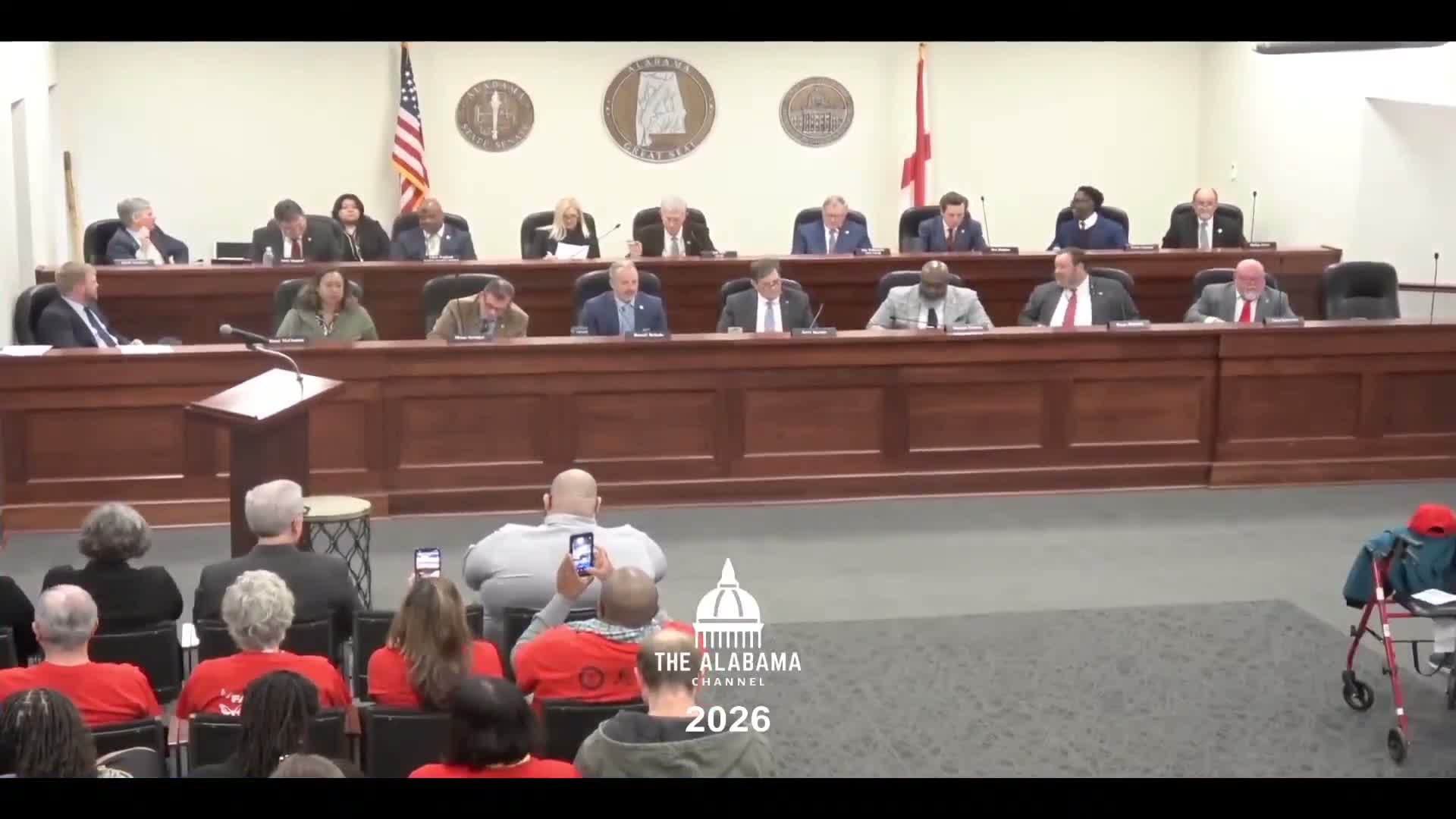
The Judiciary Committee heard public testimony on HB13, known in the hearing as the "Lake and Riley Act," which would allow state and local law enforcement agencies to enter memoranda of understanding with the federal government to assist in enforcing existing federal immigration laws. Representative Yarbrough, the bill sponsor, told the committee the measure "provides an optional path for state and local law enforcement agencies to enter into a MOU with the federal government to enforce existing federal immigration laws." The committee did not vote and the bill will be taken up again next week.
Opponents said the proposal could turn local officers into de facto immigration agents and enable profiling. Reverend Thomas, who said his 18-year-old daughter is a U.S. citizen adopted from Guatemala, described how the family lives in fear of encounters with immigration agents: "She is a model citizen... sheis afraid to leave our house," he told the committee. He said HB13 "does not define what that probable cause looks like" and warned that the measure could make people fearful of routine interactions with police.
Tanawa Downing, a civil-rights litigator from Washington, D.C., argued the bill risks unconstitutional enforcement and cited the Fifth Amendment's grand-jury protections when federal authorities pursue "infamous" crimes: "If your agents are simply relying upon the customs and customs enforcement to go out and do their duty, but customs is abridging the obligations codified in the Constitution, then your agents are actually implicated within that criminal act," she said, warning of potential federal constitutional exposure.
Immigration attorney (speaker 20) who identified a long record of prior litigation urged caution by citing the 2011 HB56 litigation: "SB Arizona's SB 1070 and Alabama's HB 56 were struck down by the Supreme Court of the United States," the witness said, and questioned whether the state should repeat that path. Allison Hamilton, executive director of the Alabama Coalition for Immigrant Justice, cited recent federal enforcement actions in other states and urged rejection: "Rejecting this bill is a responsible choice for Alabama taxpayers and the right choice for the safety of Alabama's people," she said, adding that she had seen U.S. citizens detained while carrying identification.
Committee members pressed witnesses and debated risks. Representative England acknowledged a long history of racial profiling and told the room he understood speakers' fears; other members with law-enforcement backgrounds defended officers and said the bill simply permits — rather than mandates — cooperation. Representative Faulkner walked through language in HB13 that requires written instructions before a jail holds an identified person on immigration grounds and allows use of interpreters and procedural safeguards.
No formal vote was taken on HB13 during the hearing. Representative Yarbrough was directed to return next week for further questions and discussion.
Opponents said the proposal could turn local officers into de facto immigration agents and enable profiling. Reverend Thomas, who said his 18-year-old daughter is a U.S. citizen adopted from Guatemala, described how the family lives in fear of encounters with immigration agents: "She is a model citizen... sheis afraid to leave our house," he told the committee. He said HB13 "does not define what that probable cause looks like" and warned that the measure could make people fearful of routine interactions with police.
Tanawa Downing, a civil-rights litigator from Washington, D.C., argued the bill risks unconstitutional enforcement and cited the Fifth Amendment's grand-jury protections when federal authorities pursue "infamous" crimes: "If your agents are simply relying upon the customs and customs enforcement to go out and do their duty, but customs is abridging the obligations codified in the Constitution, then your agents are actually implicated within that criminal act," she said, warning of potential federal constitutional exposure.
Immigration attorney (speaker 20) who identified a long record of prior litigation urged caution by citing the 2011 HB56 litigation: "SB Arizona's SB 1070 and Alabama's HB 56 were struck down by the Supreme Court of the United States," the witness said, and questioned whether the state should repeat that path. Allison Hamilton, executive director of the Alabama Coalition for Immigrant Justice, cited recent federal enforcement actions in other states and urged rejection: "Rejecting this bill is a responsible choice for Alabama taxpayers and the right choice for the safety of Alabama's people," she said, adding that she had seen U.S. citizens detained while carrying identification.
Committee members pressed witnesses and debated risks. Representative England acknowledged a long history of racial profiling and told the room he understood speakers' fears; other members with law-enforcement backgrounds defended officers and said the bill simply permits — rather than mandates — cooperation. Representative Faulkner walked through language in HB13 that requires written instructions before a jail holds an identified person on immigration grounds and allows use of interpreters and procedural safeguards.
No formal vote was taken on HB13 during the hearing. Representative Yarbrough was directed to return next week for further questions and discussion.
Don't Miss a Word: See the Full Meeting!
Go beyond summaries. Unlock every video, transcript, and key insight with a Founder Membership.
✓
Get instant access to full meeting videos
✓
Search and clip any phrase from complete transcripts
✓
Receive AI-powered summaries & custom alerts
✓
Enjoy lifetime, unrestricted access to government data
30-day money-back guarantee
