Newark council advances two 'Fossil Free Future' ordinances on first reading after public testimony
January 22, 2026 | Newark, Essex County, New Jersey
This article was created by AI summarizing key points discussed. AI makes mistakes, so for full details and context, please refer to the video of the full meeting. Please report any errors so we can fix them. Report an error »
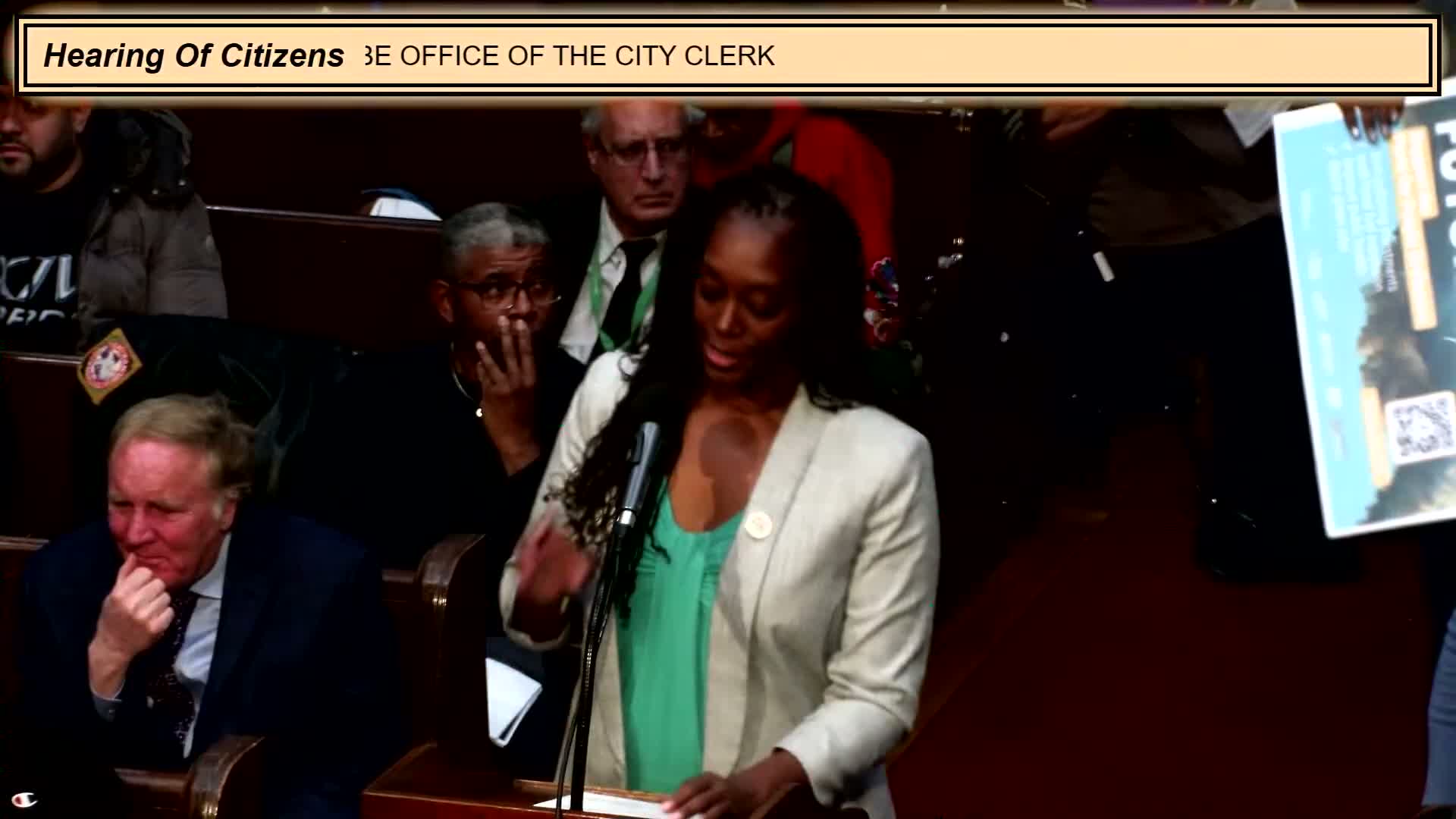
Council members advanced two ordinances on first reading on Wednesday that would restrict both the siting of large fossil-fuel facilities in Newark and the use of city funds to support them.
Dr. Leah Owens of the South Ward Environmental Alliance told the council that the pair of items on the agenda (identified in public comment as agenda items 25 15 10 and 25 15 11) would “amend the zoning and land use code to prohibit new or expanded fossil fuel facilities” that meet the New Jersey Department of Environmental Protection’s definition of a major source of air pollution, and would “prohibit public investments in these major fossil fuel facilities” so municipal dollars are directed to clean-energy alternatives (public comment, Dr. Leah Owens). Dr. Owens said seven facilities in Newark qualify as major sources and that emissions from those sites and the truck traffic serving them drive local respiratory and cardiovascular disease.
Kim Gaddy, founding executive director of the Southwood Environmental Alliance, urged the council to adopt the measures as part of a broader push to reduce asthma and other health burdens she said are concentrated in low-income neighborhoods. “We don’t bring BS to this body. We bring real solutions,” Gaddy said in public comment.
Council President moved the ordinances forward and the roll-call vote to advance both items to first reading passed with council members present voting yes; one member (Kelly) was recorded absent. The clerk said the ordinances advanced on first reading will be advertised and scheduled for public hearing, second reading and final passage at the regular meeting on Feb. 4 or soon thereafter.
Why it matters: supporters framed the ordinances as public-health measures that use land-use rules and municipal finance policy to limit the city’s long-term exposure to large polluters. Opponents were not recorded during the public hearing; council members and administration said they will continue the committee and public-review process required for ordinances.
What’s next: the ordinances proceed to public notice and will return to the council for public hearing and a final vote. Staff told the council that statutory publication and hearing schedules will be followed and that additional information — including DEP definitions and any exempted facility classes — will be made available before final passage.
Ending: environmental advocates left the meeting urging a swift final vote; council members said the items will be posted for hearing and that the public will have a chance to offer additional comment before second reading.
Dr. Leah Owens of the South Ward Environmental Alliance told the council that the pair of items on the agenda (identified in public comment as agenda items 25 15 10 and 25 15 11) would “amend the zoning and land use code to prohibit new or expanded fossil fuel facilities” that meet the New Jersey Department of Environmental Protection’s definition of a major source of air pollution, and would “prohibit public investments in these major fossil fuel facilities” so municipal dollars are directed to clean-energy alternatives (public comment, Dr. Leah Owens). Dr. Owens said seven facilities in Newark qualify as major sources and that emissions from those sites and the truck traffic serving them drive local respiratory and cardiovascular disease.
Kim Gaddy, founding executive director of the Southwood Environmental Alliance, urged the council to adopt the measures as part of a broader push to reduce asthma and other health burdens she said are concentrated in low-income neighborhoods. “We don’t bring BS to this body. We bring real solutions,” Gaddy said in public comment.
Council President moved the ordinances forward and the roll-call vote to advance both items to first reading passed with council members present voting yes; one member (Kelly) was recorded absent. The clerk said the ordinances advanced on first reading will be advertised and scheduled for public hearing, second reading and final passage at the regular meeting on Feb. 4 or soon thereafter.
Why it matters: supporters framed the ordinances as public-health measures that use land-use rules and municipal finance policy to limit the city’s long-term exposure to large polluters. Opponents were not recorded during the public hearing; council members and administration said they will continue the committee and public-review process required for ordinances.
What’s next: the ordinances proceed to public notice and will return to the council for public hearing and a final vote. Staff told the council that statutory publication and hearing schedules will be followed and that additional information — including DEP definitions and any exempted facility classes — will be made available before final passage.
Ending: environmental advocates left the meeting urging a swift final vote; council members said the items will be posted for hearing and that the public will have a chance to offer additional comment before second reading.
Don't Miss a Word: See the Full Meeting!
Go beyond summaries. Unlock every video, transcript, and key insight with a Founder Membership.
✓
Get instant access to full meeting videos
✓
Search and clip any phrase from complete transcripts
✓
Receive AI-powered summaries & custom alerts
✓
Enjoy lifetime, unrestricted access to government data
30-day money-back guarantee
